When a candidate won’t debate, should the voters lose their forum?
Sep 22, 2026 | 2:40 pm ET
Description
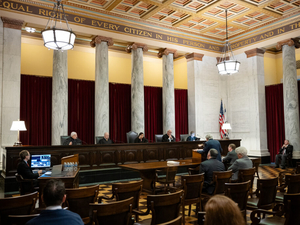
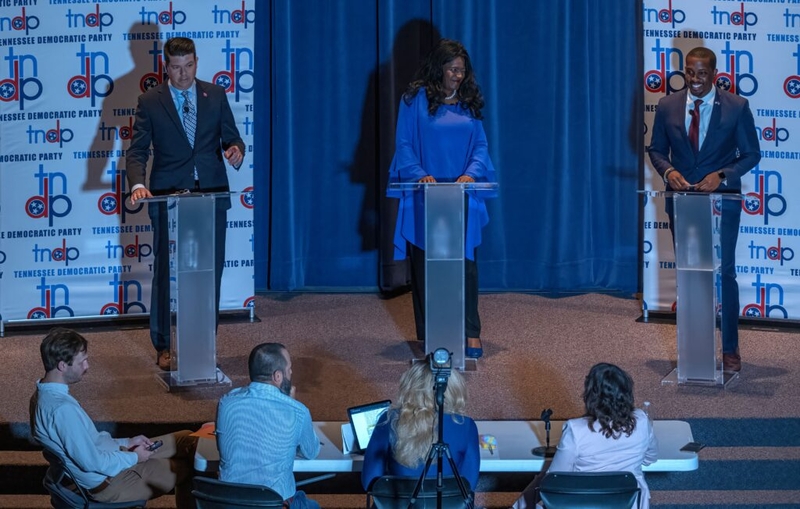
Pictured, a debate between 2022 Democratic gubernatorial candidates. No debates or forums have been scheduled in the 2026 gubernatorial race. (Photo: John Partipilo/Tennessee Lookout)
Tennesseans are preparing to elect a governor and members of Congress this November, but before Election Day arrives, news organizations need to answer a question of their own: When one candidate refuses to debate, why should the voters lose the forum?
Campaign advertisements are not accountability. They are advertisements, carefully scripted, edited and financed presentations designed to tell voters exactly what a campaign wants them to hear. Candidates get to select the images, highlight the statistics, emphasize their preferred issues and avoid the questions they would rather not answer.
Debates create the possibility of the unexpected question, the follow-up, the contradiction and the policy proposal that sounds good until somebody asks what it costs, who pays for it or whether the office being sought by the candidate even has the authority to implement it.
Citizens deserve that distinction, and news organizations ought to defend it.
Consider Tennessee’s gubernatorial race. Republican nominee Marsha Blackburn declined NewsChannel 5’s invitation to participate in a Republican primary debate in July. The station reported that Blackburn cited Senate votes, that it asked whether another date would work, and that it did not receive a response. U.S. Rep. John Rose then declined to participate without Blackburn, and the station canceled the debate.
Now Democratic gubernatorial nominee Jerri Green has proposed general-election debates with Blackburn, and Blackburn has declined. Whatever voters ultimately think about either candidate, the larger issue remains: one candidate’s decision not to participate should not automatically determine whether the public receives a serious forum in which someone is questioned about the job they are asking us to give them.
Media executives have been far too accommodating.
The answer should be simple. Invite every qualified candidate. Set the date. Establish the format. Give them a reasonable deadline to respond. If both candidates show up, host the debate. If only one shows up, convert the event into a rigorous town hall or extended interview with the candidate who accepted. Tell the audience exactly who was invited, who agreed to participate and who declined.
That participating candidate should not get a free campaign commercial. Put them under the lights. Bring in experienced journalists. Take questions from voters. Challenge weak answers. Fact-check claims. Ask follow-ups. Make them explain how their policies would actually work.
But do not allow a candidate who refuses to participate to effectively cancel the public’s opportunity for scrutiny.
That gives politicians too much control over journalism.
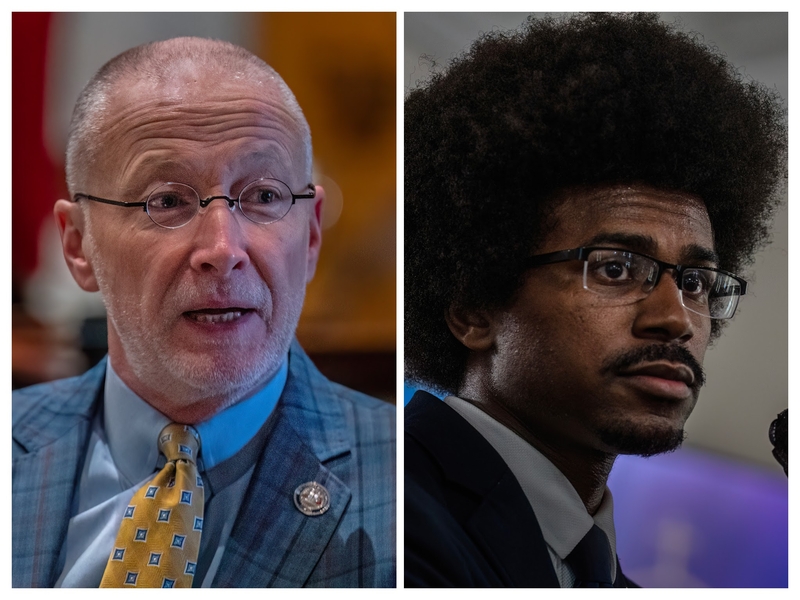
The same concern applies to Tennessee’s newly redrawn 9th Congressional District, where Republican state Sen. Brent Taylor and Democratic state Rep. Justin J. Pearson are competing for a seat that spans portions of Memphis and other parts of West and Middle Tennessee.
Voters deserve to hear these candidates questioned in real time about the issues that will confront whoever represents the district, particularly after a redistricting process that substantially changed the political geography of Memphis.
What should federal policy toward artificial-intelligence data centers look like? What responsibility does Washington have regarding their energy demands, environmental impacts and effects on surrounding communities? What should Congress do about health-care costs, wages, inflation, education, war and energy prices? Which promises are actually within the authority of a member of Congress, and which ones are merely campaign rhetoric?
Those questions deserve more than competing thirty-second advertisements.
This issue feels even more urgent considering what we are seeing nationally. Just this weekend, reporters from CNN, MS NOW and Politico were denied access to the White House after President Donald Trump announced that those outlets would be barred because of coverage he characterized as false. The affected news organizations filed a lawsuit Monday.This is precisely the kind of moment that calls for more courage from the press, not less. Political leaders already possess extraordinary privilege, visibility and access to platforms that allow them to shape their own narratives. News organizations should be especially wary of helping them avoid the one thing campaign advertising cannot provide: sustained, unscripted exposure to difficult questions.
And when media executives simply accept a candidate’s refusal without creating another meaningful forum, they risk becoming complicit in the very avoidance they are supposed to interrogate.
Journalism is not supposed to exist merely to transmit whatever politicians are comfortable saying. Its democratic value is most apparent when it creates spaces where public officials and candidates must confront questions they did not write for themselves.
The public needs to hear more than slogans about inflation. Ask candidates exactly what they would do about grocery costs, gasoline prices and wages. Ask how they would improve access to health care. Ask what their education proposals would mean for public schools. Ask congressional candidates what wars they would support, oppose or attempt to end.
And when they answer with talking points, ask again.
There are legitimate legal and regulatory considerations for broadcasters, particularly around candidate appearances and equal-opportunities rules. Those issues should be handled seriously. But they should not become a convenient excuse for surrendering the public forum altogether.
Newsrooms solve complicated legal, technical and editorial problems every day. Surely, they can figure out how to ask candidates for governor and Congress some damn questions.
A debate requires multiple candidates. Accountability does not.
At a moment when political leaders are increasingly attempting to control when, where and by whom they are questioned, media executives should not hand them additional leverage by allowing one candidate’s refusal to collapse an entire public forum. Invite them. Set the date. Turn on the cameras. If both candidates come, let them debate. If one refuses, put the other one in front of the people and start asking questions.
Political candidates may have the privilege of declining a debate. They should not have the power to cancel the public’s right to a forum.
Nashville, TN