Louisiana juvenile justice system costs grow as state locks up more youth
Feb 24, 2026 | 12:49 pm ET
Description
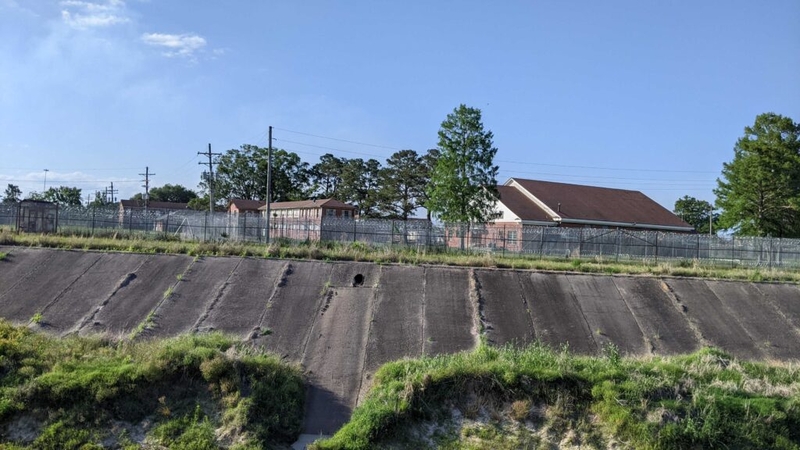
Gov. Jeff Landry's administration plans to replace the Jetson Center for Youth in Baker, pictured above. The juvenile justice facility was shut down over a decade ago. (Photo by Julie O'Donoghue/Louisiana Illuminator)
The costs of running Louisiana’s juvenile justice system surged over the past seven years as elected officials decided to keep more teens and young adults in youth prisons.
Gov. Jeff Landry’s proposed budget for the Office of Juvenile Justice during the 2026-27 fiscal year is $226.6 million. That’s approaching twice as much as the $121.2 million spent in 2018-19, the last full budget cycle of Gov. John Bel Edwards’ first term in office.
“The biggest changes over time have been the increase of additional youth being in care of the state and having to open up additional facilities,” said Ternisa Hutchinson, a senior budget analyst for the Senate Finance Committee, during a public hearing Monday.
The Senate staff presentation covered juvenile justice budget details since the 2018-19 cycle.
The juvenile justice office is responsible for most young people found guilty of committing crimes while under the age of 17 and can hold youth in custody until age 21. It runs seven secure care facilities, oversees group homes for troubled youth and provides the equivalent of juvenile probation and parole services.
During the last quarter of 2018, Louisiana incarcerated 332 youth in the juvenile justice system, according to data available on the Office of Juvenile Justice website. Seven years later, in the last three months of 2025, the state incarcerated 510 youth, about a 50% increase.
Those numbers represent the total number of youth who cycled in and out of the state’s juvenile prisons during the last quarter of those years. It does not reflect the average number of young people held over the three-month period.
For example, even though 510 youth were held in total at the end of 2025, only about 300 young people are being kept in the state’s seven juvenile justice facilities at any one time, said Jason Starnes, the agency’s undersecretary, at the Senate hearing.
The significant increases in juvenile justice spending also precede Landry’s time as governor.
In Edwards’ second term, the number of young people cycling through youth prisons went from 323 during the first quarter of 2020 to 480 during the last three months of 2024, shortly before he left office, according to documents on the Office of Juvenile Justice website. The agency budget also went from $141 million to $194.4 million.
A spike in crime that took place during the COVID-19 pandemic while Edwards was in office led to anxiety over violent teenage behavior.
The juvenile justice system was also in crisis for years following the COVID-19 outbreak. Incarcerated young people attacked staff at juvenile facilities, caused hundreds of thousands of dollars in damage to youth prisons and repeatedly escaped facilities.
In 2023, Edwards tried to shore up safety in the juvenile secure care centers by moving a group of incarcerated young people to Louisiana State Penitentiary at Angola, one of the largest maximum security prisons for adults in the country.
Legislators also pushed for more funding for the system to enhance staffing and fortify facilities. They shifted away from trying to implement a softer, more therapeutic model of juvenile justice to one that was more punitive and more closely resembled the adult prison system.
Landry, a former law enforcement officer, then came into office in 2024 with a more aggressive approach to public safety than Edwards. He and the legislature passed a sweeping package of bills to make it more difficult for people to be released from prison for good behavior.
Landry also pushed through a law that requires all 17-year-olds to be put through the adult criminal justice system. Previously, district attorneys had been able to choose whether to send a 17-year-old to adult or juvenile prison.
The juvenile justice system’s budget has continued to increase over Landry’s three years in office. Its operational expenses jumped $20 million, from $174.5 million to $194.4 million, during his first year, according to the Senate staff budget presentation.
The governor has proposed another big increase of $28 million for the 2026-27 budget year that starts July 1, though at least $10 million of that is for staff salaries that aren’t necessarily new, Starnes said. The bulk of the remaining $18 million will go toward expanding the state’s youth prison capacity.
The Landry administration wants to spend $15.2 million to open a new 56-bed youth prison and hire 122 staff members in a Vernon Parish building purchased from the local sheriff. Officials are also hoping to put 36 youth with 31 new staff members at the old Jetson Center for Youth in East Baton Rouge parish, which will cost $1.9 million.
The long-term plan for the Jetson site is to replace the existing facility with a complex that will house up to 72 children and teenagers. It is expected to cost an additional $70 million to build and would open during the 2027-28 state budget year.
The juvenile justice system lacks enough beds to accommodate all the young people who are supposed to be incarcerated, Starnes said. There are typically 70 to 80 youth waiting in local detention centers for slots in state facilities.
Starnes also said state facilities are a better place for youth than staying in detention centers for months on end. The state youth prisons have more rehabilitation services and education opportunities. The juvenile justice system partners with local community colleges to provide job training courses, for example.
“The sooner we get them into OJJ care, the sooner they can start receiving those services that they need, those wraparound services, the rehabilitation to try to get them on the right track,” Starnes told the senators.
Advocates for incarcerated youth disagree with Starnes’ assessment and oppose the state’s plans to open new juvenile prisons.
“We are calling on Louisiana lawmakers to reexamine the state’s youth justice budget and shift investments toward community based supports, rehabilitation, and front end prevention services,” said Antonio Travis, youth organizing manager of Families and Friends of Louisiana’s Incarcerated Children in a written statement Monday.
“We have not received basic answers to critical questions about this new facility [in Vernon Parish], and the plan risks blurring lines between youth and adult incarceration and deepening harm,” Travis said.
Increased juvenile justice costs come at a time when the state is also seeing a significant increase in adult prison costs.
The Landry administration is proposing to spend an additional $82 million on adult prison expenses in 2026-2027. The adult prison population has gone up considerably since the governor and lawmakers passed more severe prison sentences for crimes in 2024.
Collectively, Landry is proposing to spend $1.3 billion on juvenile justice, the adult correctional system and sheriff’s housing for state inmates in the budget year that starts July 1.
Most of that money, about $1.2 billion, comes from the same pool of state funding that pays for public universities and colleges, K-12 schools, early childhood education and economic development incentives.
Baton Rouge, LA