Climate groups concerned by proposed Maryland building code
Jul 17, 2026 | 11:44 pm ET
Description
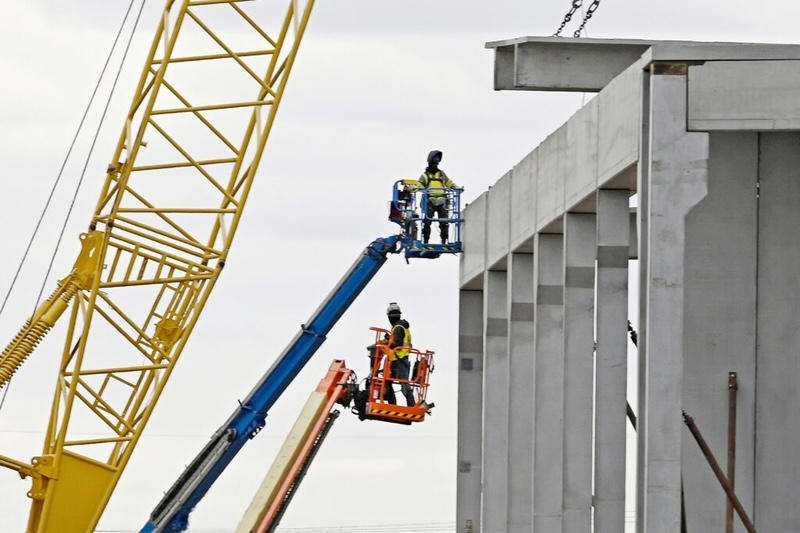
Crews work on the Applied Digital data center construction in Harwood, North Dakota, on May 6, 2026. (Photo by Dan Koeck/North Dakota Monitor)
A handful of environmental groups, and at least one legislator, are raising alarm about proposed changes to Maryland’s building code for new large commercial sites, arguing that the state’s amendments would weaken the national energy code that it is supposed to follow.
The groups believe that the proposal, crafted by Maryland’s Department of Labor, essentially allows builders too much flexibility to select — and potentially double-count — measures that would reduce the building’s overall energy use.
“It creates a lower baseline standard, and makes a bunch more things flexible,” said Del. Lorig Charkoudian (D-Montgomery). “In the end, the impact is lower levels of efficiency.”
Charkoudian is among those who believe that the agency’s changes to the International Energy Conservation Code, or IECC, could violate state law, which allows the state to adopt a code more stringent than the IECC — but not less stringent.
In response to questions from Maryland Matters, the state agency simply noted that it “appreciate[s]” the comments that have been submitted so far, and shared at a public meeting in Baltimore County this week.
“Upon the close of the public comment period, the Department will review all stakeholder input and make determinations about any further changes or modifications,” agency spokesperson Dinah Winnick said.
A public comment period on the regulations is open until July 27.
Charkoudian is a member of the Joint Committee on Administrative, Executive, and Legislative Review, or AELR, the legislative committee that reviews regulations before they take effect. In an interview Friday, Charkoudian said she has asked AELR to place a hold on the regulations so legislators can discuss them with the Department of Labor.
Committee Chair Del. Sandy Rosenberg (D-Baltimore City), said no decision has been made on Charkoudian’s request, but the committee gives “significant weight” to the opinions of committee leaders on the subject matter they cover. Charkoudian is also vice chair of the Economic Matters Committee.
For one thing, the 2024 version of the IECC requires that newly constructed large buildings, including warehouses, data centers and apartment buildings, generate a certain amount of renewable energy on-site, such as with a rooftop solar panel array.
But Maryland deleted the requirement, said Erin Sherman, a Maryland-based senior associate for the Rocky Mountain Institute, a nonpartisan nonprofit focused on energy policy.
“[It] is not a lot of renewable energy. It does not cover the entirety of a building’s electricity load in most cases. It’s a modest, likely cost-effective — in many cases, if not all cases— requirement. That is gone,” Sherman said at Thursday’s public meeting at a Labor Department office in Hunt Valley.
Maryland regulators not enforcing gas pipeline rules from 2025, consumer advocate says
The requirement is for 0.75 watts of renewable energy per square foot for the largest three floors of a new building, which isn’t a large amount, Sherman said. And buildings would receive reduced energy bills in exchange for the energy they generate on-site.
“If you’re concerned about up-front costs, I would suggest you don’t need to be. That modest solar array would pay for itself,” Sherman said.
Maryland’s proposal would also allow builders to double-count certain energy efficiency measures, reducing the overall amount of energy efficiency work that they are required to do, relative to the 2024 IECC.
“We strongly oppose double-counting of any kind. A code user should not be able to take double credit for a single efficiency measure in more than one section of the code,” said Sarah Newman of the Responsible Energy Codes Alliance during Thursday’s meeting.
If the measures become law, buildings will face higher bills and place greater strain on an already overwhelmed electricity grid, Sherman said, potentially causing an increased cost to the entire customer base, which pays for infrastructure upgrades. More energy use also means more climate pollution, Sherman noted.
“Instead of high-performance, grid-smart, clean energy-powered buildings, buildings will get higher energy bills. Those lucky enough to build brand new offices or warehouses will pass costs on to other ratepayers through higher peak demand than they otherwise would have,” Sherman said.
But Lori Graf, chief executive officer of the Maryland Building Industry Association, a trade organization representing home builders, said Maryland’s version of the IECC code — which will cover large multifamily residential buildings — would give construction companies more flexibility with energy efficiency credits, thereby reducing their costs and stimulating housing construction.
Every time the state adopts new codes, additional requirements tend to add costs for builders, Graf said. The 2021 version of the code was particularly difficult for builders to adopt, she said.
“The energy efficiency stuff was a little bit challenging,” she said. “Some of the requirements for insulation and some of the other things were very challenging — and had to, in some cases, require redesign.”
But it appears that this version in Maryland will be more flexible, and better received by the builders, said Graf, who added that her organization is still evaluating the proposed rules and plans to submit comments.
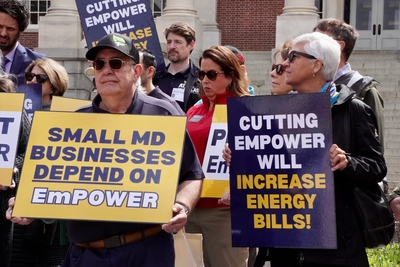
The reductions in energy efficiency requirements are all the more upsetting for Maryland climate advocates because of the recent cuts to the EmPOWER Maryland energy efficiency program. Under EmPOWER, all utility customers pay a surcharge on their bills, and those funds are used to provide home and building owners with free and reduced price energy-efficiency upgrades, including new appliances, insulation and weatherproofing.
During the most recent General Assembly session, lawmakers cut the program for the next few years, in an effort to lower the surcharge during a period of high electric bills. It’s estimated that their cuts will reduce the size of the program by about a third, though regulators are still determining precisely what cuts will be made to the program, starting in 2027.
Though advocates acknowledge Marylanders would pay a lower cost in the short-run, they believe that fewer investments in energy efficiency will result in higher energy use, necessitating costly infrastructure upgrades in the future.
“There are some shortsighted decisions that elected officials are making in response to a real concern that Marylanders have over energy affordability,” said Anne Havemann, deputy director and general counsel for the Chesapeake Climate Action Network.

Annapolis, MD