U.S. Sen. Katie Britt skeptical of one-year ACA subsidy extension
Nov 11, 2025 | 7:59 am ET
Description
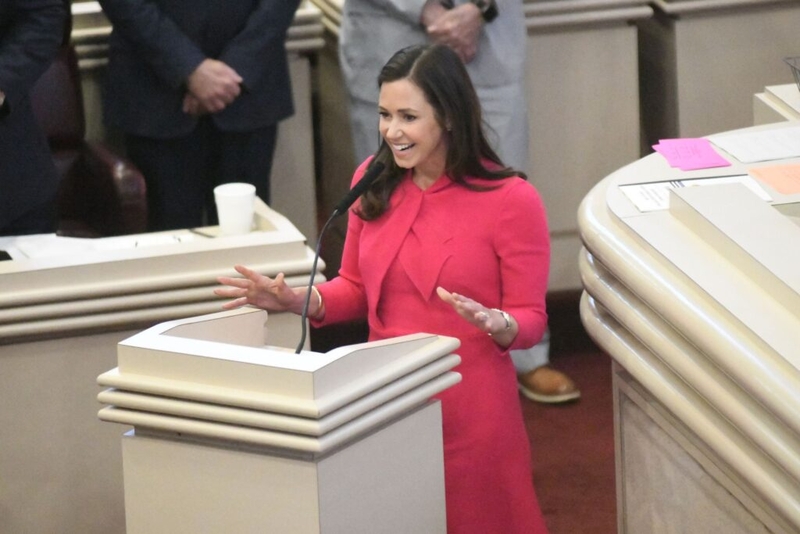
U.S. Sen. Katie Britt, R-Alabama, speaks on the floor of the Alabama House of Representatives on April 17, 2025 at the Alabama Statehouse in Montgomery, Alabama. Speaking to the Montgomery Area Chamber of Commerce on Monday, Britt expressed skepticism of a proposal to extend Affordable Care Act subsidies. (Brian Lyman/Alabama Reflector)
U.S. Sen. Katie Britt, R-Alabama, expressed skepticism Monday of a proposal to renew Affordable Care Act (ACA) subsidies one year.
Speaking to the Montgomery Area Chamber of Commerce via teleconference from Washington, Britt suggested that the proposal would not be sufficient.
“A proposal of just a one-year extension doesn’t deal with any of the issues that are in front of us on that,” Britt said of the Affordable Care Act. “There is no income cap for anyone who receives those subsidies.”
About 478,000 Alabamians, or 9.3% of the population, currently get health insurance through Affordable Care Act plans. The enhanced ACA subsidies, first approved by Congress in 2021 and extended the following year, lower insurance costs and make those making more than 400% of the federal poverty level eligible for tax credits through the marketplace. The subsidies are set to expire at the end of the year. That could lead to premiums more than doubling.
“The loss of the enhanced tax credits is going to result in 2026 health care premiums skyrocketing,” said Natasha Murphy, director of health policy at the Center for American Progress, in an interview on Monday.
Murphy said there had been fraud from some brokers and agents applying for assistance on people’s behalf, but that there had been safeguards put in place.
“The notion that individuals are, in every enrollment, enrolling in health coverage trying to get tax credits is definitely not the case,” she said. “People are not getting hard checks for their health coverage. These are funds that are going to the insurance company on behalf of their monthly premiums.”
Britt spoke a day after seven Democrats and one independent joined nearly all Republican senators in voting to advance a bill to end the federal government shutdown, the longest in history. The bill would restore aid for the Supplemental Nutrition Assistance Plan (SNAP) and return federal workers fired during the shutdown. It would not extend the ACA credits, the major sticking point for Democrats during the shutdown. Senate Majority Leader John Thune, R-South Dakota, said he will hold a vote on them in the Republican-dominated chamber.
“What we said is that we would take the budget as it currently exists, which ironically is President (Joe) Biden’s budget, and we would extend that for the next several weeks as we work to do our jobs,” Britt said during the event. “The reason we ended up having to do a continuing resolution is because we have not passed appropriation bills.”
The move will allow to approve four bills: the continuing resolution and three appropriations measures to fund the Legislative Branch, the Military Construction-Veterans Affairs and the U.S. Department of Agriculture and Food and Drug Administration through fiscal year 2026.
The continuing resolution would keep the government open through Jan. 30.
Appropriations for USDA was one of the most heavily publicized because it is the agency responsible for overseeing SNAP, which helps low-income households pay for food. It covers about 726,000 Alabamians. . The compromise funds the program for the remainder of the year.
Food banks saw increased need as more people sought their assistance as the benefits expired.
Two federal judges and an appeals court ordered the administration to use emergency funding to allow the program to continue, but the U.S. Supreme Court blocked the payment of benefits Friday.
Montgomery