Colorado wildfires: Latest updates on the 2025 fire season
Aug 12, 2025 | 6:13 pm ET
Description
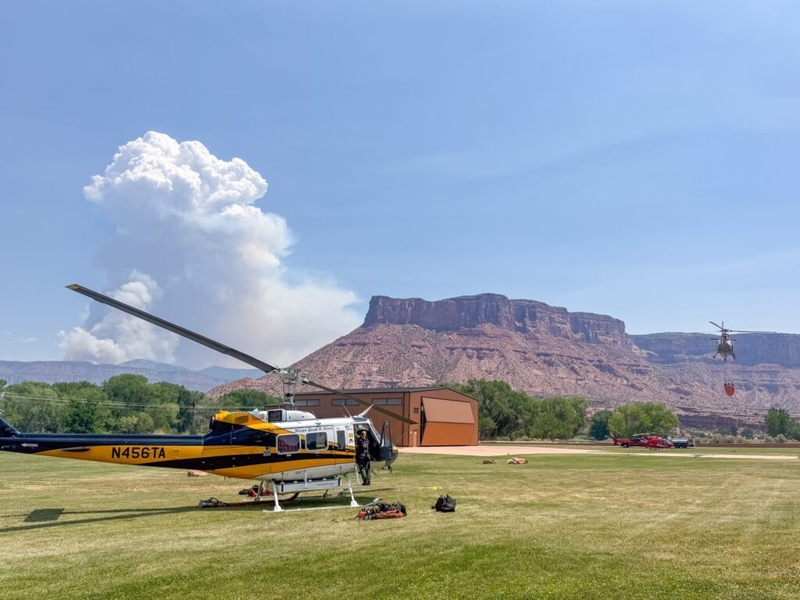
Firefighting aircraft respond to the Turner Gulch Fire near Gateway on July 15, 2025. (Mesa County Sheriff's Office)
Last updated: 11:28 a.m., Aug. 12.
Fueled by hot summer weather and persistent drought conditions across the western half of the state, wildfires as of Aug. 8 had burned more than 100,000 acres in Colorado in 2025.
By that time it was already Colorado’s worst fire year since 2020, when multiple historic blazes burned a record-setting 625,357 acres, according to National Interagency Fire Center data.
Drought conditions classified as “severe” or “extreme” extend across the majority of the Western Slope, according to the U.S. Drought Monitor. A critical fire weather advisory for western Colorado and several neighboring states has been issued by the Rocky Mountain Area Coordination Center, a Denver-based branch of the NIFC, and will remain in place through at least mid-August.
“After a dry winter with minimal snowpack fuel moistures are well below normal, and much of the region is under severe to extreme drought,” the agency warns. “Extreme fire behavior marked by rapid spread, torching, and resistance to control is being driven by critically dry … fuels, and drought-stressed brush and trees. As heat intensifies and fuel moistures decline further, fire potential will remain elevated across the area.”
Here is a look at three 2025 Colorado fires:
- The Lee Fire, west of the town of Meeker in Rio Blanco County, has burned an estimated 116,859 acres with 6% containment as of Aug. 12. It’s believed to have been caused by lightning on Aug. 2.
- The nearby Elk Fire, southeast of Meeker, is also believed to have been caused by lightning on Aug. 2. It has burned an estimated 14,549 as of Aug. 12, and is 30% contained.
- The Turner Gulch Fire, east of Gateway near the Colorado-Utah border in Mesa County, is 51% contained and has burned an estimated 28,569 acres since it was started by lightning on July 12.
Due to climate change, much of Colorado has grown hotter and drier in recent decades, increasing wildfire risk. The three largest wildfires in Colorado history all occurred in 2020, and the state’s 20 biggest fires on record have all occurred in the past 20 years. Rising levels of greenhouse gases, mostly the result of fossil-fuel combustion, have caused much of the Western Slope to warm by an average of more than 4 degrees Fahrenheit above pre-industrial levels, and the region’s current “megadrought” is its worst dry spell in at least 1,200 years.
Most wildfires are caused by human activity. To minimize the risk of sparking a fire, authorities urge visitors to national forests and other public lands to follow local fire restrictions, ensure that vehicles are properly maintained and trailer chains are secured, and avoid driving or parking on dry grass.
In 2017, the State Forest Service reported that more than 2.9 million Coloradans lived in the “wildland-urban interface” — areas at risk of being impacted by wildfires. Fire safety experts urge residents of such zones to familiarize themselves with the “Ready, Set, Go” system of precautions.
5 mins ago
Crosho Fire breaks out in Rio Blanco County, burns 300 acres
As the Lee and Elk fires continue to blaze in Rio Blanco County, a new fire sparked near the county’s border with Routt County on Monday night, officials reported. The new fire, near Crosho Lake and about 22 miles southwest of Steamboat Springs, has burned about 300 acres.
Evacuation orders were issued for campgrounds surrounding Crosho Lake, and pre-evacuation orders were issued for nearby areas. About 110 firefighters were on scene as of Tuesday morning, and no structures were immediately threatened, according to an update from Routt County officials.
For more information about the Crosho Fire, visit the Routt County website.
5 hours ago
Lee Fire amid ‘extreme drought’ spreads as officials prepare for Wednesday heat
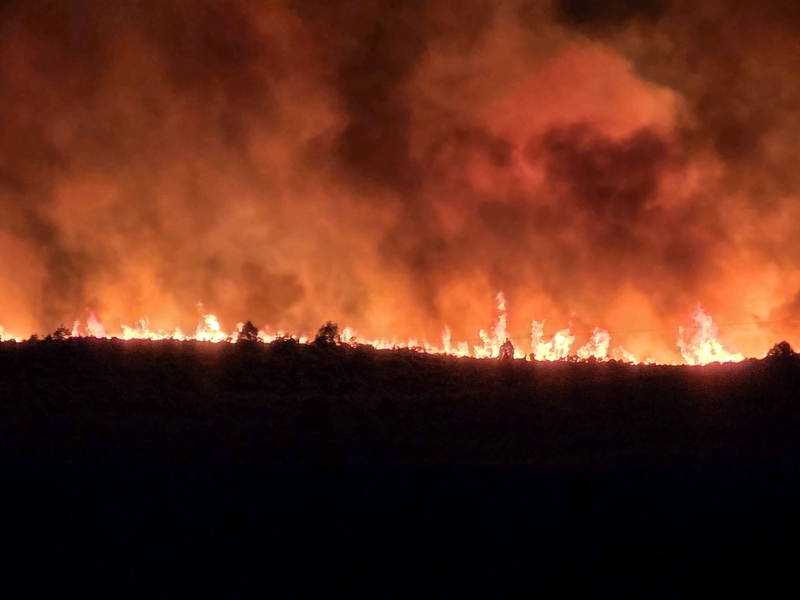
Containment of the Lee Fire west of Meeker has dropped slightly to 6%, compared to its 7% containment Monday. A Tuesday morning map of the fire, which is the fifth-largest in state history, showed 116,859 acres burned. That’s more than 3,000 new acres burned since Monday.
The Lee Fire started in Rio Blanco County and has spread toward Rifle in Garfield County, pushed by strong winds and dry conditions.
During a community meeting at Colorado Mountain College on Monday night, incident meteorologist Rose Schoenfeld said smoke conditions are expected to improve in Rifle throughout Tuesday as winds change. But fire crews still face challenges ahead, especially moving into Wednesday, Schoenfeld added.
“Wednesday is really the day to watch with regards to fire weather,” Schoenfeld said. “Wednesday is going to be warmer, and it’s going to be more of an unstable atmosphere.”
“In the past 30 days, we have gotten 5% of the normal precipitation, putting the area in extreme drought,” she added.
For information on road closures and evacuations, visit the Garfield County Emergency Operations Center website, the Rio Blanco County Sheriff’s Office Facebook and the Elk and Lee Fire Information Facebook.
Last updated: 11:23 am
1 day ago
Lee Fire becomes 5th largest in Colorado history as Oak Fire burns to the south
The Lee Fire near the town of Meeker in Rio Blanco County has grown to be the fifth-largest wildfire in state history as crews continued to battle fires in several parts of Colorado on Monday.
Dry weather and strong winds have pushed the Lee Fire south toward Garfield County, blazing through more than 113,000 acres. It was at 7% containment as of Monday. The fire was believed to have been caused by lightning on Aug. 2.
The state’s newest wildfire, the Oak Fire, sparked Sunday west of Pagosa Springs in Archuleta County. The blaze prompted mandatory evacuations in Elk Park and pre-evacuation orders in other nearby areas.
2 days ago
Lee Fire becomes one of biggest in Colorado history
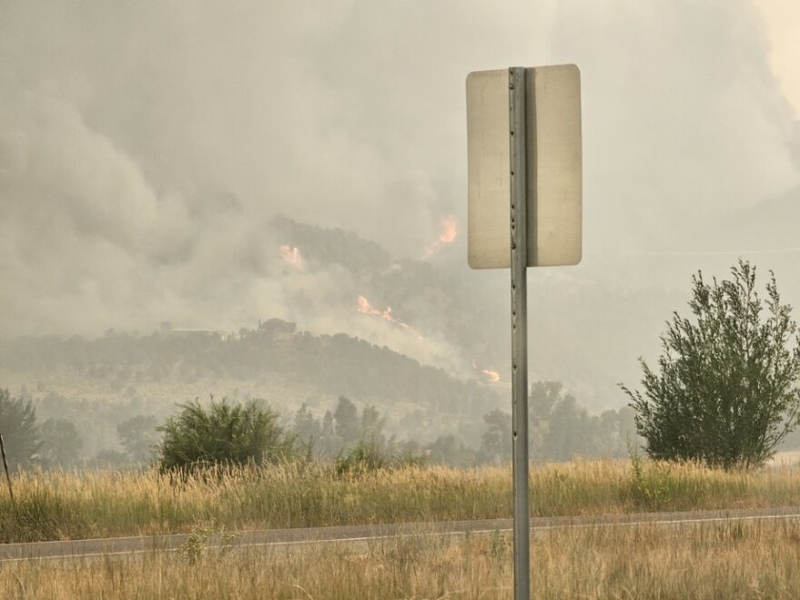
The Lee Fire in recent days became one of the biggest wildfires in Colorado history.
The fire, which began Aug. 2 in Rio Blanco County and has pushed south toward Garfield County and the Interstate 70 corridor, stood at about 107,000 acres Sunday, putting it in the No. 7 position among the state’s biggest fires. It was 6% contained.
The fire was believed to have been caused by lightning.
For information on road closures and evacuations, visit the Garfield County Emergency Operations Center website, the Rio Blanco County Sheriff’s Office Facebook and the Elk and Lee Fire Information Facebook.
2 days ago
Inmates evacuated from facility in Rifle
The Lee Fire in Rio Blanco County prompted the evacuation Saturday of all 179 people incarcerated in the Rifle Correctional Center, according to the Colorado Department of Corrections.
Evacuees from the minimum security prison at about 10:30 p.m. were relocated to the state prison in Buena Vista. No injuries were reported.
Staff members remained on site in Rifle working with emergency management personnel to “safeguard the facility and property,” according to a press release from the Department of Corrections.
The fire as of midday Sunday had grown to about 107,000 acres.
6 days ago
Western Slope wildfires already add up to Colorado’s worst fire year since 2020
High winds and extreme drought conditions in northwest Colorado have fueled the rapid growth of two wildfires this week near Meeker in Rio Blanco County, where firefighting crews say they’re prioritizing structure protection with “limited resources” on hand.
The Lee Fire, west of Meeker, nearly doubled in size Tuesday and has now burned 22,497 acres, predominantly on Bureau of Land Management land south of Colorado Highway 13. About 20 miles to the east, the Elk Fire is estimated at 8,304 acres in size. Both fires are believed to have been started by lightning strikes on Aug. 2.
With the latest growth, the estimated area burned in Colorado by 11 major wildfires in 2025 now stands at 64,196 acres, according to federal data. That doesn’t include smaller fires suppressed by state and local first responders, but it already makes for the state’s worst fire year since 2020.
Last updated: 12:58 pm
4 weeks ago
Turner Gulch wildfire nears 14K acres in western Colorado
The Turner Gulch wildfire near Unaweep Canyon northeast of Gateway is burning about 14,000 acres as of Wednesday afternoon.
“This fire remains active and continues to make significant advances to the east as winds become aligned with the terrain. Fire officials are developing a strategy to protect values while providing for safety of firefighters and the public,” said a Wednesday afternoon update from the Rocky Mountain Complex Incident Management Team 1.
The fire was caused by lightning on July 10. Winds have stoked the blaze in recent days.
Last updated: 12:58 pm
Denver, CO