While TANF cuts loom, Morrisey considers giving money to education group linked to his donations
May 27, 2026 | 1:00 pm ET
Description
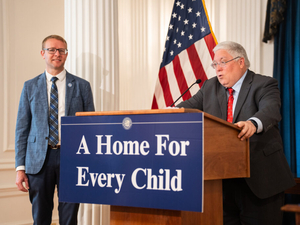
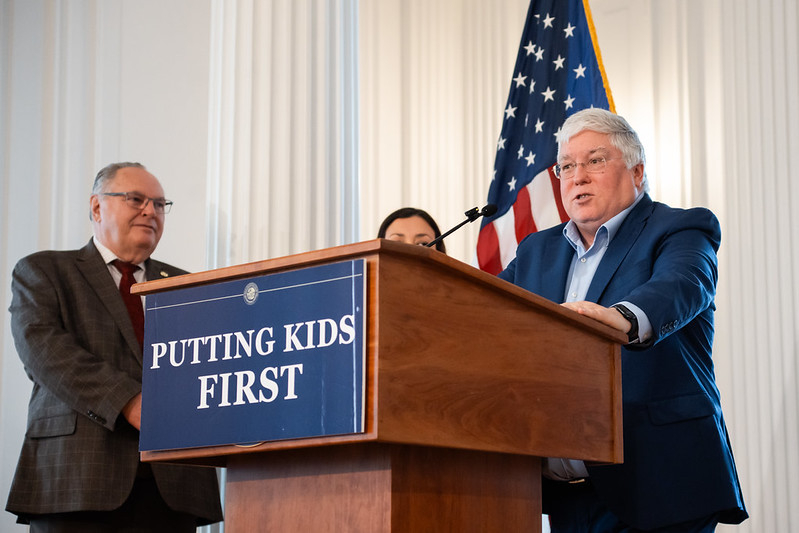
Gov. Patrick Morrisey, shown Jan. 6, 2026, wants to expand Star Academy, an education program for at-risk youth, in West Virginia using federal funds.(Photo courtesy of the West Virginia Office of Gov. Patrick Morrisey)
Gov. Patrick Morrisey is mulling over giving up to $16 million dollars of West Virginia’s federal anti-poverty grant to Star Academy, a for-profit education company that is supposed to help struggling middle-school students. At the same time, the governor has warned that he may have to cut funding to programs that help poor children access school clothes and food.
Star Academy CEO John Alvendia donated nearly $42,000 to Morrisey’s campaign and affiliated political action committees, as first reported by the Wall Street Journal in April. Star Academy is based in New Orleans.
The program has already been piloted in four areas — Charleston, Logan, Martinsburg and Philippi. Today, none of the Star Academy sites remain, according to the state Department of Education. One school district reported a lack of results.
Despite that, Morrisey is considering giving millions of dollars in federal Temporary Assistance for Need Families dollars to expand Star Academy across West Virginia.
It’s the same pot of federal money that the governor said has a projected $40 million deficit. After TANF received an infusion of COVID-19 relief funds, Morrisey said that supported programs’ budgets increased and stayed that way after pandemic dollars expired.
Lars Dalseide, the governor’s communications director, told West Virginia Watch that putting TANF funds towards Star Academy “is still in the proposal (and) planning stage.”
“Now, every program supported through TANF is being reviewed as part of the administration’s broader effort to address the program’s long-term structural deficit,” Dalseide said in an email May 19. “At the same time, the administration remains focused on supporting initiatives that produce measurable outcomes for at-risk youth and families.”
West Virginia uses TANF, known as WV Works in the state, to fund a number of programs supporting families and children and the state’s foster care system. It also provides temporary cash assistance to eligible families to purchase food.
Morrisey told reporters last week that the state may have to make cuts in its TANF funding for a clothing voucher program for low-come kids, the child care assistance program and community programs that help children and families with food, diapers, foster care support and more.
West Virginia Watch asked the governor about the connection between Alvendia’s donation to Morrisey and affiliated PACs and the potential use of TANF funds for Star Academy.
Dalseide wrote in response, “The governor’s decisions are always based on what is in the best interest of West Virginians.”
He said that the Morrisey administration needs to consult with the Legislature “on a responsible path forward before evaluating what programs make sense to add, maintain or change.”
“Right now, every option is being reviewed because we cannot continue operating at unsustainable COVID-era spending levels,” Dalseide said.
Star Academy sites already closed in West Virginia
In January, Morrisey announced that he wanted to expand Star Academy in West Virginia as part of his child welfare reform efforts. He said by helping at-risk children in school, it could help decrease the number of children coming into the state’s overwhelmed foster care system.
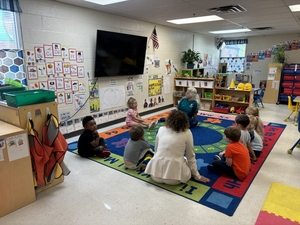
It’s a school-within-a-school model and provides specialized software, furniture and more. It focuses on hands-on instruction.
In a news conference, Morrisey said he’d use unspent federal TANF dollars to pay for the $8 million Star Academy expansion, and he said he’d need lawmakers to approve some changes to allow the expansion. Lawmakers didn’t take up any legislation dealing with the issue in the 2026 legislative session, which concluded in March.
Dalseide told West Virginia Watch that “Star Academy students in West Virginia have demonstrated measurable improvements in attendance, behavior and academic performance.”
“Early pilot results showed a 63% increase in attendance, an 81% reduction in behavioral incidents, 80% to 129% improvements in math performance, and a 33% improvement in reading fluency,” he said. “Those are meaningful outcomes, particularly for at-risk student populations.”
A spokesperson for Logan County Schools shared a different result of the now-defunct program, saying that standardized testing scores, attendance and discipline data “did not show marked improvement for students in the program compared to those who were not.”
In Berkeley County, Star Academy was piloted at Martinsburg North Middle School. It is no longer active.
“Approximately 80 students participated during the pilot period. As with many pilot initiatives, the district used the grant period to assess feasibility and alignment with the school’s needs. However, when we started to evaluate the cost sustainability and long-term implementation requirements, the district determined it was not sustainable at that location,” said Karla Troppman, executive director of communications for Berkeley County Schools.
Kanawha County Schools ended its Star Academy site under a previous administration and didn’t share why.
Star Academy didn’t respond to an email inquiry for this story.
TANF dollars can operate with little federal oversight and minimal reporting requirements. Some state legislatures have stepped in to dictate how and when TANF dollars are spent.
West Virginia lawmakers recently allocated $177 million in TANF funding in their Fiscal Year 2027 budget.
Morrisey has said that the state needs to have better tracking of TANF dollars.
“The program can go on potentially for up to 18 months, but we have to now make the changes that are going to make sure that there are no structural deficits within TANF,” Morrisey said on May 18. “This is all achievable, and we’re prepared to move forward administratively with the number of initiatives.”
Charleston, WV