Morrisey signals potential cuts to WV’s childcare assistance, clothing voucher program due to debt
May 18, 2026 | 2:02 pm ET

Description
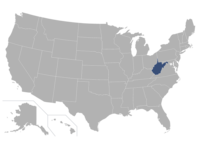
West Virginia has a projected $40 million deficit in Temporary Assistance for Needy Families funding. The West Virginia Department of Health and Human Resources is located at One Davis Square in Charleston, West Virginia. (Photo by Leann Ray/West Virginia Watch)
Cuts could be coming to West Virginia’s childcare assistance and a voucher program that helps low-income families afford school clothes.
Those programs — along with several children’s support services — are funded through Temporary Assistance for Needy Families money, a federal block grant that the states administer.
On Monday, Gov. Patrick Morrisey announced that the state has a projected $40 million deficit in its TANF funding. After TANF received an infusion of COVID-19 relief funds, Morrisey explained that programs’ budgets ballooned and stayed that way after pandemic dollars expired.
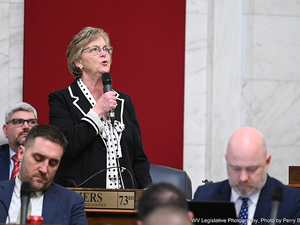
“The emergency spending levels created a big structural deficit, and quite frankly, we had these silos operating within (the Department of) Human Services that led to inadequate oversight of the TANF budget, so we’re obviously looking to fix that,” Morrisey said during a news conference at the state Capitol.
Deanna Palmer, executive director of the Lewis County Family Resource Network, worried about the potential impact on services for vulnerable children and families in her area. Her FRN offers parenting classes, GED support, job training and support for grandparents raising grandkids.
FRNs, which operated in all 55 counties, could see potential funding cuts due to TANF issues, she said.
“With six weeks to go until the end of our current fiscal year contracts, I am deeply concerned about the lack of information we have, and about the rumors we continue to hear about potential budget and contract cuts starting July 1,” Palmer said. “A reduction in services would directly impact families, and would mean loss of dozens of local jobs, across West Virginia.
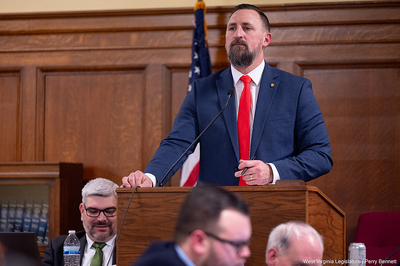
Del. Evan Worrell, R-Cabell, said, “I’m not going to support cutting childcare subsidies or clothing vouchers at all.”
“I’d like to see the data on how we’re $40 million in deficit on TANF, because our family support centers, our resource centers … they rely on these funds, so it’s a big deal,” added Worrell, who serves as chair of the House Committee on Health and Human Resources.
He questioned if the governor could reallocate the money after lawmakers already approved around $177 million in TANF funding in their Fiscal Year 2027 budget. It could require a special legislative session, Worrell said.
Morrisey also on Monday announced a number of state agency audits that revealed a potential $168 million in savings, but the audits did not contain information related to TANF or a program deficit.
“I know (Morrisey) just announced an audit through DoHS with potential savings there. Can we not fill that gap with that without cutting childcare?” Worrell said.
West Virginia uses TANF dollars to support a number of organizations focused on assisting foster children and vulnerable families.
West Virginia has a childcare subsidy program that offers income-based assistance to parents who are working or in school. It currently helps thousands of children access childcare.
Lawmakers recently passed their first hallmark childcare bill, which included better support for the childcare subsidy program. Supporters of the Republican-sponsored bill hoped it would expand childcare slots in the state by better supporting providers.
Morrisey declined to sign the measure before it went into law.
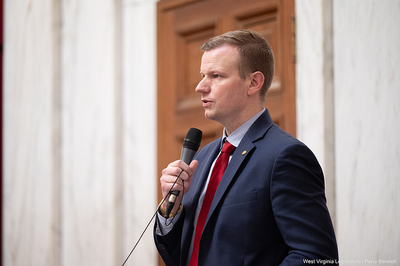
Del. John Williams, D-Monongalia, worried that any funding cuts to the childcare subsidy were “going to take three steps back after taking that one step forward.”
“I’m really concerned when you consider that childcare is a public utility that’s absolutely essential for families,” Williams said. “The cost of childcare as a percentage of household income is enormous compared to what it used to be. I think what we heard from the governor today was sort of a soft launch that he’s going to cut childcare dollars from TANF.”
Worrell said that it “just seems kind of weird to talk about cutting childcare subsidies that we just supported in this past legislative session.”
Potential funding reductions could affect family support centers around the state.
“Family Support Centers are the local backbone for West Virginia’s child abuse prevention infrastructure. They are one of the most effective strategies available to reduce the number of children entering foster care,” said Jim McKay is state director of Prevent Child Abuse West Virginia. “They are designed to help stabilize families before a crisis reaches a level requiring Child Protective Services intervention or a child’s placement in out-of-home care.”
Research shows a $4.93 return on investment for every tax dollar invested in Family Support Centers, he added.
West Virginia had around 4,200 TANF cases in December, according to state data. The federal dollars help support Legal Aid, Good News Mountaineer Garage, student support services and community and technical colleges, and more.
Morrisey said that the state needs to have better tracking of TANF dollars.
“The program can go on potentially for up to 18 months, but we have to now make the changes that are going to make sure that there are no structural deficits within TANF,” the governor said. “This is all achievable, and we’re prepared to move forward administratively with the number of initiatives.”
The governor plans to brief the Legislature on the potential changes.
“You’ll be seeing that we’ll have those briefings with the Legislature with an opportunity to solve a number of these problems,” he said. “We’re certainly committed to being fiscally responsible while also helping people who are very much in need, our kids and our families definitely need the help from that TANF program.”
- 3:22 pmThis story was updated to add a quote from Deanna Palmer, executive director of the Lewis County Family Resource Network.
Charleston, WV