What to know about the ban on kratom in North Dakota
Aug 05, 2026 | 6:05 pm ET
Description
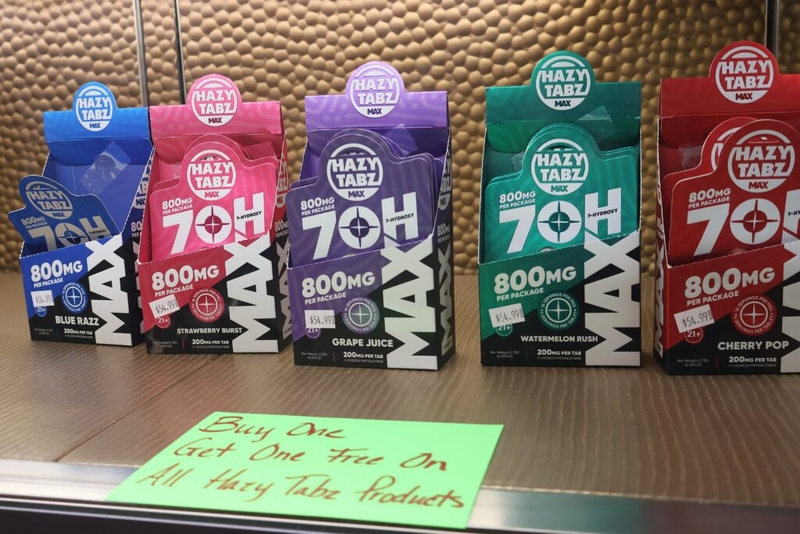
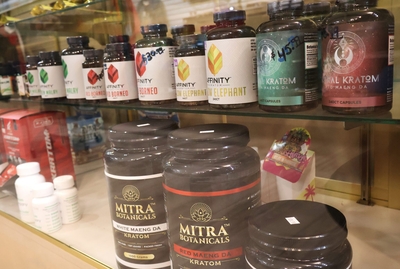
7-OH products, a concentrated synthetic kratom derivative, are displayed at a retail store in Bismarck on Aug. 5, 2026, hours before a state ban took effect. (Photo by Michael Achterling/North Dakota Monitor)
Kratom and derivative products are now illegal in North Dakota just days after Gov. Kelly Armstrong announced a ban on the substance and related derivatives.
Lawmakers are preparing to draft legislation restricting kratom for a special session. The attorney general has announced how to dispose of kratom products. And police and prosecutors will be dealing with enforcement.
Here is what to know about kratom, the ban in North Dakota and what officials are doing.
What is kratom?
Kratom is a substance derived from leaves of a tropical tree in Southeast Asia.
People use the substance, such as in capsule form, as an energy booster, for pain management and to cope with withdrawals from drugs such as fentanyl and heroin. Two psychoactive ingredients known as mitragynine and 7-OH are found in kratom leaves.
Gov. Armstrong announces special session, emergency actions to ban kratom in North Dakota
Kratom can act as a stimulant or a depressant, depending on its levels and how it mixes with other drugs.
Why are officials reacting this way?
The governor linked overdoses and deaths to readily available, unregulated products in gas stations and smoke shops. Officials say those items contain addictive, highly potent, synthetic kratom derivatives, such as 7-OH tablets, often in colorful packaging with candy-like names.
Since 2021, kratom or related substances have been part of the primary cause of 23 deaths in North Dakota, and a contributing cause in one additional death, according to the State Epidemiology Office.
Kratom-related calls to Poison Control leapt from seven in 2024 to 22 in 2025, according to a state epidemiologist report.
The governor’s actions follow a move by the U.S. Drug Enforcement Administration last month to temporarily classify 7-OH and three related kratom derivatives – but not certain botanical kratom items – as controlled substances. Ten other states, mostly in the South and parts of the Midwest, have banned kratom products, according to Armstrong’s office.
In addition to his executive order banning kratom products for 30 days, Armstrong called a special session of the Republican-led Legislature to pass kratom restrictions, beginning Sept. 2.
He also authorized an emergency rule of the state Board of Pharmacy, effective Wednesday, to ban 7-OH as a controlled substance, similar to the DEA. That rule is in effect for about six months as an emergency rulemaking process unfolds, which will include hearings and public comment.
Growing concerns prompt calls to address kratom substances in North Dakota
How to dispose of kratom
Attorney General Drew Wrigley’s office on Wednesday publicized a list of sites where retailers and consumers may dispose of their kratom products.
The locations include take-back sites at local law enforcement agencies and MedSafe sites at certain pharmacies, comprising about 200 dropoffs statewide.
People also may dispose of kratom products in the trash, per the state Board of Pharmacy.
Wrigley’s office emailed law enforcement agencies Wednesday morning, stating: “During these initial hours and days, we encourage an enforcement approach focused on providing notice and securing voluntary compliance going forward.”
Under Armstrong’s executive order, people may not knowingly or intentionally create, manufacture, deliver, distribute, sell, purchase or possess kratom or related products. Violations are punishable as an infraction up to a $1,000 fine.
Sen. Jeff Magrum, R-Hazelton, who takes natural-leaf kratom capsules for back pain, said he’ll have to dispose of his supply.
“I’ve always abided by the laws of the land, so I don’t know why I wouldn’t now,” he said.
Under the board’s emergency rule effective Wednesday, 7-OH is classified as a Schedule I controlled substance, the same as LSD and heroin, with higher penalties than an infraction, Board Executive Director Mark Hardy said.
Bismarck police will respond to calls for service related to kratom or kratom products, whether at a smoke shop or on the street, Lt. Luke Gardiner said.
The Burleigh County Sheriff’s Office plans to “take appropriate action” if officers encounter the substance during traffic stops, Maj. Jim Hulm said.
“Our guys are constantly taking drugs off of traffic stops, so I know they’re already out there looking for anything out of the ordinary,” Hulm said.
How one seller has responded
Taunya Davenport, co-owner and operator of Smokey’s House of Pipes in Bismarck, said a lot of customers who buy the kratom natural leaf supplement use it for pain management.
The store previously sold 7-OH products, she said, but discontinued those sales after hearing about the addictive and other negative aspects about 7-OH products. Davenport added the store recently brought 7-OH items back due to demand.
She was surprised Armstrong banned natural-leaf kratom in addition to 7-OH, especially after he said during a news conference he had learned about kratom three weeks ago.
“How can you make such a quick decision about that, just learning about it?” she said.
Davenport said she hopes lawmakers will take time to learn about natural kratom leaf products before potentially outright banning them.
The store planned to remove and dispose of all of its kratom products and will try to send back its 7-OH items to distributors. The store expected to take a revenue loss on the natural-leaf kratom. Neither substance is a large portion of the store’s revenue, she said.
What are lawmakers doing?
The Legislature’s Republican majority leaders announced a working group led by Sen. Michelle Axtman and Rep. Pat Heinert, both R-Bismarck, to meet with executive branch agencies to draft legislation for the special session.
The five-member, all-Republican Kratom Working Group is set to meet at 9 a.m. Friday at the state Capitol. The meeting is open to the public and will be livestreamed. The agenda does not include opportunity for public comment.
Armstrong’s executive order calls on the Legislature to consider and pass laws to regulate or ban various activities, such as delivery, distribution, sale, possession and mislabeling, as well as to set criminal penalties.
Lawmakers are likely to consider something between a complete ban or narrower prohibitions and age restrictions, Axtman said.
Sen. Janne Myrdal, R-Edinburg, who sits on the Senate Judiciary Committee which might hear the legislation, said she leans toward a total kratom ban, but wants to see what the proposed legislation says.
“The drug industry is going to keep coming up with synthetics, and I think synthetics need to be banned outright, period,” Myrdal said.
Legislative Management, a powerful interim committee of lawmakers, meets on Aug. 17 to consider bill drafts for the special session, which might cover other topics.
What about prosecutions?
The kratom ban will be treated no differently than any other law violation, North Dakota Association of Counties Executive Director Aaron Birst said.
“For me, I look at the governor’s action as a temporary ‘take-this-serious, it’s-against-the-law,’ and then the Legislature will deal with it,” said Birst, a former prosecutor.
County state’s attorneys would primarily enforce the governor’s order, Birst said. Given how new the prohibition is, some people might not know of it, but prosecutors have great discretion over what cases they pursue, he said.
What resources do people have?
State officials have directed people in crisis to call or text 988, which offers support for suicide, mental health, substance use and other crises around the clock, or contact 211, which helps connect callers with local resources.
In anticipation of more awareness of those phone numbers, FirstLink shared information with its helpline specialists, such as educational resources from Parents LEAD and guidance on services, Executive Director Jennifer Illich said.
“From our perspective at FirstLink, it’s important for people to know that support is available,” she said via email.
The Behavioral Health Division of the state Department of Health and Human Resources offers resources at 701-328-8908 during the week, State Health Officer Sherry Adams said during Monday’s news conference. Adams was not available for an interview Wednesday, a spokesperson said.
North Dakota Monitor reporter Michael Achterling contributed to this story.
Reporter Jack Dura can be reached at [email protected].
Bismarck, ND