U.S. education department plans to close office for English learners, raises concerns for Virginia
May 22, 2026 | 5:26 am ET
Description
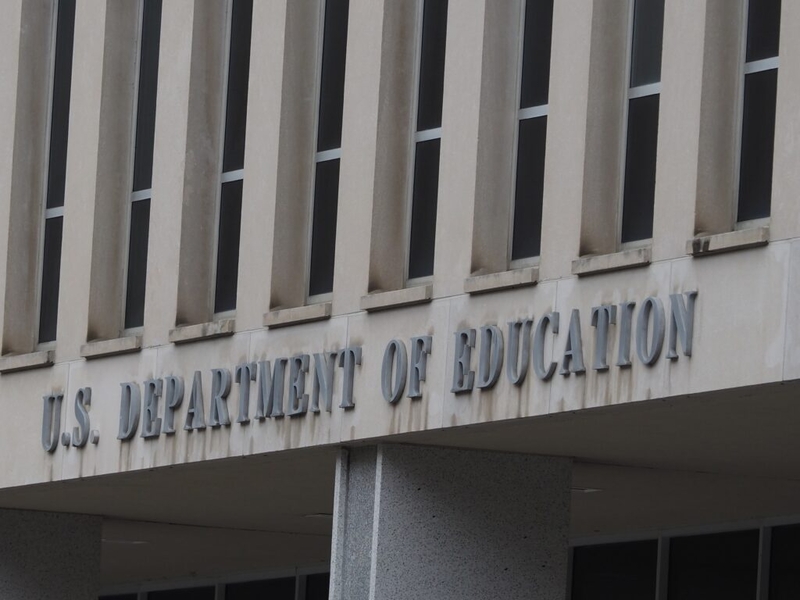
The U.S. Department of Education on Feb. 20, 2026. (Photo by Shauneen Miranda/States Newsroom)
The U.S. Department of Education’s move last week to dissolve an office dedicated to ensuring that English learners and immigrant students gain English proficiency and academic success has prompted uncertainty among Virginia’s schools and students.
The Virginia Board of Education’s changes to learning accountability standards heightens the potential impact of the federal shift. About 11% of Virginia’s total students who are English learners could now face more state testing and be less equipped to succeed.
English learners have typically been excluded from accountability testing because some are learning English for the first time and may need more time to become proficient. Under the previous regulations, approximately 35,000 students were excluded. The federal government funds support for English learners through Title III funds, associated with the Elementary and Secondary Education Act.
“The VDOE remains steadfast in its commitment to supporting divisions and teachers meeting the needs of our multilingual students,” the agency said in a statement on Tuesday in response to news of the federal Office of English Language Acquisition’s coming closure. “The federal Title III funds are critical to ensuring this work remains uninterrupted.”
K-12 Dive reported about the closure on May 14.
The planned dissolution of the office is part of a larger plan by President Donald Trump’s administration to abolish the Department of Education.
“The American people elected President Trump with a clear mandate: to sunset a 46-year-old, $3 trillion failed federal education bureaucracy in Washington, D.C., and return authority to where it belongs, to parents, teachers and local leaders,” U.S. Education Secretary Linda McMahon told U.S. House education committee members May 14.
Opponents of closing the federal education department, including Virginia’s state and federal Democratic lawmakers, have cautioned that moving operations to other agencies will negatively affect students, schools, educational services and communities.
For the time being, the Office of English Language Acquisition’s website is still active.
Mary Christina Riley, assistant secretary with the U.S. DOE, wrote in February to lawmakers that McMahon’s plan was to move the functions for administration of grant programs in the OELA to offices within the Office of Elementary and Secondary Education.
She indicated that the relocation is meant to ensure “better alignment of programs within OELA to their intended purposes and to programs with similar purposes, streamlining efficiency of program administration.”
But House Democrats, including Education and Workforce Ranking Member Del. Bobby Scott, D-Newport News, signed and sent a May 12 letter to McMahon, urging the agency to stop its plans to dissolve the OELA. They argued that eliminating the office would disrupt services for more than five million English learners nationwide.
“Eliminating OELA as a standalone office would weaken the department’s capacity to support ELs,” the letter states, adding that “the department’s decision will undoubtedly disrupt the administration of programs designed to support English learners.”
The Legal Aid Justice Center, meanwhile, is urging Virginia lawmakers to do a better job of supporting students learning English and their families.
Based on school-year data from 2024-2025, the Justice Center found that EL students were 15% less likely to graduate within four years than their non-EL peers. EL students also scored between 30% and 50% lower on Standards of Learning assessments compared to non-EL students.
The organization called for improved data collection on EL students and stronger accountability for local school divisions in how they use EL education funding. The group also recommended making state learning assessments available in more languages and increasing EL funding.
Gov. Abigail Spanberger signed legislation, successfully carried by Sen. Stella Pekarsky, D-Fairfax, and Del. Atoosa Reaser, D-Loudoun, which required all public schools to ensure that parents who don’t speak English well can fully understand and participate in their child’s education.
The law goes into effect on July 1, 2027.
Alexander Blocker, Youth Justice Program senior organizer with the Legal Aid Justice Center, said Virginia and other states are seeing growth in English learners, underscoring the need for support from all levels of government.
“We’ve made real progress at the state level in better supporting students learning English, but the federal government still plays an important role in providing expertise and overseeing how Title III funds are used so they’re as effective as possible, and that’s not a role the state can easily replace,” Blocker said.
“Closing the Office of English Language Acquisition removes a key resource for English learners at a time when we need more support for them, not less.”
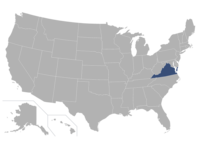
Richmond, VA