University of Northern Iowa to lead collaborative religious studies initiative
May 26, 2026 | 4:48 pm ET
Description
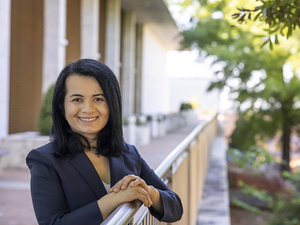
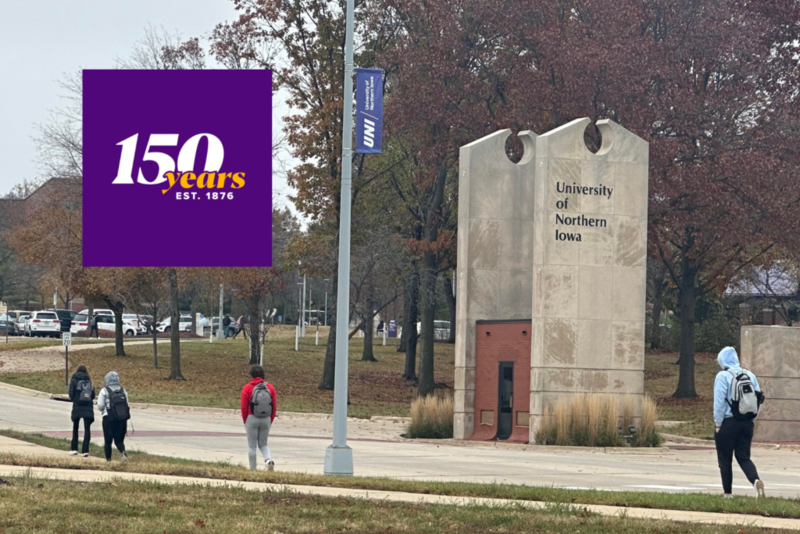
University of Northern Iowa professor Cara Burnidge has received a grant to launch a collaborative religious studies initiative with the University of Iowa and Iowa State University. UNI is celebrating its 150th anniversary in 2026. (Photo by Brooklyn Draisey/Iowa Capital Dispatch, Logo courtesy of University of Northern Iowa)
As religious education reckons with low enrollment and increased scrutiny, one University of Northern Iowa professor is working to bring together scholars and educators of religion across state universities to assess the state of religious studies in higher education and plot its future path.
UNI Associate Professor of Religion Cara Burnidge has been awarded a $30,000 grant from the Wabash Center for Teaching and Learning in Theology and Religion to form Cornbelt Colloquia. The two-year, collaborative initiative with religious studies faculty at the University of Iowa and Iowa State University will have them take a deeper look at their programming as state lawmakers and Iowa Board of Regents’ attitudes continue to move more toward workforce needs.
“There are a lot of changes happening in higher education in Iowa and across the country, and it struck me as the perfect time to gather faculty together across all three public institutions to reinvigorate, renew, revision our life as educators in Iowa, and that’s exactly what we plan to do,” Burnidge said.
Faculty from each university will meet virtually and in person to provide updates on their own programs and shifts they’re seeing, identify what they want to bring into their own teaching and brainstorm goals for the future of religious studies in Iowa public higher education, Burnidge said.
This could range from reimagining courses and curriculum to developing ways to work across institutions on student education and community engagement.
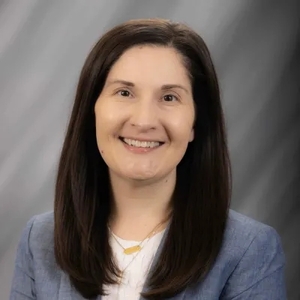
However, Burnidge said the most important aspect of collegiate religious study is to provide opportunities to discuss religion “civically and civilly with people who are not members of your family or your community,” something that can be hard to learn how to handle but is helpful down the road in critical thinking, adaptiveness and empathy.
“We think that it’s really important for everyone in our community to know a few things about different religions, that that content knowledge makes for better neighbors, better communities, better coworkers, a better state of Iowa,” Burnidge said.
When Burnidge enrolled in “Religion in America,” an undergraduate class at Washburn University in Kansas, her professor for the course said it would change her life. While she said she didn’t think much of it at the time, it turned out to be true — Burnidge says the same thing to students in her own “Religion in American History” class.
College students “are usually very interested in learning about religion,” Burnidge said, but it’s become more difficult to show students the impacts of the college experience outside of their required courses and career preparation. The “soft skills” religious study imparts on students are helpful in any industry or field, as they will learn about analyzing complex ideas and text, balancing competing perspectives, understanding cultures and traditions not familiar to them and more.
Reimagining religious study as programs merge, close
While UNI faculty in world religions and philosophy decided more than a decade ago to include pre-professional development in their programs, Burnidge said areas of religious study at all three of Iowa’s public universities are undergoing changes.
Iowa State University announced in April plans to close 10 academic programs, of which undergraduate religious studies was one, and either merge or consolidate 13 more. While none of the six UI programs approved for closure this spring are religious studies, it will merge with the university’s classics department this fall.
At UNI, Burnidge said changes set to go into effect in July include the merging of the department of philosophy and world religions and the history department — a move she said both departments voted unanimously for and one that will allow them to be more efficient with course offerings — and the combining of the religious studies and philosophy programs into one major, with different pre-professional tracks.
Religious studies programs are closing in private higher education as well, with Cornell College identifying the area of study for elimination in December after reviewing student interest and enrollment.
Lawmakers’ scrutiny plays a role
Burnidge said the news from ISU and the “greater scrutiny” her and the UI programs are seeing from the Iowa Board of Regents and the Iowa Legislature have brought her both concern and hope for new opportunities like the colloquia. The Cedar Falls university was ahead of the curve in reimagining its religious studies program, she said, and she and her colleagues still encourage other educators across the country to shift to a more “skills-based curriculum.”
“We see an alignment with the State of Iowa, the board of regents in this concern,” Burnidge said. “We have long held the view that religious studies builds important skills that every student can benefit from, and every industry needs.”
Once the initiative ends, ideas and resources developed by the group will be made available across the U.S. through the American Academy of Religion and other organizations.
One of the reasons for this is because Iowa is a “national leader” in university collaboration, but Burnidge said Iowa is also a great place to study religion due to its religion demographics mirroring that of the U.S. as a whole, with an around 60% majority identifying as Christian in some way and just over a quarter identifying as “religiously nonaffiliated.”
“Iowa isn’t the only state that’s reimagining higher education in this moment, but we are one of the few states that’s working across institutions to reimagine our discipline,” Burnidge said, “and we’re excited about that, and we want to share that effort with other with colleagues who are institutions experiencing similar issues.”
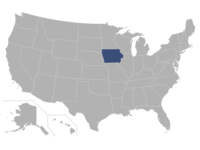
Des Moines, IA