Rhode Island rural health projects take shape with $156M federal award
Sep 23, 2026 | 6:17 pm ET

Description
Dr. Milton J. Liu treats a dental patient at Wood River Health in Hopkinton. The health center serves several of Rhode Island’s state-designated rural communities and operates a twice-monthly dental clinic on Block Island, where access to routine dental care can require off-island travel. (Photo by Seth Jacobson/Seth Jacobson Photography)
The federal government infused $50 billion into rural healthcare last July when President Donald Trump signed into law H.R. 1, also known as the One Big Beautiful Bill Act.
How Rhode Island will spend its $156.17 million initial share of the nationwide, five-year Rural Health Transformation Program awards is now taking shape ahead of the federal Oct. 30 deadline to obligate the funds for the first year.
“How do we do that in places that don’t have doctors right now, that don’t have a physical doctor’s office to put people?” Christopher Ausura, the Executive Office of Health and Human Services’ director of policy and community investment, said during a virtual meeting Wednesday morning of the Rural Stakeholder Advisory Council.
The meeting brought together state officials and providers to focus on the 18 of the state’s 39 municipalities that fall under the Ocean State’s own version of the “rural” label. One common federal standard is to base rurality on census data, largely how far a particular community sits outside a metropolitan area — so most of Rhode Island is considered metropolitan because few municipalities are far away from a city, leaving only Block Island and Westerly federally designated as rural. Rhode Island, meanwhile, defines a rural community as having fewer than 25,000 residents and fewer than 1,000 people per square mile.
The 18 municipalities are home to about 195,800 residents, or 17.9% of the state population. The transformation program is meant to improve access to healthcare in communities facing primary care shortages, or a dearth of specialists, dentists or behavioral health providers — even if the communities may appear different from the outside.
Ausura noted that some of the communities have no healthcare providers, while several have a very small pool of practitioners or infrastructure.
But the state is not advocating merely throwing money at places with poor infrastructure, Ausura noted.
“One, there’s going to be an upper limit of how much they’re going to be able to take, how much practice transformation is sustainable in those practices with the patient populations that they have,” Ausura said. “And secondly, if we collectively as a state only invest in the places where there’s existing infrastructure, we’re not transforming healthcare. We’re just piling onto the places where it currently exists.”
Executive Office of Health and Human Services spokesperson Kerri White said via email Wednesday that the state is on track to meet the Oct. 30 deadline to obligate all funds.
She also clarified the communities without physicians: “When you look at the ratio of physicians per 1,000 residents, Exeter, Glocester, Little Compton, New Shoreham (Block Island), Richmond, and West Greenwich have no local physicians,” White wrote.
The options discussed by the advisory council — its full membership, officials said, is not online but is expected to be soon — to provide healthcare in hard-to-reach places included mobile clinics, community-based care and telehealth.
State health officials stressed during the meeting that they are open to feedback about the best ways to implement the state’s intended slate of 13 programs. The federal grant application and subsequent state budget amendment detailed the various buckets into which the funds will ideally flow, such as mobile dental care, nutrition programs, maternal and child health services and improved telemedicine capacity in schools.
But like the various definitions of rurality, stakeholders also had different ideas about what some of these initiatives would mean in practice. Alison Croke, president and CEO of Wood River Health — which has a main office in the village of Hope Valley in northern Hopkinton and a satellite in Westerly and offers services at least twice a month on Block Island — wondered during the meeting what “mobile” treatment would actually look like. It sounded to her like a traveling vehicle.
“Trying to achieve having a vehicle and expecting people to go and seek their healthcare on said vehicle is probably not realistic,” Croke said, “and [it] might not achieve the program goals that you’re looking to achieve.”
Croke said in a follow-up email to questions from Rhode Island Current, “Conceptually, bringing health care into the local community is a great idea.” But she added, “Expecting patients to want to be seen for primary care in a vehicle is less realistic.”
Mobile treatment works better in urban areas, where pedestrians and public transportation make getting to the vehicle itself a more viable option, Croke said. In the towns Wood River Health serves, the coverage area is too large and lacks public transportation, she said. She suggested a nurse practitioner-led team and home delivery of care for chronic issues or behavioral health, plus some additional funding for services like Wood River’s health center van.
Wood River operates a dental clinic at the Block Island Health Center twice a month for patients of all ages, including those on Medicaid. Croke said appointments are always fully booked, although the service’s waiting list remains short.
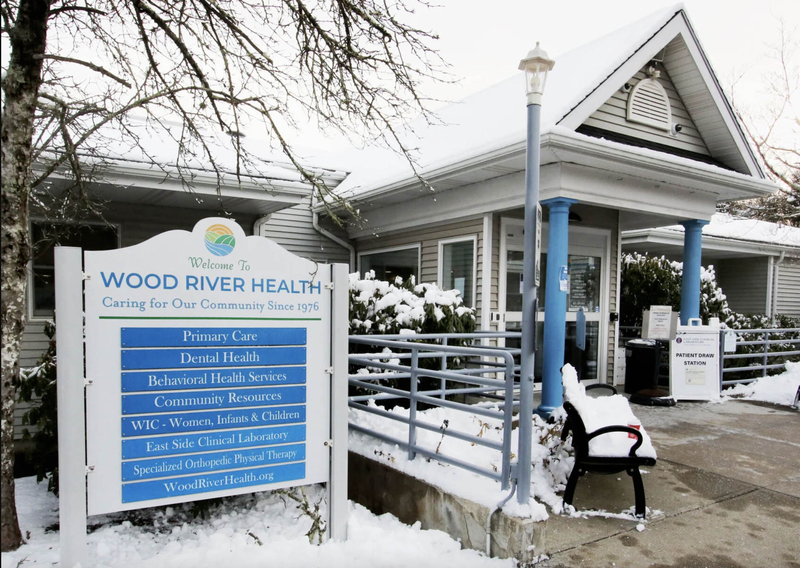
Before the clinic, Croke wrote, “Medicaid patients, including kids, would need to take a full day and travel off-island to seek routine care. Not all families are able to do this, which causes delay in routine care and can lead to oral disease and decay.”
But figuring out the most effective — and fiscally shrewd — ways to deliver crucial healthcare to rural Rhode Island with the new grant money is exactly what the advisory council exists to discuss.
Jessica Patalano, a contractor and physical therapist who is leading the mobile health project for the state health department, said officials are open to different design options that would allow more complete coverage of the state’s rural areas. Block Island, she noted, was excluded from initial plans for the mobile unit because of “the challenges of getting on a ferry.”
Still, psychotherapist and counselor Kerri Gaffett, who runs her practice out of Wickford and was invited to speak at the meeting, thought that mobile services could uniquely benefit Block Islanders.
“A lot of my Block Island clients will come to Wickford for the privacy aspect of it,” Gaffett said.
But not every medical visit requires such privacy: “It takes a whole day to go to the dentist or to go to seek mental health or behavioral health or any kind of care, right?” Gaffett said. “We have a small community, so a mobile health team makes a lot of sense for Block Island.”
“If we need to pivot, then we will pivot,” Patalano said.
Christina Angelone-Gatteri, a licensed mental health counselor and outpatient director of Gateway Healthcare’s Washington County region, noted to Croke’s point that “mobile… really implies a vehicle bringing the treatment team around.” She added that a community-based treatment model can involve the same care team traveling to homes or other community venues without having to lug a van around.
Health and Human Services spokesperson White said Wednesday evening that the mobile health initiative involves more than just clinical vehicles. She said it’s meant to expand healthcare access beyond clinics and hospitals into places “where rural residents live, work and congregate,” with mobile health units as one part of this strategy.
White said about $7.2 million has been allocated in the current budget to rural community-based and mobile health services, one of the 13 initiatives funded for the first year through Rhode Island’s federal grant. Among the mobile programs being funded are dental and family medicine services, the Women, Infants and Children (WIC) nutrition program, behavioral health services and other mental health supports for schools, and the Dare to Dream program, which assists youth with special healthcare needs.
Other investments across the entire grant program include workforce development, behavioral health services, health information technology, hospital-at-home care and expanded EMS services. The state has until Sept. 30, 2027, to spend the first-year grant money.
The Rural Stakeholder Advisory Council is scheduled to meet again on Oct. 28, with plans to discuss the program’s data infrastructure.
- 8:48 pmUpdated to include comments and information from Rhode Island Executive Office of Health and Human Services, and also reflect the Oct. 30, not Oct. 1, deadline for obligation of first-year funds.
Providence, RI