Childcare workers struggle to afford care for their own kids. NC communities are testing solutions.
Description
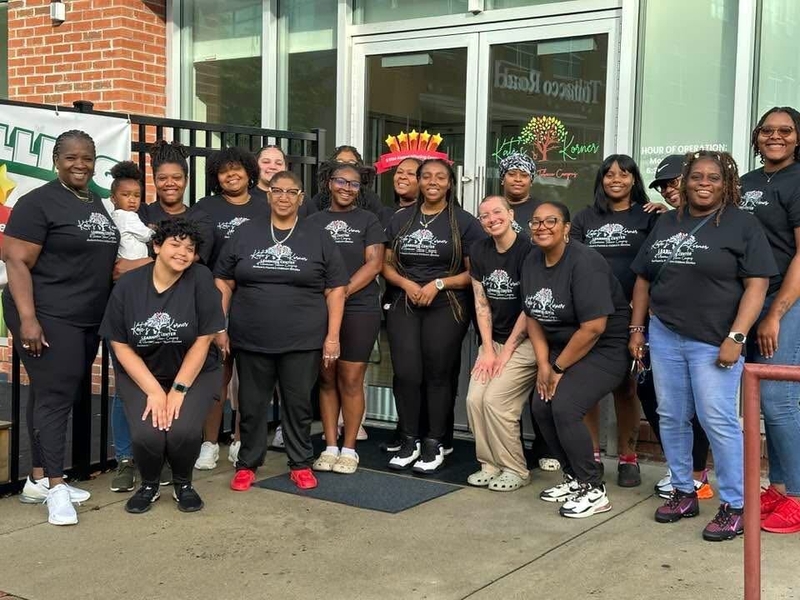
The staff of Kate's Korner Childcare Center stands in front of the entrance in Durham. (Photo: Courtesy Kate's Korner)
DURHAM — At Kate’s Korner, the day begins early – children arriving, classroom doors opening, small voices calling for teachers, parents saying quick goodbyes before heading to work.
For the childcare center’s staff, the morning comes with one less worry: they don’t have to figure out how to pay for care for their own children.
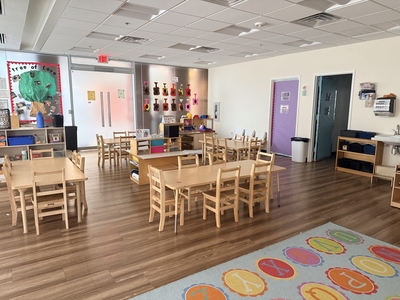
The center provides employees with free childcare, a benefit owner Kate Goodwin says is an intentional investment in the workers who care for other people’s children. Some employees use vouchers, but for those who can’t, the center covers all but one week of care a month.
“As a business owner, I made a decision that my margins will be slimmer than most because I felt like this was the commitment I needed to make,” she said. “What we hear often is that our childcare providers can’t pay for the type of care and education they’re providing to others for their own child,” she said.
The approach comes as childcare providers across North Carolina continue to grapple with recruiting and retaining workers.
If childcare workers can’t afford care for their own children, it becomes harder for centers to maintain the workforce they need. Staffing shortages take the shape of smaller classrooms, shorter hours and reduced enrollment.
Kate’s Korner isn’t alone in offering childcare for its employees. In a survey of about 1,200 childcare providers across the state, 61% of directors said their programs already offered a childcare benefit to their employees.
But the way those benefits are funded varies. At Kate’s Korner, Goodwin said the center absorbs most of the cost. Meanwhile, other communities are testing whether businesses, nonprofits and governments can help shoulder that expense.
A local experiment
Watauga County offers an example of how communities can help offset those costs, while also supporting the broader workforce.
North Carolina’s labor force participation rate, or the percentage of those working or actively looking for work, is hovering around 58%, which is lower than the national average of around 61%. Business leaders say a lack of affordable childcare is a big part of the problem.
NC budget offers rural childcare businesses financial help they’ve sought for years
Childcare is one of the state’s lowest-paid professions. A study from Appalachian State University found that childcare workers earned an average of $30,600 a year, while the median monthly cost of childcare was $900. For a worker earning that average salary, one child in care would consume about a third of their gross income.
And for workers earning even less, including in rural counties, the cost of caring for their own children can push them out of the industry in search of higher-paying work.
To help ease a shortage of childcare in Watauga, the Boone Area Chamber of Commerce Foundation launched a childcare assistance initiative last year to help childcare workers pay for the care of their own children with $40,000 in funding from local donors and businesses.
The program provided assistance to 18 childcare employees with 22 children, averaging $684 per child.

David Jackson, president of the chamber, said programs like the one in Watauga can also help strengthen local workforces by giving employees another reason to stay with a center.
“Center directors do not want to see their staff members just essentially handing their paycheck back,” he said.
The initiative is part of a larger effort to support the childcare workforce and help providers who are still recovering from the loss of federal funding that helped stabilize the industry.
A statewide model
Kentucky has taken a different approach to supporting providers statewide by investing state dollars.
The state launched its Free Child Care for Child Care Workers Program in 2022, which subsidizes care for workers who work at least 20 hours a week at a center, regardless of household income.
Kate Shanks, senior vice president of public affairs for the Kentucky Chamber of Commerce, said more than 5,300 families working in childcare benefited from the program over the past year.
She said lawmakers made the program permanent earlier this year.
“Quality childcare is a critical part of Kentucky’s economic infrastructure,” she said. “Childcare professionals provide an essential service that allows thousands of parents to go to work every day.”
At least nine other states have since enacted similar policies, according to the Kentucky Chamber of Commerce.
Goodwin said she supports creating a similar program in North Carolina to subsidize childcare for workers at centers across the state, and maybe expanding it to teachers, too.
“I don’t care if you say all childcare workers and educators get free childcare,” she said. “That’s an investment in our education system, all the way around.”
Raleigh, NC