Tulsa school closures part of statewide picture of enrollment decline
Sep 29, 2026 | 6:30 am ET
Description
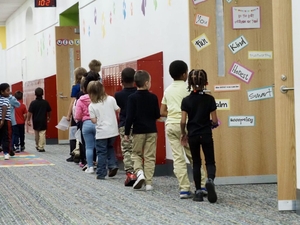
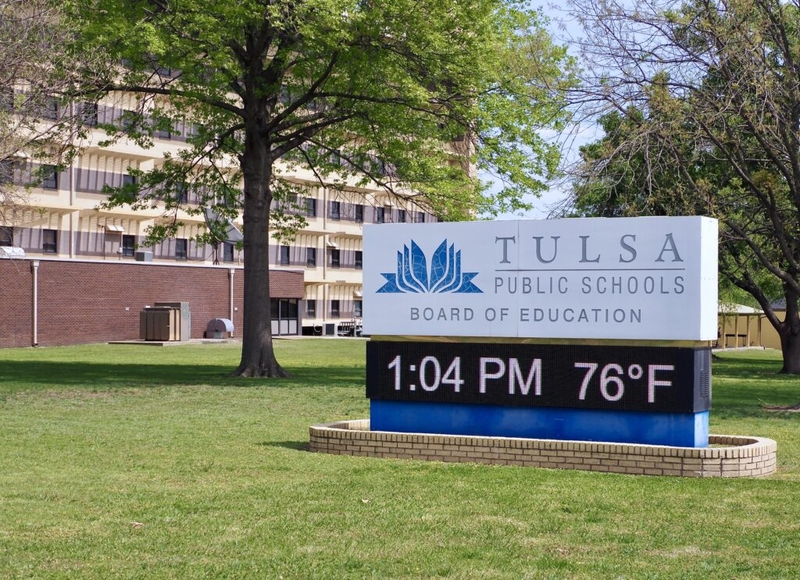
Tulsa Public Schools has proposed closing 17 school buildings. District leaders say the move will save needed funds and help improve programs at the remaining schools. (Photo by Nuria Martinez-Keel/Oklahoma Voice)
OKLAHOMA CITY — Amid the largest single-year decline in decades for Oklahoma public school enrollment, the state’s largest district announced the potential closure of 17 schools as it grapples with a long-term trend of decreases.
Tulsa Public Schools last week became the latest district to reveal a closure plan that leaders say is necessary to ensure financial stability. Oklahoma City Public Schools and other large, urban districts across the country have taken similar measures as a result of decreasing enrollment.
But, these losses aren’t unique to big-city schools. An Oklahoma Voice analysis of state records found 65% of districts in the state saw their student count decline last school year, impacting rural, urban and suburban schools.
Public school enrollment fell by 10,640 students statewide in the 2025-26 academic year, the largest one-year drop in decades and the third straight year of decreases in Oklahoma. The next annual count will happen Oct. 1.
The three-year decline began in 2023-24, notably the first year of Oklahoma’s parental choice tax credit program, which now supports private school tuition for about 42,000 students.
The number of children attending public schools nationwide also is trending downward while private school voucher programs have grown and the country’s birth rate has steadily fallen to a near-historic low.
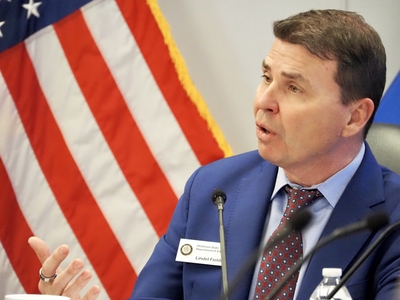
Still, Oklahoma’s 10,000-student “cliff” last year was “surprising to all of us,” state Superintendent Lindel Fields said. He attributed the decrease to changing birth rates and private school enrollment.
“Is it a bad thing? I don’t know,” Fields said. “It was just so abrupt. And like Tulsa Public Schools, if you know the enrollment’s dropping, you just have to make the necessary adjustments. So, I don’t know that it’s a bad thing, but in general you don’t want to see things decline.”
In Tulsa, a decade-long drop is expected to continue. The City of Tulsa Planning Office projects a population decline of 2.5% in children age 17 and younger over the next five years within the district’s boundaries, school administrators said when presenting their consolidation plan.
Tulsa, with an enrollment count of 31,700, already has lost more than 5,700 students since the 2017-18 school year as leaders consider rolling out closures for 2027-28. All 17 schools suggested for closure received a D or F grade on the most recent state report cards, and each is using less than 65% of their facility capacity.
In a state where public school funding is distributed per pupil, the district “cannot continue to spread our resources across a model that does not consistently produce the experience we want for our students,” Tulsa Superintendent Ebony Johnson told her school board, which is expected to vote on the plan on Oct. 19. Student access to exceptional programs is too inconsistent from school to school, which she said is “not acceptable.”
Closing underutilized buildings, consolidating students and teachers into fewer schools, cutting job positions and seeking out other cost-saving opportunities is expected to save more than $12 million a year in the district’s budget, Johnson said.

While pledging not to raise class sizes above allowed limits, district leaders said the plan would free up funds to guarantee art, music and physical education programs at every Tulsa elementary school, and it would increase the number of students assigned to a high-quality teacher.
Tulsa school board member Stacey Woolley said closing schools might seem unfair to some, but “it’s also not right to serve students in a way that’s not as effective as we could be if we did things differently.”
“My vantage point on this is that the only way that we can justify doing what we’re doing is by saying in the process we’re going to make sure that we provide better for all of these kids,” she said.
Similar changes and challenges have been at play in Oklahoma City.
Total public school enrollment declined by more than 5% from 2014 to 2024 within Oklahoma City Public Schools’ boundaries, despite growth in the city’s overall population and in local public charter school enrollment, according to data from Fuel OKC, an organization focused on improving public school quality.
A declining birth rate is a factor, but families with children also are choosing to live outside of the urban core in search of schools they believe will be better, said Brent Bushey, the organization’s CEO.
He said the Oklahoma City district has taken positive steps toward improvement, particularly by setting academic goals and discussing student outcomes at every school board meeting.
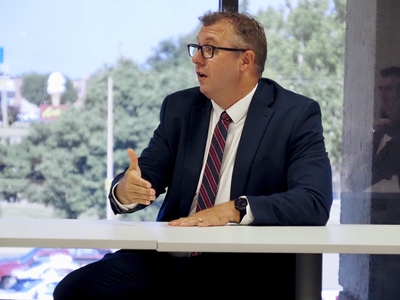
School consolidations carried out in 2019, which closed 15 buildings and reconfigured 17 others, also left the district in a stronger place, Bushey said.
Although closing schools can be “heartbreaking,” he said shedding underused buildings and adding school programs are a better use of funds.
“I think if we’re serious about Oklahoma City being the city that it can be — the city that hosts Olympics, the city that has a world championship basketball team — that it should be attractive to families,” Bushey said. “And so, to me, it’s a call to action that we can build schools and we can make changes that are attractive to families.”
Rural schools experienced some of the steepest enrollment declines last year, when considering the percentage of the total student population lost, state records show.
District leaders say they’ve lost families to online schools, homeschooling or to larger cities, where more job opportunities and housing options exist, said Robert Trammell, executive director of the Organization of Rural Oklahoma Schools, a collective of rural districts.
Even in a shrinking climate, rural districts are wary of consolidation and annexation, fearing their schools — and therefore their community identity — will be lost, Trammell said.
Many districts simply have to tighten their belts, he said, by cutting job positions and closely managing rising expenses.
“They’ve done more with less for so long it just becomes a way of life and business,” Trammell said. “They’re doing everything they can to survive in this uncertain time.”
Oklahoma City, OK