Minnesota AG candidate’s stock portfolio presents 174 potential conflicts of interest
Sep 29, 2026 | 7:00 am ET
Description
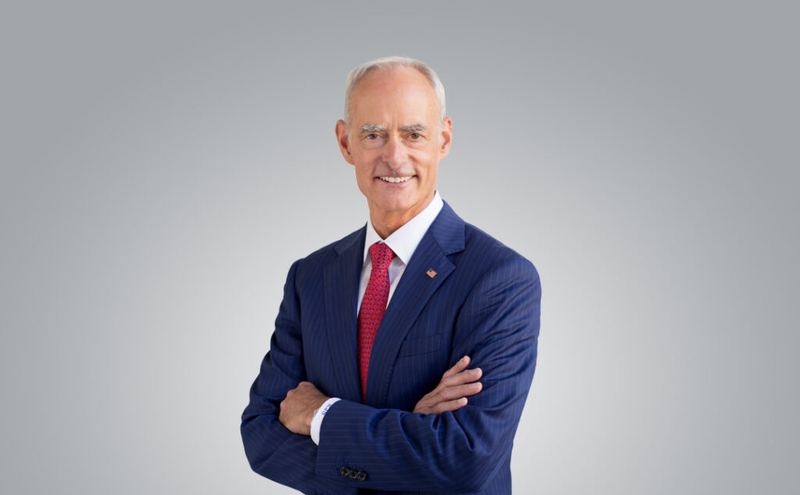
2026 Republican candidate for Minnesota attorney general Ron Schutz (Courtesy photo)
If Republican Ron Schutz wins the attorney general’s race in November, he will be responsible for enforcing Minnesota’s laws against the country’s biggest and most powerful corporations.
His own personal fortune is staked on many of them.
Schutz owns more than $10,000 of stock in 174 companies — at least $1.74 million altogether — according to his economic disclosure. His expansive investment holdings span industries that are often the subject of litigation like pharmaceuticals, banking and artificial intelligence and include at least six companies that are currently being sued by the state of Minnesota.
Ethics experts say his individual stock holdings present clear, cut-and-dried conflicts of interest that would make it impossible for him to carry out the duties of the office.
“He really needs to sell all that and buy mutual funds if he’s going to be attorney general,” said Richard Painter, a University of Minnesota law professor and former chief ethics lawyer to President George W. Bush. “I hope he committed to doing that.”
Schutz has not committed to doing that and did not respond to a Reformer question asking if he would.
Candidates for office in Minnesota must disclose individual companies in which they or their spouse own more than $10,000 of stock, though not as part of index or mutual funds. Candidates also aren’t asked how much they own, so Schutz’s holdings may be substantially larger.
Democratic Attorney General Keith Ellison, who is seeking a third term, does not have any individual stock holdings worth more than $10,000, according to his disclosure.
Schutz had a lucrative career as a patent attorney. He was chair of Robins Kaplan’s national intellectual property litigation group, and went after large corporations like Sony and La-Z-Boy in business disputes over patent infringement, trade secret violations and royalty payments.
Lawsuits brought by state attorneys general have the power to reshape companies — and even entire industries — to protect the public’s interest, but that can come at a significant cost to shareholders.
Without divestment, the public wouldn’t know whether he were acting on behalf of their interests or his own.
“I just can’t see another way that he would expect to act as attorney general without divestment,” said Danielle Caputo, senior legal counsel for ethics at the nonpartisan Campaign Legal Center. “It’s such a clear and present conflict that it would call into question any actions he would take.”
Schutz, if elected, would decide how to proceed with cases Ellison is pursuing against Amazon for monopolistic practices that stifle competition; Uber for making it exceedingly difficult for customers to cancel subscriptions; and Exxon Mobil for deceiving the public about the causes and costs of climate change. Schutz owns more than $10,000 of stock in all of them, along with Apple, Alphabet and Pfizer, which are also defendants in suits brought by Minnesota and other states.
Schutz’s stake in BlackRock could also present a conflict of interest. The asset management giant recently took over the parent company of Minnesota Power, the utility provider for northeastern Minnesota, over Ellison’s objections. The Attorney General’s Office represents consumers in fights over rate increases proposed by utility companies.
Schutz’s portfolio includes corporations that have recently settled lawsuits with the state, and he would be responsible for monitoring for compliance: Eli Lilly, accused of charging exorbitant prices for insulin; Meta, over claims it made its apps addictive to children; and Shipt, accused of misclassifying workers. Schutz also owns stock in AT&T, Verizon and T-Mobile, which settled an investigation two years ago over deceptive advertising with the state.
Federal law is stricter than Minnesota’s when it comes to these potential conflicts: The U.S. attorney general cannot legally take part in a case against a company in which he or she holds stock. Federal executive branch officials are barred from participating in government business that could affect their own financial interests.
Minnesota law only requires public officials to disclose and abstain, when possible, from work in which they have a conflict of interest. Minnesota rules of professional conduct for attorneys also state lawyers should not represent clients if there’s a risk their representation will be limited by a personal interest.
“A lawyer should not be involved in a lawsuit in which he’s on both sides, and he would be on both sides if he were suing a company of which he is a shareholder,” said Richard Briffault, a law professor at Columbia University and member of the New York State Bar Association Committee on Professional Ethics.
There may be alternatives to divestment, though ethics experts say they’re not ideal.
Schutz could put his assets in a blind trust, though he would know what went into the trust. He could also direct a deputy attorney general to take over cases in which he has a conflict of interest, but that might mean deferring high-stakes decisions to an unelected official.
“If it’s just a few cases, it might be doable,” Briffault said. “If there are a lot of cases, it’s hard to see how that’s manageable.”
In response to a Reformer interview request, Schutz pointed to Attorney General Keith Ellison’s position on the State Board of Investment, which manages thousands of assets for government employee retirement plans.
“The question you need to ask, and report on, is what is Keith Ellison’s fiduciary duty to the citizens of the State of Minnesota when he sues companies whose stock funds the retirement accounts of state employees,” Schutz wrote in an email.
Under the state constitution, the investment board is made up of the governor, attorney general, state auditor and secretary of state. That means Schutz would serve on the board if elected.
Schutz’s answer may shed light on his pro-business approach to the Attorney General’s Office. It does not, however, raise a conflict of interest similar to owning a personal stake in scores of corporations.
“Those are absolutely not the same,” Caputo said. “That’s a non sequitur.”

Saint Paul, MN