Thanksgiving dinner in Kansas doesn’t need to be rehash of November election rifts
Nov 27, 2024 | 3:45 pm ET
Description
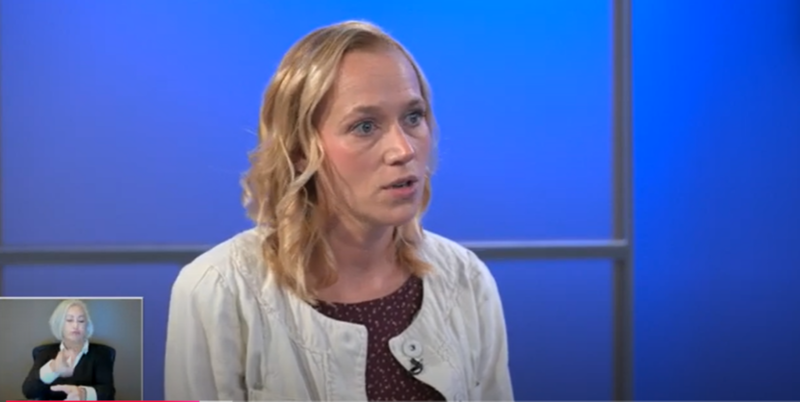
Jessica Hamilton, a clinical psychologist at University of Kansas Health System, said people concerned about bitter political arguments during Thanksgiving gatherings could opt out of those conversations. She said holiday dinner hosts could set boundaries for guests to forbid quarrels about the November election. (Kansas Reflector screen capture from KU Health System YouTube channel)
TOPEKA — Personal political agendas, social-media inflamed partisanship and tough-to-swallow outcomes in the 2024 election are likely to simmer as families with divergent perspectives gather around dinner tables for annual Thanksgiving meals.
Instead of settling whether it was acceptable to substitute lasagna for turkey as the main course, folks were likely to argue about attributes and shortcomings of Donald Trump and Kamala Harris. Rather than consider whether the menu should include fried apples, braised collard greens, macaroni and cheese or roasted broccoli, relatives could slide into debate on the potential of tariffs igniting inflation.
In lieu of conversation about whether pecan pie should be displaced by English toffee for dessert, diners might bicker about implications of Republicans simultaneously controlling the U.S. House and U.S. Senate.
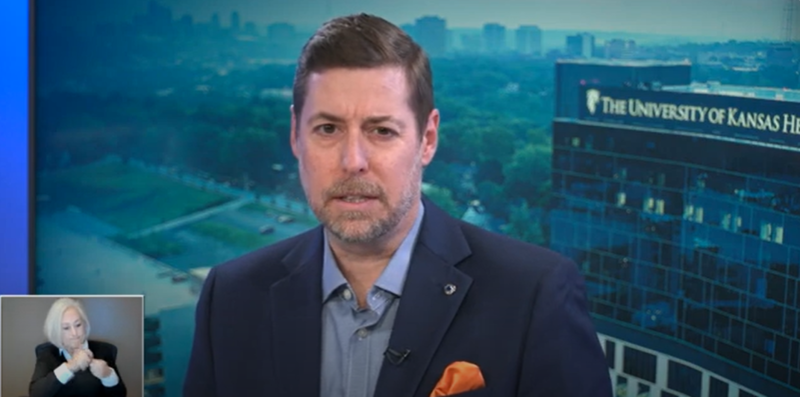
Clinical psychologists Greg Nawalanic and Jessica Hamilton, of the University of Kansas Health System, said supper-time strife could be reduced by taking a healthy approach to political differences. They recommended families and friends strive to set boundaries, be courteous, actively listen to others, express curiosity and focus on the big picture of a holiday associated with counting blessings.
“If you are on the winning side, then that’s great for you. Have those feelings. Celebrate it. Maybe keep it inside of you. Talk to like-minded people about that,” Nawalanic said. “But when you have friends or family who were opposing, try to be gracious about it. Remember, they were just as invested as you were … but now are very disappointed.”
He said that during the two weeks after the Nov. 5 election about 90% of his counseling sessions were tied to ballot-box results.
Healthy engagement
Hamilton said some of her patients were suffering anticipatory anxiety because they understood their personal political ideas didn’t align with others in the family. Some clients, she said, were experiencing political grief because a majority of voters didn’t see national, state or local candidates in the same way or took a contrary position on taxation, gambling or abortion questions.
She said the desire of people to stand up for personal values made it difficult to accept the political opinions of rivals.
One option on Thanksgiving was to not participate in political dialogue at the dinner table, she said. Those who do ought to take a deep breath before commenting to avoid escalating a rhetorical quarrel, she said.
“If you want to engage, I would say engage in a way that is true to the kind of person that you want to be,” Hamilton said. “Are you wanting to be ‘right’ as far as politics go? Or, do you want to be understanding and recognize that there is a difference and be respectful?”
She suggested individuals direct conversations toward poignant or humorous family stories and histories rather than squabble about political events capable of driving people apart.
Hamilton said it would be acceptable for a Thanksgiving host to set ground rules in advance that precluded back-and-forth friction on political topics. Adults and children might be well-served by looking at election results through the lens of good sportsmanship, she said.
“We teach our kids this,” she said. “Why aren’t we displaying that as adults? How can we be good sports and appreciate one another?”
Wine not the answer
Nawalanic said the environment of some Thanksgiving gatherings could be compared to a visit to a dentist. It might not be pleasant, he said, but the agony was of limited duration.
He said individuals consumed political news in different ways with some remaining glued to social media and others taking passive interest until Election Day. He said social media amplified discord during the 2024 elections. In the end, he said, technology played a larger role in this election because messaging left little room to calmly consider the range of candidates and issues.
“We have to understand that when we go into these conversations there’s been an echo chamber that is so reinforced and impregnable,” Nawalanic said. “If you try to talk or communicate at your dinner table the way you’re doing it online — if you’re one of those little snipers who wants to nail you — let’s not do that.”
He advised people to resist the temptation to sever family relationships based on results of November’s voting. Perhaps it would be best to explore more substantive reasons for contemplating closure of those doors, he said.
“If you’re considering ending a relationship because of politics, it’s probably less about the politics and more about personality attributes in the way they’ve gone about it,” Nawalanic said.
Nawalanic said it could be useful to snack before arriving for the big Thanksgiving meal, because hunger could trigger what he referred to episodes of “hanger” when controversial topics were broached. He said consumption of alcoholic beverages ought to be minimized at dinners where discord could arise because “wine is not adaptive coping.”
He said it was important to remember this year’s snapshot of people around the dinner table was certain to change by next year.
“Do you want to look back on this Thanksgiving and think, ‘It was such a nice, lovely family time together and a great meal,'” Nawalanic said. “Or, do you want to remember, ‘I burned her with that comment. When I said that, she felt it.'”
Topeka, KS