Pillen order requires Nebraska to track, restrict antisemitic behavior
May 29, 2026 | 9:21 pm ET

Description
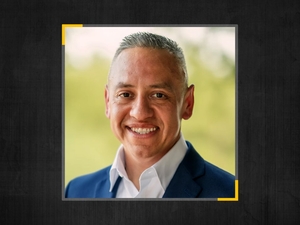
Nebraska Gov. Jim Pillen speaks at his press conference at the Capitol in Lincoln on May 29, 2026. (Juan Salinas II/Nebraska Examiner)
LINCOLN — Nebraska Gov. Jim Pillen signed an executive order Friday that creates a framework for K-12 schools, colleges and universities to track and report antisemitic behavior to the Governor’s Office.
Pillen, a former University of Nebraska regent, said during a Capitol press conference that his executive action is meant to “fight antisemitism.” The order would require each public K-12 school district, community college and four-year higher education institution to file an annual report with the state that documents complaints and incidents of antisemitism that occur during an academic year, as well as any findings from investigations of such incidents.

The order uses the definition of antisemitism from the International Holocaust Remembrance Alliance, which says “Antisemitism is a certain perception of Jews, which may be expressed as hatred toward Jews.” Some have criticized the group’s definition as overly broad, especially during a time of war in the Middle East.
Pillen said he is “formally requesting” that schools and higher education institutions around the state fully cooperate with his order and make sure that their institutional policies align with “federal and state civil rights protections.”
The IHRA says manifestations of antisemitism might include language targeting the state of Israel. Pillen said he pursued the order, in part, because Legislative Bill 538 from State Sen. Brian Hardin of Gering did not pass during the last legislative session. That bill would have required specific training on combatting antisemitism for public school and university employees.
The international group’s definition of antisemitism was the main point of contention during legislative debate, which ended with the bill being passed over after a filibuster threat spurred by an interaction between Hardin and State Sen. Megan Hunt of Omaha, in which she said Hardin made a comment about her being “wet,” which he denies.
The Combat Antisemitism Movement has said 38 states have adopted or endorsed the IHRA definition of antisemitism, with 18 of them codifying it into state law, according to the group’s database.
Pillen’s order requires the Nebraska Department of Education to provide “supplemental materials and curricula aligned with state academic standards” about Jewish-American history, including before and after the Revolutionary War and history of the State of Israel. It also requires distribution of “professional learning resources to support best practices in instruction” on the topic.
Several faith leaders who joined Pillen’s press conference praised the order. CEO Bob Goldberg of the Jewish Federation of Omaha said the executive action matters because there has been an increase in anti-semitism. Goldberg said the order “moves us from reaction to prevention, through education, awareness, and accountability.”

When asked by a reporter how the order might affect Nebraskans who want to critique the government of Israel over the actions in the Middle East, and whether the order might conflict with First Amendment protections of speech, press, religion and assembly, Pillen recalled his trip to Israel and his visit with Israeli Prime Minister Benjamin Netanyahu. Pillen said he talked with Israeli citizens near the Gaza Strip after the Oct. 7, 2023, attacks.
“[The] prime minister said … the same thing is happening at American universities that happened in Europe in 1935 … we have to stand up, so history is not repeated,” Pillen said.
Pillen also said “anybody that wants to stand up and talk about … the Palestinians, they’ve got to understand that those people are born to kill Jews and Christians. We have to stand up and deal with reality. It’s as simple as that.”
Pillen’s generalization about Palestinians echoes rhetoric from some Israeli leaders, soldiers and entertainers, which is being used as evidence in South Africa’s case accusing Israel of genocide at the U.N., a charge Israel denies, according to the Associated Press.
Another reporter asked whether Pillen’s statement about the Palestinians is as harmful as “anti-semitic comments.”
Pillen said, “All I can go by is what I saw, what I learned.”
“I sat with 25 other governors 30 days after the October attacks … [a] couple governors had to get up and leave … saw dead bodies being dragged through the streets in Gaza. I don’t think I need to go into any more [of] what actually took place there, and that’s not a generalization,” Pillen said.

The death toll in the conflict between Israel and Hamas in Gaza has been disputed — and is sometimes politicized. In 2023, the Hamas-led Oct. 7 attacks on southern Israel killed 1,200 people and took more than 250 people hostage. Israel went to war with Hamas in response, leaving a Palestinian death toll that Gaza’s Health Ministry says surpassed 70,000 last year.
The ministry operates under the Hamas-run government. It is staffed by medical professionals and maintains detailed records that the international community generally considers reliable, according to PBS.
Adam Beren, founder of the Combat Antisemitism Movement, said during the Pillen press conference that the order wouldn’t face First Amendment challenges because “you can be antisemitic all you want …This order clarifies what would be a legitimate criticism of Israel.”
In Texas in 2024, Gov. Greg Abbott signed a similar executive order using the IHRA definition. A federal judge in Texas ruled that pro-Palestinian student groups have a right to sue top officials at several public universities in Texas for allegedly violating their First Amendment rights.
Lincoln, NE