Tennessee once sent real leaders to D.C. during economic crises and war. Now they fail us.
May 19, 2026 | 5:59 am ET
Description
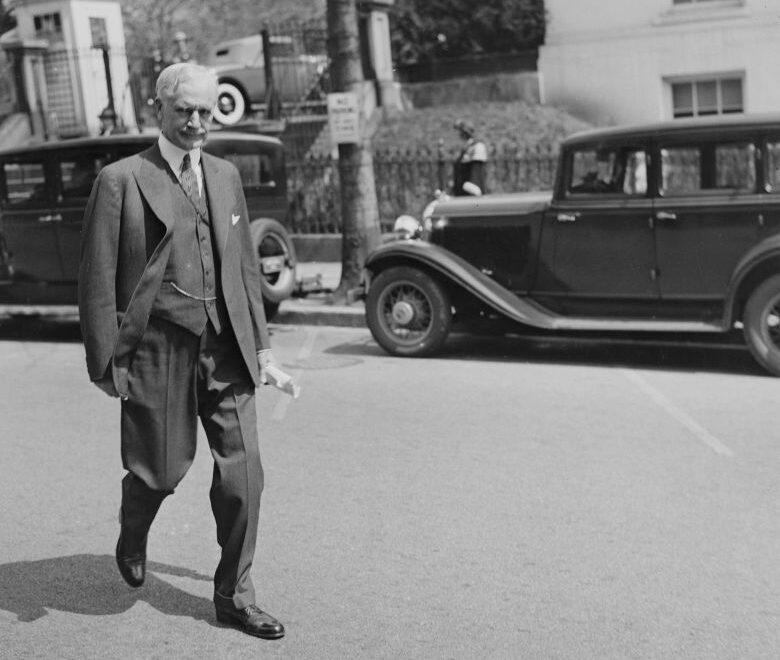
Once, Tennesseans sent people like Cordell Hull to Washington. President Franklin D. Roosevelt tapped Hull to serve as his Secretary of State where his actions earned him a Nobel Prize. (Photo: Getty Images)
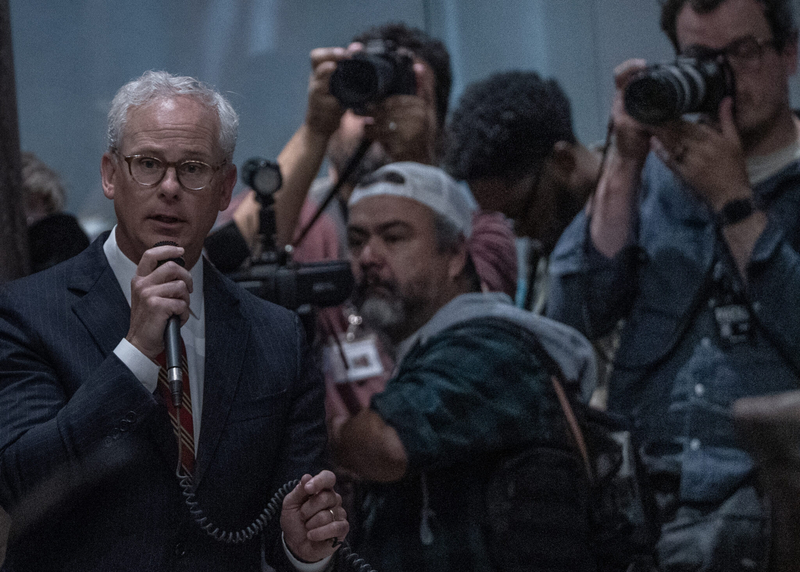
The 2026 midterm elections approach. With the Tennessee legislature’s recent move to quickly redraw congressional maps to give Republicans an advantage in all nine of the state’s districts, Tennesseans are being sorely reminded that their representatives care more about wielding power than they do about representing constituents.
“Tennessee is a conservative state, and this map ensures that our congressional delegation reflects that,” said State Sen. John Stevens, a Huntingdon Republican, when introducing the new U.S. House map. “This is about allowing Tennessee to maximize its partisan advantage.”
It’s easy to prove that Stevens is lying about the state he claims to represent. In the 2024 House elections, Tennessee voters cast ballots 64.39% for Republicans and 33.41% for Democrats. Almost one in every five Tennesseans is a Democrat, and about half are independents.
From a representation standpoint, it doesn’t make sense to draw congressional maps that edge out the voices of hundreds of thousands of voters. And given the war in Iran and a skyrocketing cost of living crisis at home, residents need more honest and effective representation in D.C., not less.
Thankfully, Tennesseans don’t need to reinvent the wheel, because they’ve sent great people to Washington before, and they can do so again.
A Tennessee statesman once represented the Volunteer State on the world stage
In Traitor to His Class: The Privileged Life and Radical Presidency of Franklin Delano Roosevelt, biographer H.W. Brands described Tennessee Democrat Cordell Hull as one of America’s toughest and hardest-working advocates for affordability at home and peaceful cooperation abroad.
The longest serving Secretary of State in U.S. history, Hull’s accomplishments were many, and he pulled them off despite often butting heads with President Franklin Roosevelt, something Tennessee’s Republican politicians could learn from when interacting with the Trump Administration.
Hull served in the U.S. House of Representatives from 1907 to 1921 and from 1923 to 1931. He won a Senate seat in 1931, but he accepted FDR’s request to join the cabinet as Secretary of State in 1933, an unusual political move for a senator at the time.
Hull immediately set to work resolving the international aspects of the economic crisis that beleaguered the world. He championed free trade and helped engineer the Reciprocal Trade Agreements Act of 1934, which lowered the tariffs that had contributed to the Great Depression.
Hull spearheaded FDR’s “Good Neighbor” policy toward Latin America, which fundamentally shifted the U.S. away from its interventionist “gun boat diplomacy” that had treated other Western Hemisphere nations as though they were subservient colonies.
In the lead-up to World War II, FDR took center stage in diplomatic relations with Europe, but he delegated much of American diplomacy in the Pacific to Hull, who did everything he could to prevent conflict with Japan.
Following the Allied victory, the crowning achievement for this quiet Tennessean was undoubtedly the 1945 Nobel Peace Prize Hull received for his central role in creating the United Nations.
Hull was a conservative southern Democrat steeped in Jeffersonian principles of strict constitutional interpretation and limited federal government. That perspective sparked almost routine conflict with FDR, yet the two statesmen found a way to work together during a 12-year period that saw Roosevelt’s administration reverse the Great Depression and win World War II, thus overcoming the two greatest challenges the nation faced in the 20th century.
Tennesseans need leaders who will speak truth to power, end wars of choice abroad, and bring costs down at home
Fast forward to today, and Tennessee’s political representation looks much different. For example, in addition to being deeply immoral, President Donald Trump’s war in Iran is making life unaffordable for Tennesseans, and the state’s Republican supermajority refuses to stand up to the White House and do anything about it.
The war has caused one of the most severe oil crises in world history following Iran’s closing of the Strait of Hormuz, a critical shipping waterway. The closure has caused gasoline and diesel prices to surge by 50%. Tennesseans are paying more at the pump, and given that diesel is used in commercial transportation, they’re paying more for consumer goods, too.
The war has also affected utility bills. Tennessee was already on the list of states experiencing the highest surges in electricity prices. The war in Iran has made that worse by disrupting Liquefied Natural Gas (LNG) production. LNG accounts for 22% of Tennessee’s electricity generation.
Members of Tennessee’s federal delegation, who at one time said they were “America First,” and anti-war, have completely failed to meet the moment. President Trump knows that strength — not weakness — brings peace,” wrote U.S. Sen. Bill Hagerty.
The war also spiked fertilizer prices by 40%, which means the recent 3% surge in grocery prices is predicted to at least double as the growing season gets underway.
All this to say, Tennesseans have less money leftover each month than they did the month before, and their representatives, many of whom once claimed to be “America First and Anti-War,” have completely failed to meet the moment.
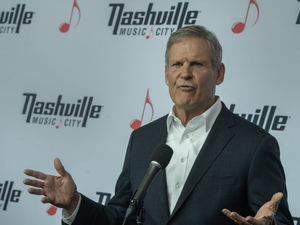
“President Trump is right to hold the Iranian regime accountable,” wrote Gov. Bill Lee.
“President Trump knows that strength — not weakness — brings peace,” wrote U.S. Sen. Bill Hagerty.
“Iran is in a weaker position to respond thanks to President Trump’s leadership,” wrote U.S. Sen. Marsha Blackburn, who is also a candidate for governor.
Hull met the moment of his time by improving economic conditions at home while reducing U.S. intervention abroad, negotiating peace where possible, and forming alliances when conflict was imminent.
Fast forward to the present, and 72% of Tennesseans strongly disapprove of the Trump Administration’s war in Iran, while 87% said their cost of living was very concerning. Despite residents needing representation that ends war and lowers costs, none of their Republican elected officials have spoken out against the war, and when given opportunities to vote for congressional resolutions that would limit military action against Iran, every Tennessee Republican has voted no.
This is not representation. This is self-interested grifters jockeying for favor in an increasingly cult-like political party.
Tennesseans deserve better, and they should vote accordingly.
Nashville, TN