Louisiana legislative leader pans excluding no-party voters from primaries: ‘I don’t like it’
May 22, 2026 | 12:19 pm ET
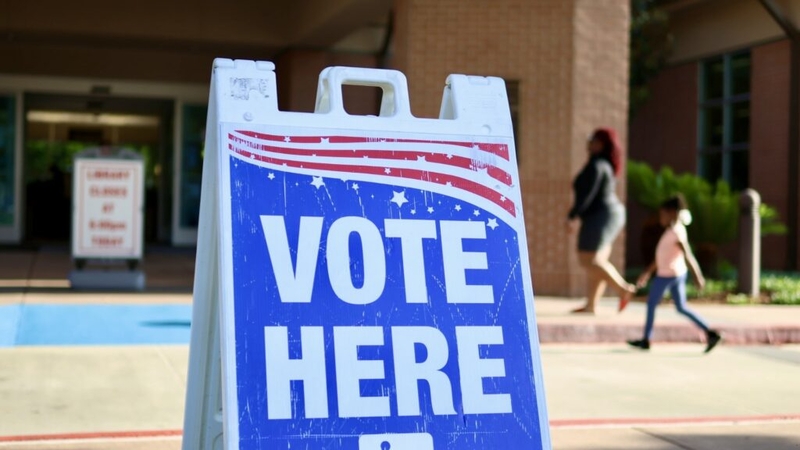
Description
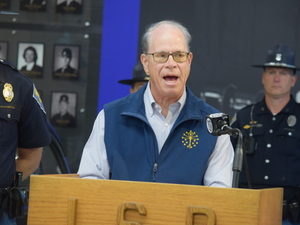
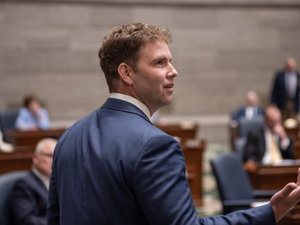
Senate President Cameron Henry, R-Metairie, said he doesn't support a bill that could exclude unaffiliated voters from no-party elections. (Photo by Wes Muller/Louisiana Illuminator)
Louisiana Senate President Cameron Henry, R-Metairie, said he doesn’t support a bill that’s advancing in the legislature to exclude unaffiliated voters from Democratic and Republican primary elections.
“I don’t like it,” Henry responded when asked Thursday about the proposal.
“The independent party, the no-party, is about one-third of the voting population. I don’t know why you would tell someone, if they wanted to vote, that they can’t,” Henry said.
The Senate president’s comments are significant because he can sometimes prevent a bill from being brought up for a vote in his chamber, though Henry didn’t say he would stop this particular legislation from moving forward.
House Bill 906, sponsored by Rep. Beth Billings, R-Destrehan, would allow the state’s Democratic and Republican party leaders to decide whether voters who aren’t affiliated with a party could participate in their primary elections. It has already passed the House and only needs approval from the Senate to go to Gov. Jeff Landry’s desk.
Landry has pushed proposals to exclude no-party voters from political primaries in the past and would likely support the bill becoming law.
Louisiana used separate Democratic and Republican party primaries for the May 16 election after decades of mostly using a more open primary system. State law currently requires Democrats and Republicans to let no-party voters participate in almost all of those contests.
For example, no-party voters were able to choose a Democratic or Republican primary ballot — or a party ballot without partisan races at all — for the U.S. Senate, Public Service Commission, Louisiana Supreme Court and state school board races on the May 16 ballot.
If Billings’ legislation had been in place, Democrats and Republicans could have excluded no-party voters from those races.
Her legislation would be a further departure from the so-called jungle primary used for most of the past 50 years. In the jungle primary, every candidate, regardless of party affiliation, competes against each other on the same ballot and all voters, regardless of party affiliation, can vote in that initial election.
If a candidate gets more than 50% of the vote in a jungle primary, they automatically win the election. If not, the top two candidates move on to the runoff election, regardless of their party affiliation. This means you can have two Democrats or two Republicans running against each other in the general election.
The new closed-party primary process, which would be more restrictive under Billings’ legislation, essentially ensures that one Democrat and one Republican advance to a general election.
Louisiana’s top elections official, Republican Secretary of State Nancy Landry, is backing Billings’ bill, saying it will fix a technical challenge her office faces in 2028. The state’s voting system won’t be able to handle running both closed primaries for U.S. president and state political party offices as well as more open races in the same year.
“If this bill doesn’t pass, we have to come up with another solution to that problem,” Nancy Landry said at a legislative hearing this week.
Baton Rouge, LA