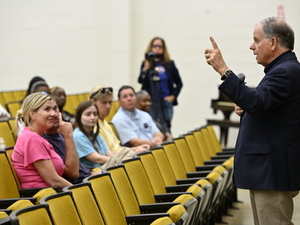
Subramanyam questions Loudoun transmission line route process, offers new paths for SCC to consider
Oct 13, 2026 | 5:27 am ET
Description
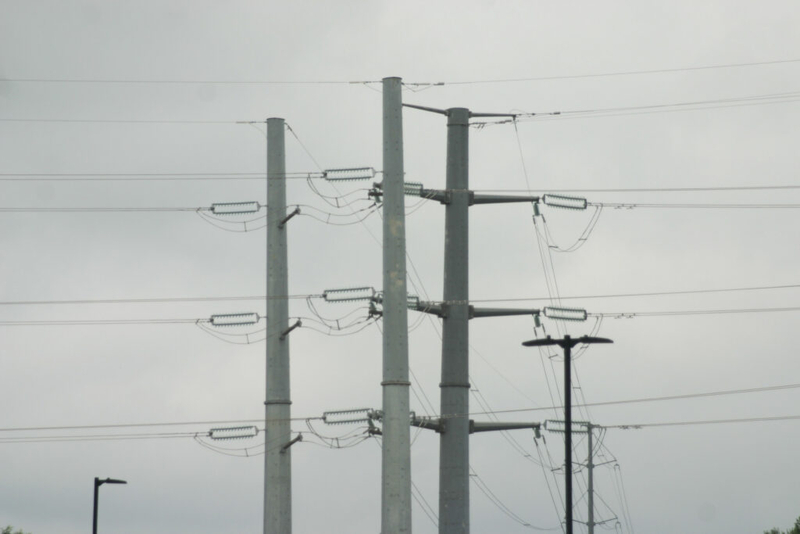
Transmission lines for a data center in Prince William County, Va. (Photo by Shannon Heckt/Virginia Mercury)
The debate over the final path for Dominion Energy’s controversial high-voltage transmission line project in Loudoun County continues, with U.S. Rep. Suhas Subramanyam, D-Loudoun, now urging the State Corporation Commission to consider three new routes that avoid cutting through residents’ yards and encroaching on two schools.
The Golden to Mars transmission line project is the final piece of a “reliability loop” in Loudoun designed to send more power to Data Center Alley in Ashburn. Residents of the Loudoun Valley Estates neighborhoods have fiercely opposed the 500-250 kilovolt project, which would partially transverse some private properties.
Those residents and others in the region have rallied to keep the power line away from homes, Rock Ridge High School and Rosa Lee Carter Elementary, which sit near one of the proposed routes. Subramanyam has also spoken against the planned location of the line and on Oct. 9, penned a letter to state regulators proposing alternative paths.
The congressman’s route options would place the line on Old Ox Road/Route 606 or west of Dulles International Airport’s runways, cutting through National Oceanic and Atmospheric Administration (NOAA) property.
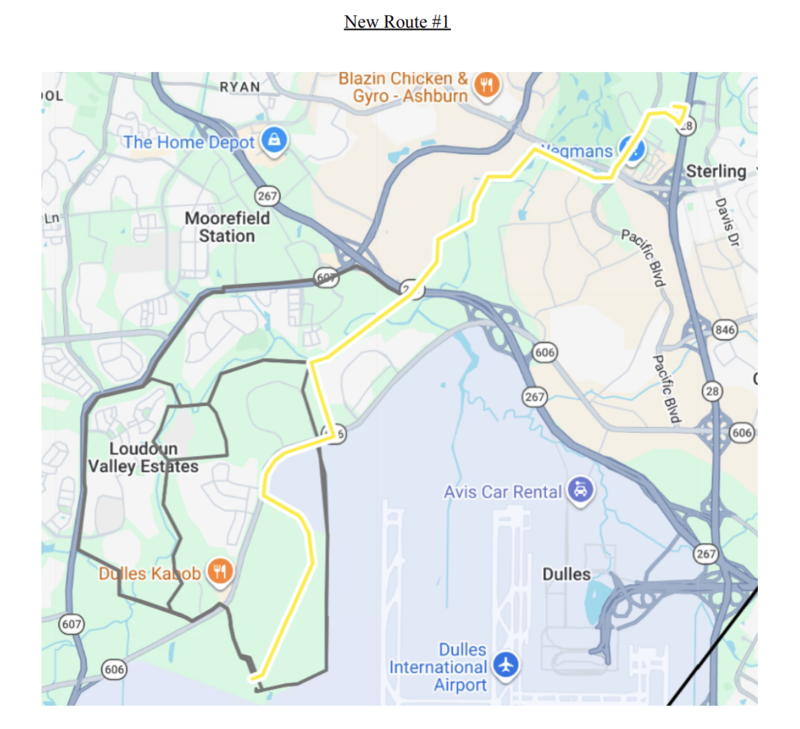
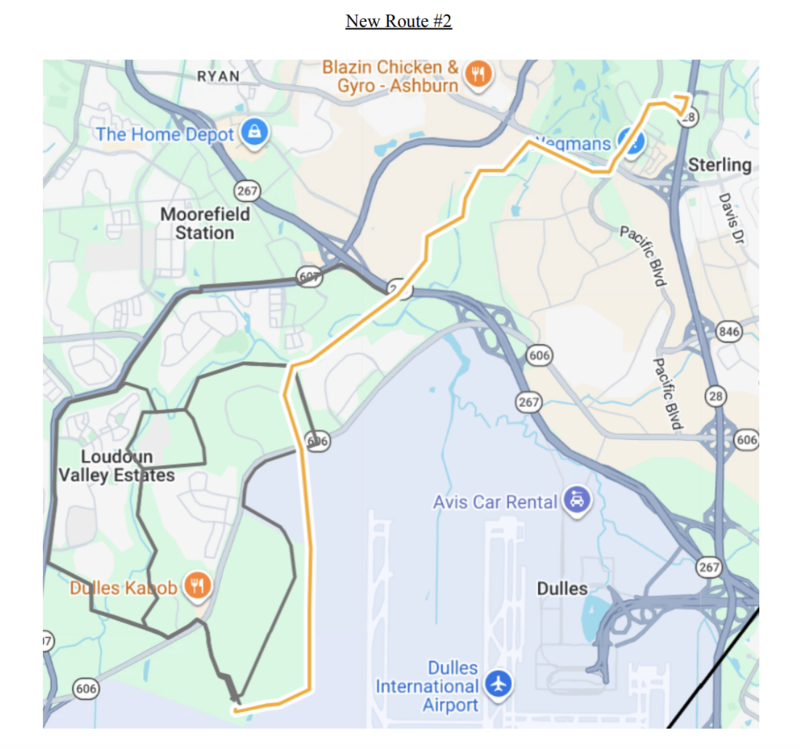
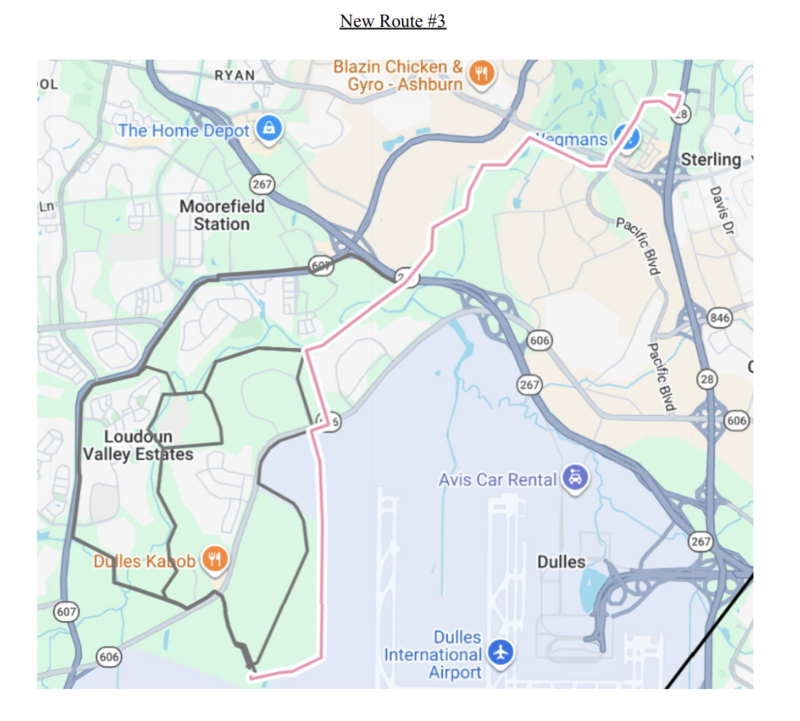
These routes “would minimize impacts to homes and communities,” Subramanyam wrote to commissioners.
Subramanyam wrote that he was told routes along Route 606 or directly west of Dulles Airport would not be feasible because federal agencies like the NOAA would likely not allow right-of-way for transmission lines on their property.
“I sat down with NOAA Administrator Dr. Niel Jacobs on July 20, 2026, and I was surprised to hear that NOAA did not have a technical objection to a route on their land or near the WSR-88D Doppler radar such as New Route #1,” Subramanyam said in his letter. “In fact, Dr. Jacobs seemed open to working with the community to find a feasible route for a transmission line even if it were to go through NOAA property.”
The congressman also said that the Federal Aviation Administration is producing an obstruction evaluation on a route Dominion submitted that could cross the center of two runways. He also asked if commissioners would be willing to meet with these agencies to better assess route options.
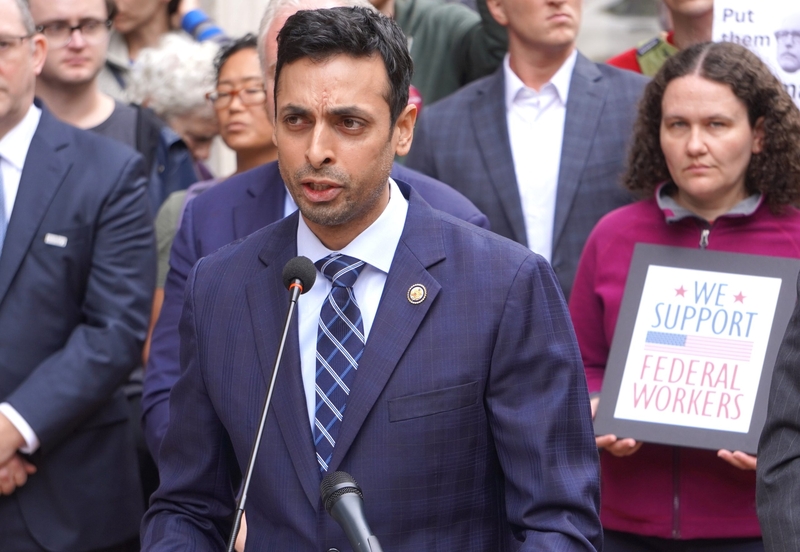
He supports ensuring grid reliability, Subramanyam wrote, “but we cannot place the data center industry’s need for electricity on the backs of Virginians.”
“Ignoring community input and calls for better routes is eroding the public’s trust in regulators, utilities, this entire public engagement process, and even transmission infrastructure itself,” Subramanyam warned.
How the transmission line battle began
Dominion proposed the transmission line project in March 2025, laying out several route options for the line. It faced widespread public backlash almost immediately.
The SCC ruled in June that Dominion’s proposed Route 4 would be in the public’s best interest, but because a portion of that route would have to be placed on school property, Loudoun County Public Schools would have to approve it.
If the school board rejected that idea, commissioners wrote, then Route 3a would be selected. In July, the board did just that, which kicked off a slate of appeals to the SCC’s decision.
However, Route 3a cuts into the backyard of residents like Vicky Hu, who has lived in her home for over 20 years and has been fighting the transmission lines for months. In the 3a plan, a 165 foot monopole would be placed in the center of her back yard and all surrounding trees would be cut down.
Hu has filed an appeal of the final order to the Supreme Court of Virginia.
There was a push by residents of Loudoun County to get the lines buried. But the SCC sided with Dominion in blocking that idea, saying that the process would be too expensive and it would take up more space for the transition sites.
Legislation passed during the regular General Assembly session to allow for cost sharing of the burying of lines between the utility and impacted localities but it didn’t change the SCC’s decision.
The Golden to Mars project, estimated to cost $513 million, will complete a trio of major transmission line projects in the area.
Dominion previously stated that if the line isn’t complete by June 2028, they could face violations from the regional grid operator PJM and infrastructure could be damaged.
Richmond, VA