Idaho’s top officials keep getting these common election questions. Here’s the answers to your FAQs.
Oct 13, 2026 | 6:15 am ET
Description
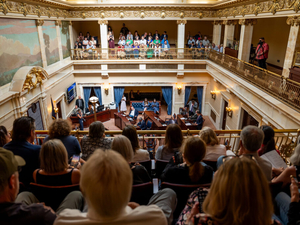
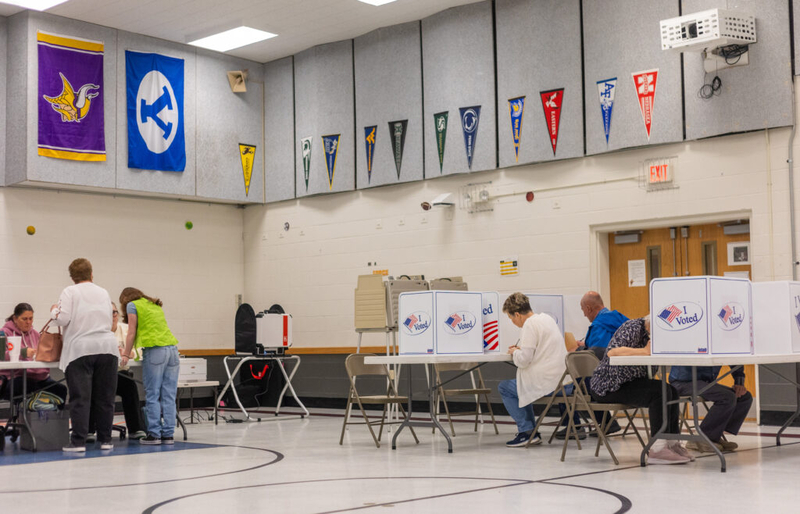
Voters cast their ballots in the primary election on May 21, 2024, at Linden Park Elementary School in Idaho Falls. (Photo by Pat Sutphin for the Idaho Capital Sun)
As the 2026 Nov. 3 general election approaches, Idahoans have been asking questions about filling out ballots, write-in candidates, online voter registration searches, and more as they gear up to vote.
The Idaho Capital Sun spoke to Secretary of State Phil McGrane and his staff about some of the top concerns that have arisen this election season.
Here are some of the most frequently asked questions:
If I don’t fill in a response to every question, does my ballot still count?

Voters can skip any question or race on their ballot if they choose to.
McGrane had heard concerns from voters worried that if they didn’t fill out a response to one of the ballot questions, that the rest of their ballot would be thrown out. This won’t happen, he said.
“Voters are not required to vote in every race on their ballot for it to count,” the secretary of state’s office spokesperson Joe Parris said in an email. “If they skip a question or contest, the remaining selections on their ballot will still be counted.”
Can I write in a candidate or write in an answer to the state gun advisory question?
Prospective write-in candidates in Idaho must file a “Declaration of Intent” to run with the Idaho Secretary of State’s Office, and the deadline to do so was Sept. 4. Voters may still write in a name, but that vote won’t count if it doesn’t go toward a registered write-in candidate.
This year, the only write-in candidate who filed this declaration is independent gubernatorial candidate Jacob Burnett, according to the Secretary of State’s Office.
For House Joint Resolution 4, House Joint Resolution 6, and Proposition 1, there are only “yes” or “no” options to fill out on the ballot. The advisory question about selecting an official state gun has six choices of gun and no option to write in a response.
Are signatures on absentee ballots verified, and how?
Signatures on all absentee ballots are verified, Idaho Secretary of State’s Office officials said.
Election staff members compare signatures on the ballots with voter registration, signature history on previous ballots, and driver’s license records to confirm a match before ballots are counted, Parris said.
“Make sure you sign your own absentee ballot,” Parris said. “A common mistake is a spouse putting their return ballot in the wrong return ballot envelope.”
I can’t find my voter registration. Have I been purged from the voter rolls?
Voters who have moved, changed their name or haven’t voted in the past four years will need to update their voter registration.
Eligible voters who are still having a hard time finding their voter information in the Secretary of State’s online voter look-up tool at VoteIdaho.Gov may be running into the tool’s more stringent search requirement.
“No one’s being removed,” McGrane said. “It’s our search function on VoteIdaho(.gov) got tighter, and so we’ve been working to try and resolve it.”
The tool was previously updated after several people were unable to find their voter registration and expressed concern that they’d been removed from the voter rolls, the Idaho Capital Sun reported. The issue was previously linked to people searching on their cellphones, but other voters have run into challenges finding their information.
“Voters need to use their name exactly as they registered it,” Parris said. “If a user, for example, registered as ‘Elizabeth,’ the short name ‘Beth’ won’t yield results. Make sure no extra characters, like a space, are at the front or back end of the submission. If there are questions, don’t hesitate to call the Idaho Secretary of State’s office to confirm voter registration.”
Some voters who tried to use the polling location look-up tools to find their polling location or sample ballots ran into hurdles if they put a period in the directional abbreviations for cardinal directions — such as “W. Jefferson St.”
To avoid this, don’t add periods after the directional abbreviations and try to allow the search bar to auto-populate once there’s enough information in it. If you lived at the Idaho State Capitol, the correct search would be “700” in the “House No” search bar, and “W Jefferson St, Boise 83702” under “Street Name.”
I’ve seen lists online of people who signed the petition to get Proposition 1 on the ballot — are those real? Is that allowed?
Conservative North Idaho blogger Summer Bushnell has posted several lists of people who signed petitions to get the proposed abortion rights initiative, now called Proposition 1, on the ballot in the November election. The lists are broken out by county.
Signatures on initiative petitions are a public record. McGrane confirmed that the information came from his office from public records requests.
However, the names appear to be from the unverified lists, he said. This means that all of the names are real, but some of them might have been thrown out in the official signature count because there were duplicates, the person wasn’t a registered voter, or other reasons for ineligibility.
“While initiative signature lists are published using valid public record information, there are nuances in the lists being published that need to be detailed,” Parris wrote. “For example, voters may appear on the list more than once, but that only means they signed a petition more than once. A signature is counted only once. All signatures are validated as a part of the process on the county level during the petition-gathering cycle.”
McGrane said his office has been getting questions about the eligibility of the initiative because people have noticed some names appearing on multiple lists.
In Idaho, a ballot initiative allows residents to directly propose and decide whether to enact a new law. To qualify for the ballot, initiative supporters must collect the signatures from a total of at least 6% of registered voters statewide, as well as 6% of registered voters in at least 18 of Idaho’s 35 legislative districts.
The supporters of the initiative, Idahoans United for Women and Families, turned in over 110,000 signatures, the Idaho Capital Sun previously reported. The group needed 70,725 valid signatures to qualify.
County clerks first checked the signatures turned in from their county and then the Secretary of State’s office performed a final verification. McGrane said he’s confident the signatures were valid and sufficient to qualify the initiative for the Nov. 3 ballot.
Boise, ID