North Dakota stripper well tax break more generous than ‘historic norm’
Oct 13, 2026 | 6:00 am ET
Description
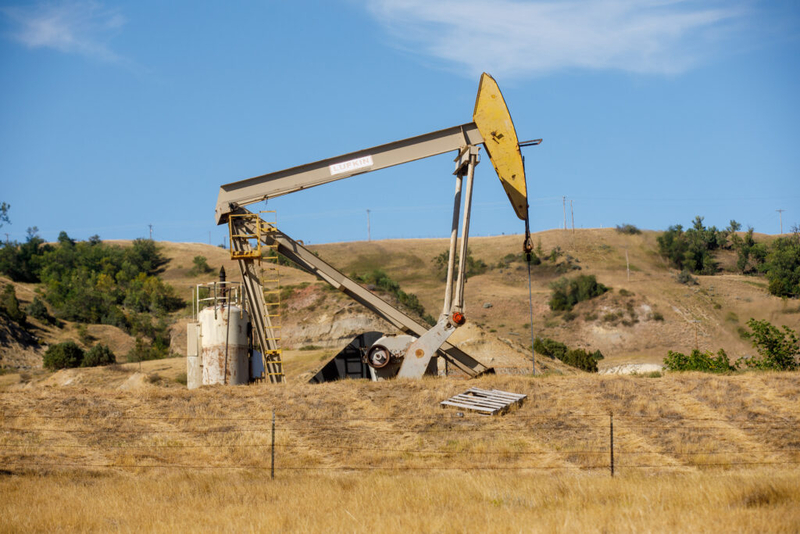
This oil well operated by Rim Operating, shown Sept. 2, 2026, is the oldest active stripper well in North Dakota. It was first drilled in 1954 and was certified as a stripper well in 1988. It has produced an average of 62 barrels of oil per day so far in 2026. The well continues to receive a tax break for low-producing wells despite exceeding the thresholds used in North Dakota and other top oil states. (By Kyle Martin/For the North Dakota Monitor)
This is the second in a two-part series supported by a grant from the Fund for Investigative Journalism. Read the first installment here.
More than one-third of North Dakota’s stripper wells that are exempt from half of the state’s oil tax would not qualify for that status in other major oil-producing states.
That’s because North Dakota defines a stripper well differently than those states do. North Dakota’s threshold for most wells is 35 barrels of oil per day, while other top oil states set that standard at 10 or 15 barrels per day.
North Dakota’s higher threshold allows more productive wells to qualify for the tax reduction.
North Dakota on pace to lose out on $66M from permanent oil tax break questioned by lawmakers
Sam Bradley, a board member with the National Stripper Well Association, said 15 barrels a day is the “historic norm” in the industry for defining a stripper well.
“The longtime industry standard that has been accepted and utilized by the federal government in the tax code is 15,” Bradley said.
The National Stripper Well Association uses the 15 barrel per day definition. So does the federal government and Texas, by far the largest oil producer in the country.
Some states, like New Mexico and Oklahoma, are more restrictive and use 10 barrels of oil per day as the eligibility limit.
North Dakota had 4,791 stripper wells producing more than 15 barrels of oil per day in May, more than one-third of all the state’s stripper wells.
The tax reduction on those wells has cost North Dakota an estimated $82 million in oil tax revenue through May 31, and is on pace to cost $196 million this year, according to state production data and Energy Information Agency pricing information.
The oil industry argues some stripper wells would be taken offline entirely if oil prices fall and there is no tax break, leading the state to collect less money.
How North Dakota policy evolved
North Dakota’s stripper well tax break has been active for nearly half a century. Commercial oil was first discovered in the state in 1951. Oil production was taxed at 5% for much of the following decades. The tax increased in 1980, adding the oil extraction tax that is currently 5%.
The stripper well tax policy was also created in 1980, exempting less productive wells from the extraction tax to encourage them to keep pumping oil, according to Legislative Council research. Stripper wells still pay the 5% gross production tax.

“Stripper wells really have been the fabric of American oil production for a century,” said Ron Ness, president of the North Dakota Petroleum Council. “Plain and simple, that’s the reason for the stripper well incentives.”
The incentive was amended in 1987, 1995 and 2013. Eligibility for the tax break evolved into a four-tier system based on the depth of the well. The threshold ranges between 10 barrels per day and 35 barrels per day depending on the depth. Wells deeper than 10,000 feet in the Bakken formation qualify for the tax break at 35 barrels per day.
Around 90% of North Dakota’s active oil wells fit the current criteria for the tax reduction when they hit 35 barrels of oil per day for 12 straight months.
Ness said the depth-based tiers reflect that deeper wells are more expensive to operate and repair, and he lauded the state for its forward thinking in the area.
“That’s always kind of what’s been unique about North Dakota, right? We’ve always been kind of the leader in the thought process of how do you best reference these wells and keep them going,” Ness said.
It’s unclear to what extent those factors motivated past generations of lawmakers when modifying the tax policy.
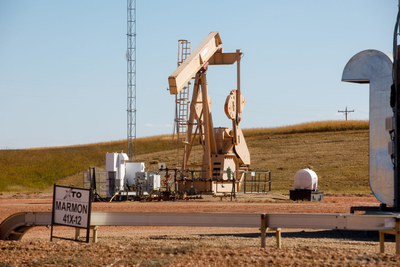
The 2013 change expanded eligibility for the tax break by increasing the production threshold from 30 barrels per day to 35 barrels for Bakken oil wells. It was made as part of a political compromise to close a loophole in the law. North Dakota had previously allowed stripper wells to be certified by “property,” or a geographic area. If a new well was drilled on an existing stripper well property it could receive the tax break while still producing at high levels.
Closing the loophole was estimated to generate an estimated $100 million in new tax revenue, but some lawmakers said they viewed it as a tax increase on the industry.
“I’m not comfortable with raising the taxes on the oil industry $104 million. I think it’s imperative that if we are going to fix this we try our best to move towards a bill that is more revenue neutral,” said then-Sen. Dwight Cook, R-Mandan, according to minutes of the committee he led.
The debate about raising the eligibility threshold mostly focused on what could offset the $104 million from closing the loophole, not on what threshold would be justified on its own merits, according to legislative minutes.
“Which has not been uncommon, you know, with legislation, to give a little when we’re taking,” said Rep. Craig Headland, R-Montpelier. “So being, you know, good partners with the oil industry, a little give and a little take.”
Tax break eligibility varies by state
The production criteria for eligibility is not the only difference between North Dakota’s stripper well tax break and what’s offered in other states.
The top two oil-producing states offer tax breaks that only take effect when oil prices are low. Texas’ kicks in when the price of oil drops below a certain price based on the consumer price index. It has not been used in the last decade except for eight months in 2020, according to the Texas Comptroller’s website. New Mexico’s tax reduction takes effect when the price of oil, minus trucking expenses and government royalties, drops below $18 per barrel for a calendar year. The tax break in New Mexico hasn’t been in effect since 1999, according to a spokesperson from the state’s tax department.
Oklahoma takes a variety of factors into account when deciding whether a well is eligible to be its equivalent of a stripper well. A well has to produce less than 10 barrels of oil per day, operate at a net loss or marginal profit, and sell its oil for less than $50 per barrel. The state also places a cap on the total dollar amount of tax rebates offered through the program at $10 million annually.
North Dakota’s tax reduction has cost the state around $200 million annually in uncollected tax revenue since the start of the 2023-2025 budget cycle, according to the North Dakota tax department’s presentations to lawmakers.
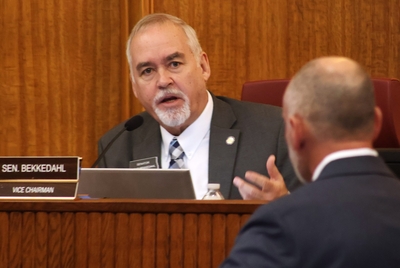
North Dakota lawmakers were surprised by revelations about the scale of the tax break during the last legislative session and directed an interim committee to gather information on the topic over the last year.
The committee is not recommending any changes be taken up by the Legislature during the 2027 session. One member, Sen. Dale Patten, R-Watford City, said stripper wells still have economic value and warned that wells are lost forever once they’ve been plugged.
“This is going to be driven by economics in oil country, whether there’s value. Our tax structure has to stay competitive with all of the other states,” Patten said during a meeting last month.
Some lawmakers said they should have a discussion about whether the tax break needs to be tweaked. But Sen. Brad Bekkedahl, R-Williston, who chaired the committee, said he has not seen any firm proposals to consider so far.
“Regardless of what the committee does, we’ve set the stage with the information gathering, and we’ve had the public hearings. I would expect we will see some bill drafts from somebody during the session,” Bekkedahl said.
North Dakota Monitor reporter Jacob Orledge can be reached at [email protected].
Bismarck, ND