Housing a key issue for NJ congressional candidates campaigning on affordability
Oct 13, 2026 | 6:38 am ET
Description
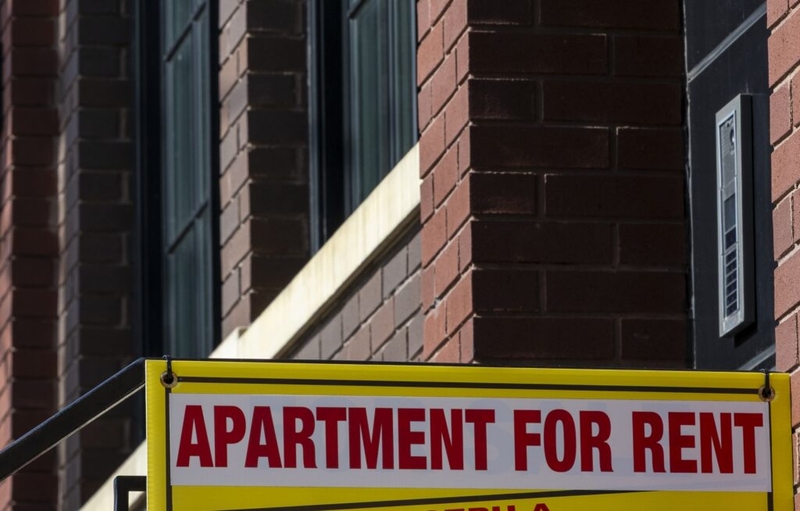
Democratic and Republican congressional candidates agree that housing is a key affordability issue. They differ on how they want to bring down costs. (Photo by Anne Marie-Caruso/New Jersey Monitor)
As prices on gas, groceries, healthcare, utilities, and more soar, candidates running to represent New Jersey in Congress say housing has become the biggest affordability issue of all.
The concern is bipartisan, though they diverge on how to rein in runaway housing costs.
“Obviously, we want to bring down the cost of groceries and gas and things like that. But housing is the basis of generational wealth for so many Americans, and right now, the average first-time home buyer is 40 years old. That is a terrible statistic for our country,” said Zack Mullock, a Democrat looking to unseat Rep. Jeff Van Drew (R) in South Jersey’s 2nd District.
Skyrocketing housing costs impact people of all ages, as well as renters and owners alike, agreed Michael McGuire, a Republican challenging Rep. Herb Conaway (D) in Central Jersey’s 3rd District.
“If I had to buy my home today, my wife and I couldn’t afford this home that we’re in right now,” he said. “It’s absolutely absurd. The younger generation can’t afford to get into homes, and the older generation is dealing with the ridiculous real estate taxes here in New Jersey, which sometimes unfortunately force people out.”
Experts attribute rising housing costs to colliding trends that have driven young adults to live with their parents longer and delayed home ownership for those who regard renting as cheaper than buying.
High mortgage rates and a housing shortage have inflated prices for homebuyers nationally, while New Jersey’s highest-in-the-nation property taxes compound the problem here. Yet apartment rents simultaneously have crept up, making it challenging for renters to save for house down payments, said Jung Hyun Choi of the Housing Finance Policy Center at the Washington, D.C.-based Urban Institute.
Rising labor, fuel, materials, and other building costs have deepened the housing shortage and worsened affordability, with both new construction and renovations of existing homes more expensive, Choi added.
But delaying home ownership, or rejecting it altogether, can cause harm for a lifetime — and beyond, she added.
“Access to homeownership and building wealth have really long-term implications, not only on your own wealth, but then the wealth of the future generation,” Choi said.
Most of those campaigning for Congress have focused on financial assistance as a key strategy for easing housing unaffordability.
“I think we need to look at the thresholds for these first-time homebuyer programs and make sure that the cap aligns with the actual fiscal reality that we’re facing currently,” said Rachel Peace, a Democrat hoping to flip the 4th District in Central Jersey that Rep. Chris Smith (R) has held since 1981. “We absolutely want to focus on people whose parents never were able to purchase homes, so that they can start to build their own generational wealth.”

Mullock, who’s mayor of Cape May, supports such aid too, saying he personally benefited from it when he bought his first home in his early 20s.
“I bought a junky house — and it was junky! It was under $100,000, and it needed a ton of work. But that started my life. It was 3% interest on the mortgage, and 3% down. Otherwise, I wouldn’t have been able to do it,” Mullock said. “That kickstarted how we raised our family, and we sold that house eventually and did make a profit and used that to build our next house. That aim for so many people right now seems completely unattainable.”
Republican Joe Hathaway, who’s challenging Rep. Analilia Mejia (D) in North Jersey’s 11th District, proposes a temporary freeze on federal taxes for first-time homebuyers.
“So in that first year of initial home purchase, rather than sending more money down to Washington, those are dollars they can keep in their own pockets,” Hathaway said.
Hathaway, a Randolph councilman, also supports eliminating the cap on what’s known as the SALT deduction. That itemized deduction allows taxpayers to reduce their federal taxable income by deducting certain state and local taxes they paid, so it especially benefits high earners in high-tax states like New Jersey. It had been unlimited until President Donald Trump and Republicans in Congress capped it at $10,000 in a tax bill they passed in 2017. Trump raised the cap to $40,000 in the spending bill he signed in July 2025.
“Quadrupling that cap from 10,000 to 40,000 was huge for New Jersey homeowners, but I’d like to see it get completely removed because it’s always going to be a challenge for New Jersey families,” Hathaway said.

Sagging salaries that haven’t kept pace with inflation also have kept homeownership out of some hands, added Sean Kirrane, a Republican challenging Rep. Josh Gottheimer (D) in North Jersey’s 5th District.
“It used to be you could work a blue-collar job, make a normal salary, support a family of four with a mom at home, and you lived a good middle-class lifestyle,” Kirrane said. “Now you’ve got two working adults in every house, and they’re struggling just to keep their head above water, even making professional salaries.”
He and McGuire support mortgage portability, which would enable people to move without getting a new mortgage at a potentially higher rate.
Rep. Tom Kean Jr., a Republican in the 7th District hoping to be reelected, proposed such a change in a bill dubbed the Making Ownership Viable for Everyone (MOVE) Act that he introduced in August. Homeownership is an important way to build equity, stability, and long-term financial security, Kean said in a statement then.
“I have heard directly from residents across our state who feel stuck in homes that no longer meet their needs because moving would mean giving up their mortgage rate,” Kean said. “I wrote this bill, the MOVE Act, to give homeowners more freedom, help put more homes on the market, and make the American Dream of owning a home more attainable for families across New Jersey.”
Kean’s challenger, Democrat Rebecca Bennett, agreed “creativity” is needed to ensure high mortgage rates and other financial stressors don’t discourage homeowners from selling, essentially trapping people in homes they’ve outgrown and limiting inventory for homebuyers.
Bennett also proposes stopping algorithmic price-fixing in the rental market and ending tariffs Trump enacted that she blames for driving up building costs.
“Different generations have different challenges when it comes to housing,” Bennett said. “When I talk to somebody in their 20s, they’re like, ‘I’m never going to be able to buy a house.’ People that are my age are in starter homes, and they’re looking at, ‘I can’t afford to buy another home.’ And then you have people that are empty nesters that are trying to downsize, but they’re not able to because of the housing inventory.”
Bennett, Mullock, Kirrane, and Hathaway support banning institutional investors from buying up homes, a trend that has sent housing prices soaring in many communities. Congress passed a bill largely barring this practice in June, and it became law in July.
“I don’t believe that large financial institutions should be getting in the business of buying up those single-family homes and then flipping them and artificially driving up the market. That was a really good move on the part of Congress,” Hathaway said.
Peace also proposes reevaluating federal poverty standards, both to put home ownership within reach for more people and to improve affordability more broadly.
“Money is not stretching as far as it once did, and we need to look at the models that we’re using to determine this,” she said.
Trenton, NJ