State task force aims to confront rise in hate crimes
Feb 20, 2026 | 7:50 am ET
Description
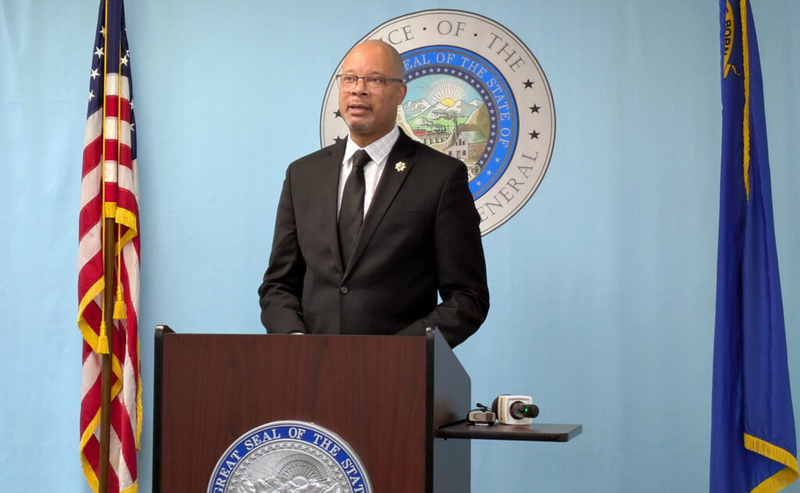
“Not everybody wants us talking about hate crimes. Not everyone wants us engaging in the conversation or even acknowledging that they exist,” said Nevada Attorney General Aaron Ford. (Photo: April Corbin Girnus/Nevada Current)
The number of hate crimes reported in Nevada have been rising, and even then, there’s a high probability that they’re underreported. In response, Nevada’s Attorney General’s office and community leaders formed a task force aimed at providing more avenues for the public to report hate crimes and incidents, resources for victims, and improving data collection for lawmakers before the next state legislative session.
“Not everybody wants us talking about hate crimes. Not everyone wants us engaging in the conversation or even acknowledging that they exist,” Nevada AG Aaron Ford said at the task force’s inaugural meeting this week.
Reported hate crimes in Nevada have been on the rise for three consecutive years, according to state crime statistics. In 2025, 279 hate crimes were reported in Nevada, a 73% increase over 2024. Four out of five of those reported crimes involved race, ethnicity or ancestry biases.
The Stop Hate Nevada hotline was created last year by the AG’s office in order to address the underreporting of hate crimes and to provide assistance to victims.
The hotline fielded 53 calls from the public in 2025, 35 of which were reportable hate crimes or hate incidents, the latter meaning a bias motivated act but not a crime as per state statutes.
“Law enforcement doesn’t generally take those reports or help individuals who have been impacted and still need support,” said Morgan Ferguson, the Stop Hate Nevada hotline manager.
Vandalism and property damage was the most common hate crime type, according to the hotline’s data, with 26 of the 35 reportable calls coming from Clark County.
Though victims of hate crimes can directly report to law enforcement or community groups, callers to the hotline can remain anonymous and be connected to any available resources by a care coordinator. Most victim referrals were for mental health services, Ferguson said.
The hotline cannot have a law enforcement component, Alcinia Whiters, a spokesperson for the AG’s office, explained via email. They can take “calls from victims and witnesses and can perform a warm handoff to law enforcement at the request of the victim/witness, if desired,” Whiters added, “but the goal is to connect victims with resources.”
This is due to the stipulations of the federal grant which funds the Stop Hate Nevada hotline. The grant is scheduled to end on Sept. 30, though the attorney general’s office may be able to apply for an extension.
Since the task force is also made up of community partners, organizations could expand beyond what the federal grant allowed for the hotline; however, one partner ran into funding issues.
Silver State Equality (SSE), a Nevada LGBTQ+ civil rights organization, was originally given a three-year $399,999 grant by the U.S. Department of Justice in 2024, but had it rescinded when the new administration took office last year.
“We received a termination notice in April 2025 that our grant was terminated because the focus no longer aligned with the priorities of the Department of Justice,” SSE State Director André Wade said.
SSE planned to provide education and awareness about LGBTQ+ hate crimes and how to report them with the funding.
“We would’ve been positioned to help the AG’s office promote the hotline and website and encourage them to collect data on sexual orientation and gender identity and expression—even if it was outside the scope of their federal grant,” Wade said.
The organization is actively seeking funding for the project because of a great need for it, Wade added.
Providing resources for hate crime victims was a throughline of the meeting, bookended by AG Chief of Staff Teresa Benitez-Thompson highlighting that victims can receive financial compensation. In the 2025 regular legislative session, Nevada lawmakers broadened the state’s victims of crime compensation fund to include victims of hate crimes and appropriated $30,000 for each fiscal year of the current biennium to serve hate crime victims.
The hate crimes task force will meet quarterly and plans to make recommendations to the Legislature when it is next scheduled to meet early in 2027, according to AG Ford.
Las Vegas, NV