State Board of Education rejects eastern Oklahoma district’s high school expansion
Jun 08, 2026 | 5:48 pm ET
Description
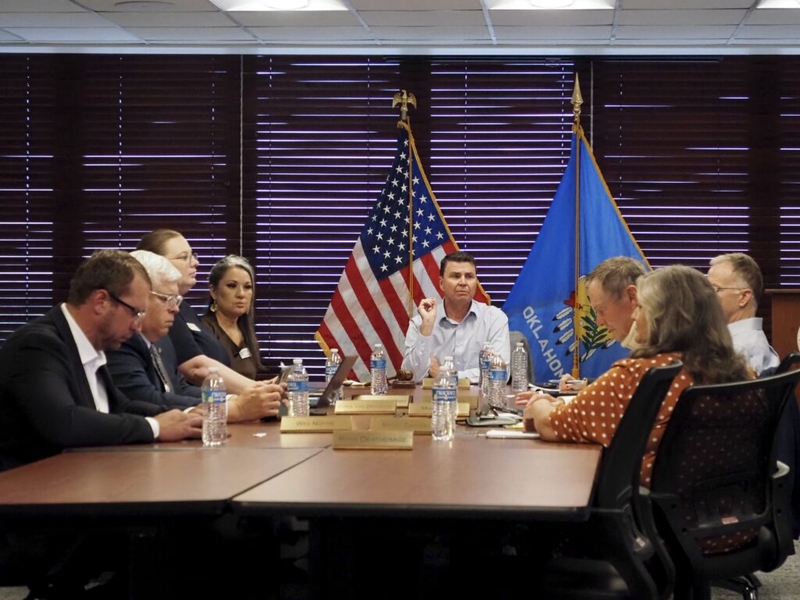
The Oklahoma State Board of Education, pictured Monday in Oklahoma City, voted to deny a proposal from Dahlonegah Public Schools to add a high school. The eastern Oklahoma district currently serves students K-8. (Photo by Nuria Martinez-Keel/Oklahoma Voice)
OKLAHOMA CITY — Balancing the aspirations of an expanding school district and a potentially existential impact on its neighbors, the Oklahoma State Board of Education denied a plan to open a fifth high school in rural Adair County.
Dahlonegah Public Schools, a K-8 district in Stilwell, had proposed opening a new high school in the coming 2026-27 academic year. The eastern Oklahoma district of 163 students is nearing completion on a new facility that would accommodate the expansion.
Neighboring districts warned they could lose students, teachers and funding to the proposed high school. State board members acknowledged approving a Dahlonegah High School could put Cave Springs Public Schools, a nearby K-12 district of 166 students, at risk of closure.
“If they lose kids there, they may not even be viable,” board member Chris Van Denhende said of Cave Springs. “I’m not saying that’s good or bad. I’m just saying that’s the reality.”
Dahlonegah students must transfer to other districts once they finish eighth grade. District officials estimate a high school in Dahlonegah could enroll up to 84 students in grades 9-12 in the next five years, according to Education Department records.
Superintendent Steven Cain said Dahlonegah is a small, well-funded district that provides individualized services to its high-need student population. State records show more than 90% of the district’s students come from low-income homes, and its per-pupil funding is among the highest in the state.
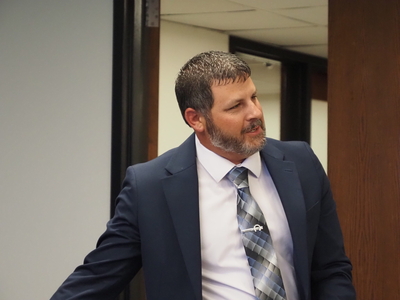
District employees know which students are living with grandparents without a working vehicle or which children have incarcerated parents, Cain said. Dahlonegah is “on the front lines” of overcoming those barriers, he said.
Once students disperse to other districts for high school, “they lose that connection, they lose those services and that opportunity to go on to post-secondary (education),” Cain said after the state board meeting. He said Dahlonegah could better provide for those students than if they went elsewhere.
Families in the district reported their children “often experience challenges such as inconsistent attendance, reduced engagement, and interruptions in the continuity of services and supports” once they leave Dahlonegah, state accreditation program director Amy Young wrote in a report on the proposed high school expansion.
“The Dahlonegah community deeply values the district’s strong wraparound support system, and expanding to a locally accessible high school would help maintain these supports while providing rigorous pathways within the community,” Young wrote in her report to the state board.
The district is building a new facility to support a larger capacity for middle- and high-school classes. The Cherokee Nation offered a 50-year lease agreement for $1 per year to support the new construction on 17.5 acres of land.
Young and other Education Department officials who made a May 1 site visit reported that the new facility is “progressing on schedule” to be substantially ready by August.
School boards representing nearby Stilwell Public Schools and Cave Springs submitted letters urging the state Board of Education to reject Dahlonegah’s high school proposal.
Opening the new school within Cave Springs’ boundaries would cause a “significant and adverse impact,” its board wrote.
Adding another high school in Adair County would force neighboring schools to compete for a limited pool of students and educators, wrote board members from Stilwell, a district of 1,300 students whose high school is 7.3 miles away from the proposed Dahlonegah site.
State funding of public schools is distributed on a per-student basis, so losing enrollment could cause a financial loss to Dahlonegah’s neighbors, they wrote.
“Adding a new school when it’s not strictly necessary can lead to under-enrollment, which eventually forces school closures and disrupts community stability,” according to the Stilwell board’s letter.
State Board of Education member Wes Nofire, a native of Adair County, said he’s supportive of Dahlonegah someday having its own high school, but doing so could cause upheaval.
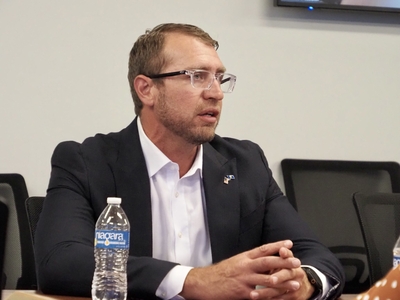
He said the matter needs more discussion with residents in the affected area and with the federal Bureau of Indian Education, which provides funding and services in the heavily Indigenous community. Dahlonegah’s student body is more than 80% Native American, state records show.
Nofire said the state shouldn’t “rush into this in such a short timeframe,” but he and other board members encouraged Dahlonegah to continue pursuing the expansion idea.
Cain, the district’s superintendent, said he “absolutely” intends to bring the high school proposal back to the state board in the future.
“It’s been a long, long process, and we’re getting closer,” he said.
Oklahoma City, OK