State auditor raises alarm about ‘highly questionable billing’ in program for aged and disabled
Aug 24, 2026 | 5:11 pm ET

Description
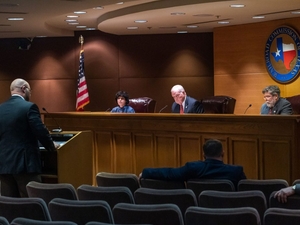
Nebraska Auditor of Public Accounts Mike Foley speaks with reporters after a hearing before the Legislature's Government, Military and Veterans Affairs Committee on a bill brought at his request. Feb. 5, 2026. (Zach Wendling/Nebraska Examiner)
LINCOLN — A Nebraska auditor’s probe has discovered examples of “highly questionable billing” and alleged weak oversight in a Health and Human Services program whose costs increased nearly 600% in the past decade.
Auditor Mike Foley’s team released a 34-page report Monday detailing findings after examining the Medicaid Aged and Disabled Waiver program administered by the Nebraska Department of Health and Human Services.
In a news release, Foley said extraordinary growth of the program, funded by a mix of federal and state tax dollars, makes having stronger and effective controls in place “ever more crucial,” though he noted that he is encouraged DHHS already is implementing measures to “catch dishonest providers.”
Foley’s team cited examples that raised red flags:
- Some personal care providers billed for more than 24 hours of service in a single day. “A certain provider billed for an impossible 47 hours in only one day,” Foley said.
- Auditors identified 15 providers who were paid for DHHS services but allegedly were working elsewhere at the time.
- Auditors found that providers could adjust their billable time after an Electronic Visit Verification system had verified hours worked. “One agency increased its billable time by 434.5 hours in a single month,” Foley said.
Foley said it is “all but inevitable” that Nebraska’s aging population will lead to further demands on resources.
“A major challenge in controlling surging costs is eradicating fraudulent billing by unscrupulous providers who exploit the program’s current administrative weaknesses,” Foley said.
The AD Waiver program is designed to help Medicaid-qualified older adults and individuals with disabilities receive care in their own homes or community settings instead of an institution.
Payments for services increased from about $65 million in 2016 to about $434 million in 2025, reflecting the nearly 600% increase.
According to the auditor report, 1,985 providers delivered services last year to 8,694 program recipients. The number of recipients two years earlier was about 6,100.
In a response included in the report, DHHS officials said some auditor claims and concerns already have been addressed by system enhancements. The agency said, for example, that as a result of changes made last December, its system rejects and won’t process a visit billed outside a 24-hour threshold. In other instances, DHHS said it would investigate and implement correction as appropriate.
Foley said that with nearly 2,000 providers, oversight is “no small task.”
Unrelated to the Monday report, DHHS has been in the spotlight lately as advocates of disabled Nebraskans criticized the agency’s implementation of a new interRAI tool, which essentially determines the level of publicly assisted care, services and funding for eligible Nebraskans with developmental disabilities. DHHS announced last week it hired an outside contractor to review interRAI usage.
Foley in his Monday report also raised concerns about four providers structuring themselves in a questionable way apparently to get a higher reimbursement rate. Agencies are permitted to bill at higher rates than independent providers due to additional costs, he said. But in those four cases cited, the caregivers were both the owners and the sole employees of their respective agencies and served only one participant.
“The people receiving assistance through the AD Waiver program deserve our full support and honest service providers are entitled to fair compensation,” Foley wrote. “At the same time … DHHS must be able to account for every dollar spent on this program.”
Lincoln, NE