Judge: FIU can’t enforce protest policy against anti-ICE demonstrators
Aug 24, 2026 | 4:54 pm ET
Description
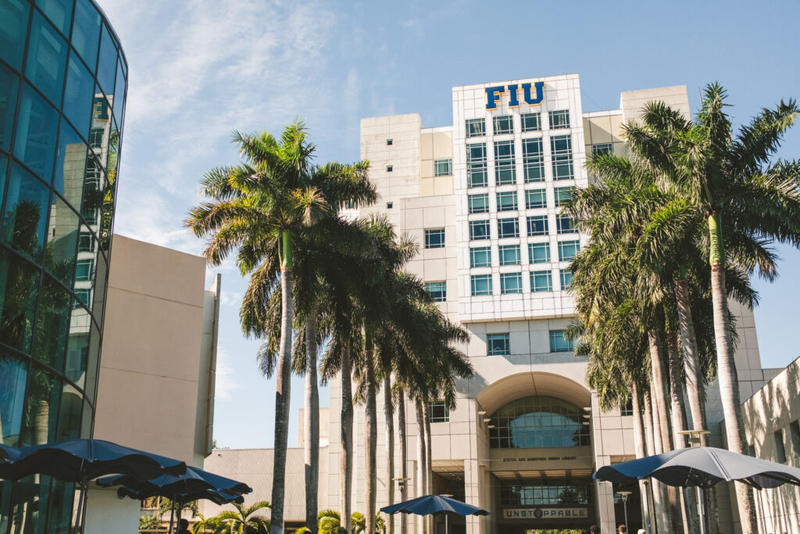
View from the FIU campus. (Photo via FIU)
A federal judge says Florida International University’s protest policy likely won’t withstand judicial scrutiny in a lawsuit filed by students punished after protesting ICE.
The ruling came Sunday, less than two weeks before a university-imposed deadline for the students to make a “video reflection” on the policy that prohibited their protest, and less than two weeks after they filed suit.
Judge Jacqueline Becerra, a Joe Biden-appointee to the U.S. District Court in the Southern District of Florida, issued the preliminary injunction.
The judge found a substantial likelihood the students, members of a group called ICEBreakers, would succeed on the merits, the standard for a preliminary injunction.
FIU students file federal lawsuit over ICE protest clampdown
The suit stems from a March 13 anti-ICE protest during a public event with FIU President Jeanette Nuñez and retired pro baseballer Alex Rodriguez.
Students stood up in the audience, turned around, and faced the crowd while wearing shirts urging, “ICE OFF FIU.”
Becerra wrote that “over sixty years of First Amendment precedent supports” the students.
“In short, when all is said and done, and for at least sixty years, the standard has been the same: student speech cannot be curtailed unless it materially disrupts the educational mission or involves substantial disorder or invasion of the rights of others,” Becerra wrote.
Becerra pointed to Tinker v. Des Moines Independent Community School District in her 28-page filing. That U.S. Supreme Court decision held that students and teachers do not “shed their constitutional rights to freedom of speech or expression at the schoolhouse gate.”
High school and elementary school students in that case wore black armbands to protest the Vietnam War, and the Des Moines school district suspended the older kids.
“Any discussion of a student’s freedom of speech in public schools certainly begins, and perhaps ends,” with Tinker, Becerra wrote.
The details
Per the lawsuit, the FIU students, a group of no more than 15, left the auditorium on their own after less than five minutes. The students remained silent and the conversation on stage continued throughout.
FIU charged the students with misconduct, contending they violated the school’s “expressive activities” policy.
The university, to “protect health, safety, and welfare and prevent disruption of university activities,” prohibits inside university buildings “protests, parades, marches, picketing, demonstrations, and other similar expressive activities” under the policy.
“Formally, the ruling prevents FIU from enforcing its policy against only members of ICEBreakers, but the court’s reasoning makes clear that it would be unconstitutional if enforced against anyone else as well,” the ACLU said in a news release.
The university demanded the students produce a two-minute video reflecting upon the regulation by Sept. 4. Failure to do would would get them barred from registering for classes or receiving diplomas.
“Blocking this regulation means students can start the fall semester without fear of being punished for peacefully protesting,” Max Fondren, president of the ICEBreakers student group, said in a news release. “Our work to end FIU’s cruel and unnecessary decision to deputize campus police as ICE agents will continue.”
The students are represented by the ACLU of Florida and Community Justice Project.
“FIU’s discomfort with our message does not override our right to protest against the university’s 287(g) agreement — nor will it get us to stop,” Andrew Caro, another of the seven charged students, said in the news release. “Our protest did not derail the event, nor did it impact anyone else’s rights. It was non-disruptive and fully protected speech.”
The university police department had signed such an agreement with ICE to help enforce immigration law.

Tallahassee, FL