SJC upholds Mass. law restricting firearms for people under 21
Oct 20, 2026 | 1:48 pm ET
Description
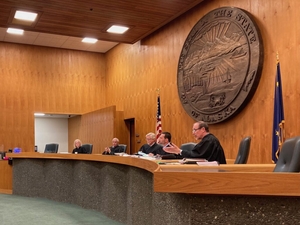
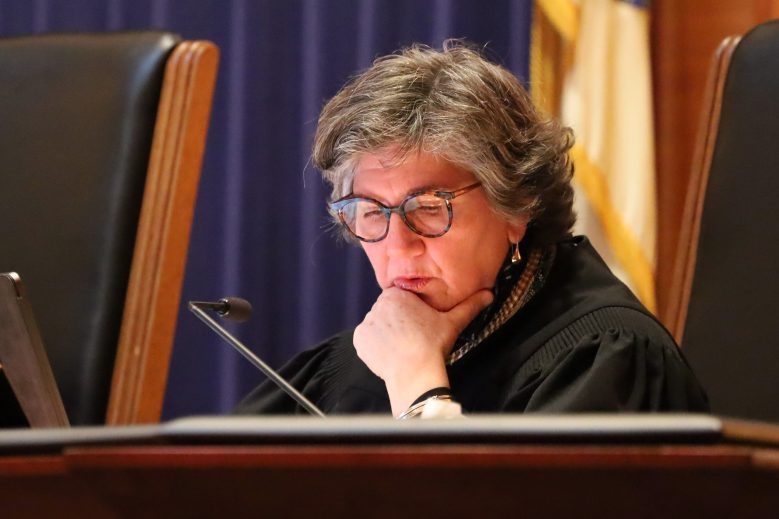
Massachusetts Supreme Judicial Court Justice Gabrielle Wolohojian at the John Adams Courthouse in Boston.
MASSACHUSETTS’S LAW PREVENTING people under 21-years-old from obtaining a license to carry handguns or large capacity firearms is constitutional, the state’s highest court ruled on Tuesday. But two justices dissented, arguing the matter should have been sent back down to a lower court for more detailed expert testimony and briefs.
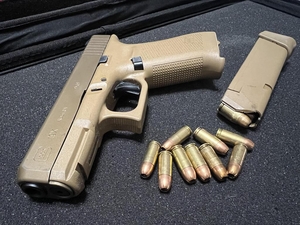
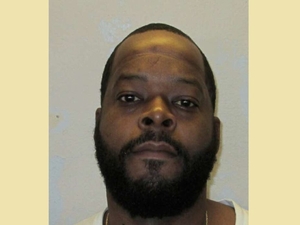
Mikai Thomson, who was a passenger in a car that ran a red light, was arrested in December 2021 after he fled police and discarded a semiautomatic handgun. Because the 20-year-old Thomson had no license to carry, he was charged with and convicted of carrying a firearm without a license.
Despite never applying for a license, Thomson challenged the age restriction in his specific case and on broader grounds. It would have been futile for him to apply, since the law prevented him from being licensed, and the regulation unconstitutionally diminished the Second Amendment to a “second-class right” by depriving adults under 21 from carrying, Thomson’s lawyers argued.
COMMONWEALTH vs. MIKAI THOMSON
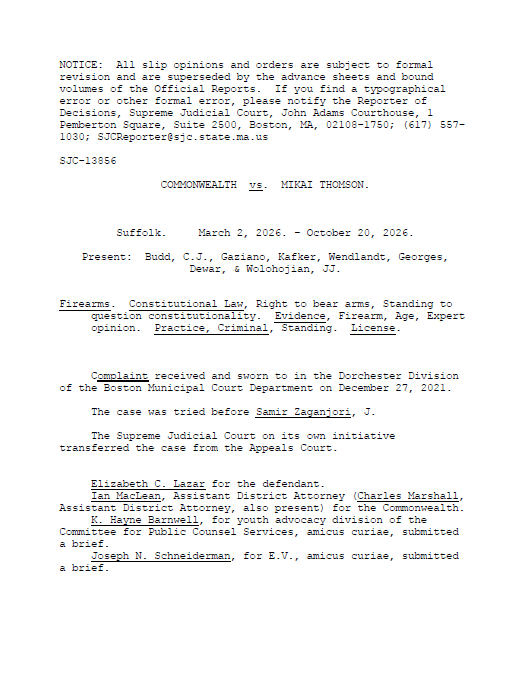
Thomson did not have standing to challenge the law as it applied to him, Justice Gabrielle Wolohojian wrote in a 49-page opinion for the court’s majority, because Thomson was never actually denied a license. But he did have standing to challenge the law as unconstitutional on its face, the full court agreed.
“Because restriction of firearm possession by those deemed too young to handle them safely outside of supervised settings is consistent with the nation’s regulatory tradition,” Wolohojian wrote, the majority upheld the lower court’s conviction.
The decision comes as Bay State voters are deciding whether to keep or scrap a sprawling firearms law passed in 2024, which includes the same age restriction.
In its analysis, the SJC noted that rulings from the US Supreme Court have found that the Second Amendment established a right to have and use arms for self-preservation and self-defense, but that right is “not unlimited.”
A 2022 US Supreme Court decision created a new test for how states must defend their gun restrictions: whether the law has a relevant historical analogue from the Founding era.
The licensing system in Massachusetts “gives progressively greater unsupervised access to the possession and use of firearms by young people as they mature in age,” Wolohojian said. This was the result of “calibrated legislative determinations” on when and where young people can be entrusted with deadly weapons.
Young people can carry firearms under an array of circumstances in the Bay State, the court noted, such as under the supervision of a licensed gun owner. Minors from 15- to 17-years-old can apply for a Firearms Identification Card (FID) with parental consent to carry rifles or shotguns that are not large capacity, as can anyone 18 or older without needing a parent’s permission.
But, under Massachusetts law, they have to wait until they are 21 for a license to carry rifles and shotguns including large capacity and semiautomatic firearms and all handguns.
Age-based restrictions are common in the United States and in Massachusetts, the court’s majority noted. Exactly what the cut-offs are for any specific right — like voting on a jury or drinking alcohol — is a matter for the Legislature to determine, Wolohojian wrote.
The licensing age restriction works by relaxing over time “as young people mature” to protect them “from the consequences of firearm possession –- to themselves and others — stemming from their own immaturity.”
Wolohojian wrote that this is analogous to laws from the founding era in Massachusetts in which minors, even those enrolled in military service, were not expected to supply their own arms. Supervising officers were tasked with overseeing the use of firearms to preserve public safety, she wrote.
She also noted that a federal judge upheld the Massachusetts age restriction against an NRA-backed challenge in August, using similar logic.
Justice Scott Kafker dissented, joined by Justice Dalila Wendlandt. In the 28-page dissent, Kafker took issue with the majority’s analysis, especially when three appeals courts decisions struck down policies in other states that restricted carrying firearms by those between 18- and 21-years old.
The briefing was too thin on this extremely complicated question of which historical analogues are most informative, he wrote, and the case should have been sent down to the lower court for deeper scrutiny.
“I believe further briefing and expert historical analysis are required to draw the appropriate analogy reliably and correctly,” he wrote. “Lamentably, as a result of the court’s chosen course, the first time the defendant will see much of the history undergirding the court’s legal conclusion will be when the court’s opinion issues.”
Boston