How Nebraska helped turn 2026 into the year of the independent US Senate candidate
Oct 20, 2026 | 3:41 pm ET
Description
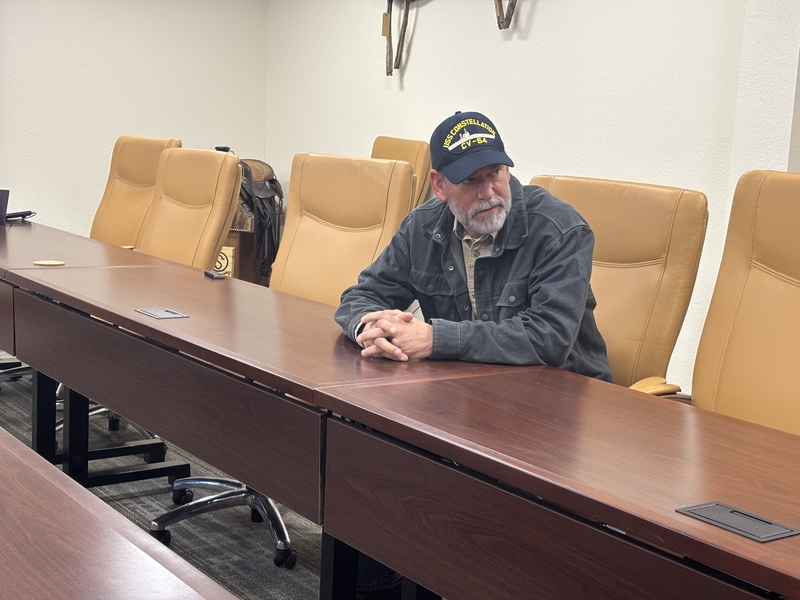
Dan Osborn, an independent candidate for U.S. Senate, sits at a conference room in Hyannis, Nebraska, on Oct. 15, 2026. Osborn met with three voters, including a local rancher who supports President Donald Trump. (Photo by Jonathan Shorman/States Newsroom)
HYANNIS, Neb. — With 19 days until Election Day, Dan Osborn sat across from three skeptical voters in a conference room in this blink-and-you-miss-it rural Nebraska town.
Osborn, a bearded former union leader and Navy veteran, wants to become the first independent U.S. senator from Nebraska since World War II by defeating Republican Sen. Pete Ricketts. The state’s top Democrats are backing Osborn’s bid rather than fielding a candidate.
But this is Trump country. President Donald Trump has never received less than 58% of the vote in Nebraska.
In Grant County, where Hyannis is the county seat, 96% of voters backed Trump in 2024. The county, one of the least populous in the state, had a population of 611 in the 2020 census.
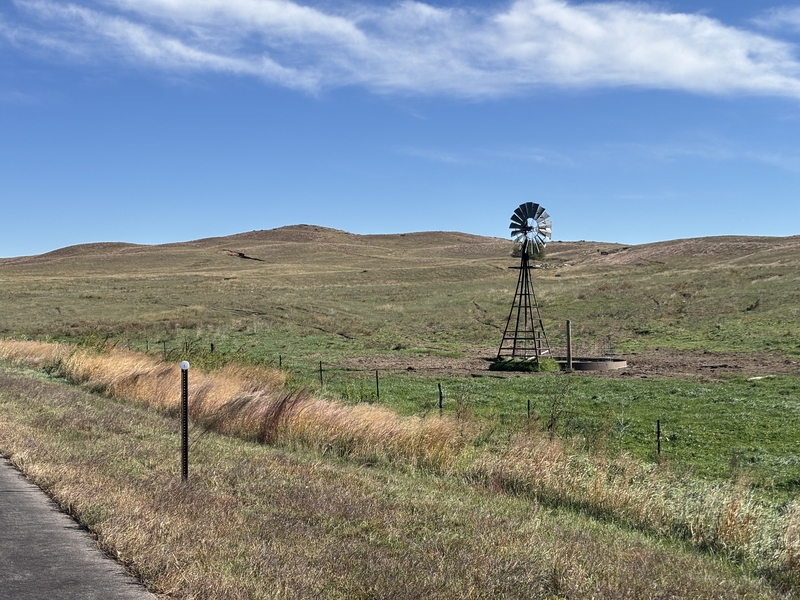
Local rancher Mark Vinton told Osborn he was “no huge fan” of Ricketts, but that he fully supports Trump’s agenda. Trump was the most consequential and probably the best president of his lifetime, he said.
“So I need to ask you: Would you support Trump’s agenda?” Vinton asked. “Because you know you’re talking to a pretty red area, right?”
“For me, a good idea is a good idea,” Osborn replied, noting that if elected, another president will also be in office during his six-year term.
Osborn is one of four independent candidates for U.S. Senate this year who are the main opponents of incumbent Republican senators. All hail from states — Idaho, Montana, Nebraska and South Dakota — where Trump won easily and Democrats struggle in statewide elections.
While a Democratic candidate remains on the ballot in Montana, the state party chair recently resigned and endorsed the independent.
The independent campaigns come at an opportune moment. The president’s party typically loses seats in midterm elections, but Trump’s popularity has fallen to new lows, driven by frustrations with inflation and the war with Iran. A national Washington Post-ABC News-Ipsos poll released Sunday found Trump’s approval stands at just 33%.
The independent candidates are betting that broad dissatisfaction among voters and economic anxiety, combined with their distance from the national Democratic brand, will be enough to create breathing room for voters — including Trump voters — to seriously consider them.
A real race in Nebraska
The Nebraska race appears to be the most competitive. A YouGov poll released in early October gave Osborn a 1 percentage point lead over Ricketts among likely voters, within the poll’s margin of error and suggestive of a toss-up race.
In addition to Osborn, the other independent Senate candidates — Brian Bengs of South Dakota, Seth Bodnar of Montana and Todd Achilles of Idaho — and their supporters see an opportunity to crack the dominance of the two parties in the Senate.
They have promised not to caucus with either party if elected, spurring talk of an independent caucus that could exercise leverage within the chamber. Such a body would be a novelty in the Senate, where a complex network of rules and tradition closely tied to party membership govern the process.
The Senate already has two independents, Sen. Angus King of Maine and Sen. Bernie Sanders of Vermont, but both caucus with Democrats, who now hold 47 seats in the chamber with their support.
One or more successful campaigns could also spur additional candidates in the future, advocates for independents say. Over time, more states could have close or competitive races after years of one party dominating.
“It’s not just winning, though,” said John Opdycke, a longtime activist for political independence. “It’s going to Washington and creating an independent caucus — an independent nexus, a lead, a beachhead, a toehold — for people that want to serve their state but don’t want to be part of team red and team blue.”
The independents are also running in agriculture-heavy states where Trump’s trade wars and the cost of diesel have become economic pain points. Trump recently signed an executive order in Nebraska aimed at lowering diesel prices by deferring the federal tax on the fuel. On Monday, the president also announced an $8 billion fuel relief program for farmers.
An unhappy electorate
Nebraska’s likely voters have nearly equal levels of dissatisfaction with the two major parties. The YouGov poll found that 54% of respondents had a somewhat or very unfavorable view of the Republican Party, while 58% said the same of the Democratic Party.
“I think Democrats have spent too much time talking down to people, telling them what they need to respect, what they don’t need to respect, especially on social issues,” Osborn said in an interview. “And I would align more conservatively with the fact that we have $40 trillion in debt. We need more fiscal hawks, and unfortunately, that’s not a Republican thing anymore.”
Republicans have responded by working aggressively to tag the independent candidates as Democrats. They argue the independent label simply masks support for liberal policies that will anger conservative voters. The Ricketts campaign has dubbed Osborn “Democrat Dan.”
“The Fake Independent circus is fooling nobody,” Bernadette Breslin, national press secretary of the National Republican Senatorial Committee, the main campaign arm of Senate Republicans, said in a statement.
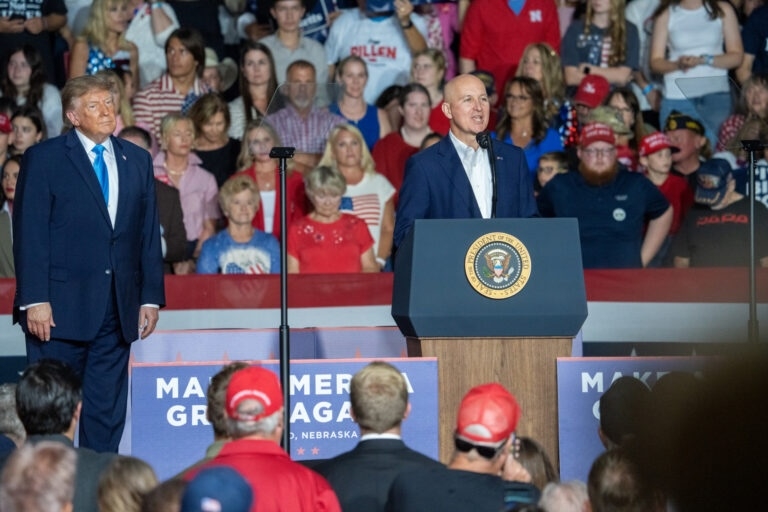
Trump is also betting that he has enough juice to drive his own core supporters to the polls, even though he’s not on the ballot. The president has already held one rally in Nebraska this month and Vice President JD Vance is expected to visit in late October. (Trump has also visited Montana this fall).
“Pretend I’m on the ballot, please,” Trump told supporters in Grand Island, Nebraska, on Oct. 5. “We’ve got to go and win this.”
Populist pitch
Osborn, a 51-year-old industrial mechanic, first gained attention as a labor leader at Kellogg’s, the food company. In 2021, he helped lead a nationwide 77-day strike of the company’s cereal-producing plants, including an Omaha location.
The strike garnered national attention, with President Joe Biden at one point attacking Kellogg’s plan to replace striking workers.
On the campaign trail, Osborn brings a blue-collar aesthetic, wearing blue jeans, work jackets and a U.S.S. Constellation hat — the Navy ship where he served as a storekeeper. During stump speeches, he offers a populist pitch centered on addressing affordability, opposition to the war in Iran and combating corruption.
Osborn also often talks about the importance of releasing more information on the convicted sex offender and financier Jeffrey Epstein, saying the files are “going to break up the entire world order.”
He paints Ricketts, a 62-year-old former governor and the eldest son of the founder of TD Ameritrade, as someone who “ran our state like a mob boss” and demanded complete loyalty.
In Nebraska, a Democrat last won a U.S. Senate race in 2006 amid a blue wave driven by anger over the Iraq War, when incumbent Sen. Ben Nelson beat Ricketts. No Democrat has won more than 40% of the vote in a Senate contest since 2012.
But Osborn earned notice when he won 46.5% of the vote during his first campaign in 2024, as an independent against Republican Sen. Deb Fischer.
‘They’re going to need my vote’
At a late afternoon town hall at a Mexican restaurant in Omaha that drew about 40, Osborn outlined how he believes he would exercise influence in the Senate as an independent. He noted that the One Big Beautiful Bill Act, Trump’s signature tax and spending package, only passed in 2025 with a tie-breaking vote from Vance.
If he had defeated Fischer, Osborn said the legislation wouldn’t have passed or would have been changed. “There’s going to be a lot of different bills like that where they’re going to need my vote, and that’s leverage,” Osborn said.
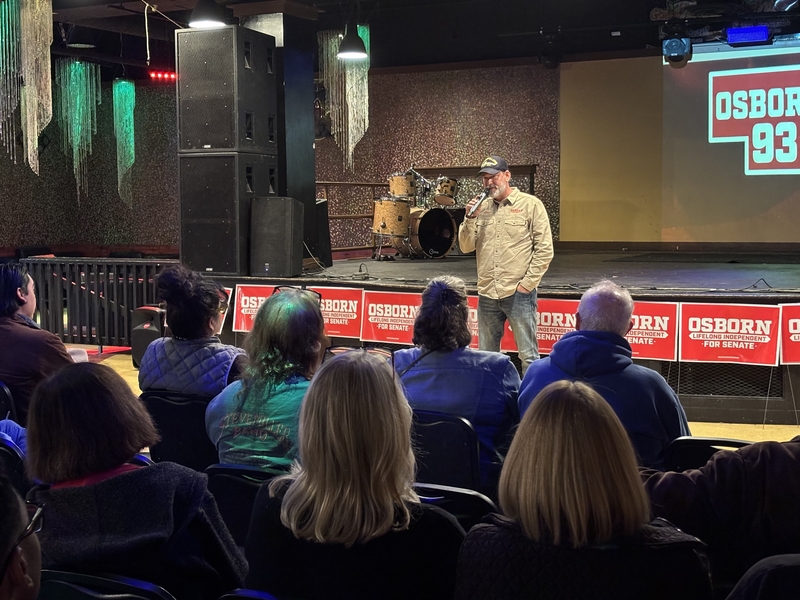
D’Shaun Samuels, a truck driver studying computer science at Bellevue University near Omaha, after the town hall said he was impressed with Osborn. Samuels said he was a registered Democrat but has grown more independent as he observes the political system.
“It’s become this back and forth screaming match between, basically, two adult children screaming at each other: ‘It’s your fault, it’s your fault,’” Samuels said. “But I appreciated that he was saying, ‘No, it’s both of you.’”
GOP questions independence
Republicans charge that Osborn, rather than embodying independence, has been a flip-flopper who’s contemptuous of Nebraska’s rural areas.
Ricketts and other Republicans point to comments Osborn made at a 2025 town hall where he appeared to signal openness to caucusing with Democrats. During a press call earlier in October, Osborn told reporters he has “no interest” in caucusing with either the Republicans or Democrats.
Osborn also faced heavy criticism for an audio recording in which he denigrated a hypothetical Trump-supporting couple from Red Cloud, a town of just under 1,000 in southern Nebraska. He traveled to Red Cloud on Oct. 1 and apologized during a town hall.
In another audio clip, Osborn called Trump’s border wall a “symbol of racism.” Osborn said after the leak that he supports strong, effective border security.
Ricketts’ campaign didn’t make the candidate available for an interview but provided a statement attacking Osborn.
“Dan Osborn isn't an independent. He was recruited by Democratic Socialists, funded by national Democrats, and endorsed by the Nebraska Democratic Party,” Ricketts said in a statement.
“He's comfortable lying to Nebraskans in a way this state has never seen,” Ricketts said. “He’s running ads promising to help build the border wall while calling it ‘a symbol of racism’ behind closed doors. Independent voters want honesty, and I’m the only candidate in this race who tells Nebraskans exactly where I stand."
In an interview, Osborn said he had never considered running as a Democrat. He noted the fear some of the Founding Fathers, such as George Washington and James Madison, had of political factions and parties.
“Everybody wants me to play on their team, but ultimately I’m not interested in doing that,” Osborn said.
Democrats offer backing
Even as Osborn seeks to distance himself from both parties, top Nebraska Democrats have been open about their support.
More than a year ago, Jane Kleeb, the chair of the Nebraska Democratic Party, publicly backed Osborn’s campaign. The Democratic nominee for U.S. Senate, Cindy Burbank, also dropped out to support the independent candidate.
While Kleeb made clear that Democrats want to continue building party support in the state, including in rural communities, she said supporting Osborn isn’t strange because of the state’s unicameral, nonpartisan legislature.
Nebraska is the only state to take that approach, a change voters approved in 1934 after a campaign driven by Sen. George Norris, the state’s last independent senator.
“Nebraska is a very kind of populist, independent state,” Kleeb said.
Some Republicans say the legislature effectively functions as a partisan institution and dismissed the idea it fosters political independence.
“Technically, it’s nonpartisan. In reality, it’s very partisan,” said state Sen. Loren Lippincott, a registered Republican.
Nonpartisan voters account for about 22.5% of registered voters statewide, while Democrats comprise 26% of voters. Nearly half, 49%, are Republicans.
Despite Republicans’ lopsided voter registration advantage, Kleeb said voters have shown they’re willing to cast a ballot for a different party.
“We’re a smaller state, in that you really do get to know the candidate,” Kleeb said. “It’s not just a person on your TV.”
Hours on the road
Osborn has committed to visiting every Nebraska county during his campaign. As of Tuesday, his website recorded stops in 79 of the state’s 93 counties.
Fulfilling the pledge takes hours on the road, sometimes for stops that draw only a handful of people. But it can also mean reaching voters who may not be willing to vote for a Democrat but might consider an independent, especially as Trump’s popularity sags.
Nida Gorwill said she hadn’t made up her mind about who to vote for after Osborn on Wednesday visited with lunchtime patrons at The Bunkhouse, a restaurant in Arthur, a town of about 120 nestled in the Sand Hills.
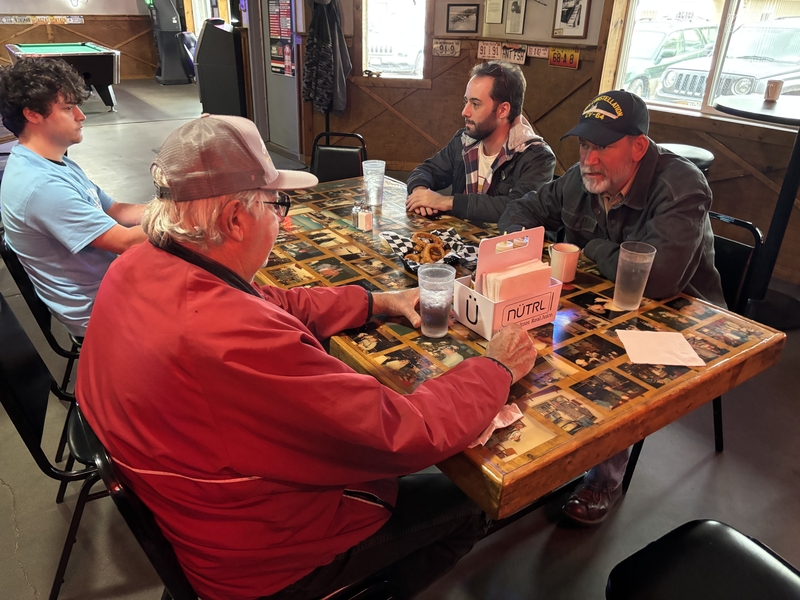
But Gorwill, who at 80 manages a local general store, said she liked Osborn’s status as an independent and not a Democrat.
Candidates for office need to spend time as a “common, ordinary” person, Gorwill said. “I don’t think Trump has a clue about what it would be like to stand in the back of a truck and pitch hay,” she said.
The Trump administration’s policy on beef has caused particular consternation in rural parts of the state. The White House announced in August that beef from Argentina would be allowed into the United States without tariffs.
The move was intended to fight rising beef prices at grocery stores, but it angered cattle producers, who see it as undercutting the American beef industry amid the lowest cattle inventory in decades. Ricketts criticized the move at the time, but Osborn has produced an ad slamming the imports.
Al Davis, a former state lawmaker and Sand Hills rancher, was a registered Republican while in office but is now a Democrat. After supporting Fischer, he’s pulling for Osborn over Ricketts. Davis said Osborn appears to have more momentum than in his first campaign.
“I just really hope we’ll have change,” Davis said.
'Usually, the Republicans come home'
But Hall County Republican Party Chair David Plond predicted Republican voters would vote for Ricketts, no matter what differences they may have with Trump. Plond, whose county includes Grand Island, called any visit by a president a positive.
While Plond acknowledged that Trump “says some things once in a while and misspeaks,” he said most people in Nebraska are happy with his politics.
“Usually, the Republicans come home,” Plond said. “They may be upset with one or two things, but they usually come home.”
In Hyannis, Vinton — the Trump-supporting rancher — said his mind was “pretty well made up” but that he came to speak with Osborn to see if he could change it. As the meeting broke up, he told a reporter he planned to vote for Ricketts.
This didn’t appear to faze Osborn. Asked about Vinton, he emphasized the importance of speaking with as many people as possible. Calling his approach “old school,” he said the conversations were the right thing to do.
“If I win, I’ll be back,” Osborn told the voters as they left.
Nebraska Examiner’s Juan Salinas II contributed reporting.
All States Newsroom content is free to republish. Read our republishing policy for more information.