A federal judge lets North Carolina’s new absentee ballot rules stand
Oct 20, 2026 | 11:02 am ET
Description
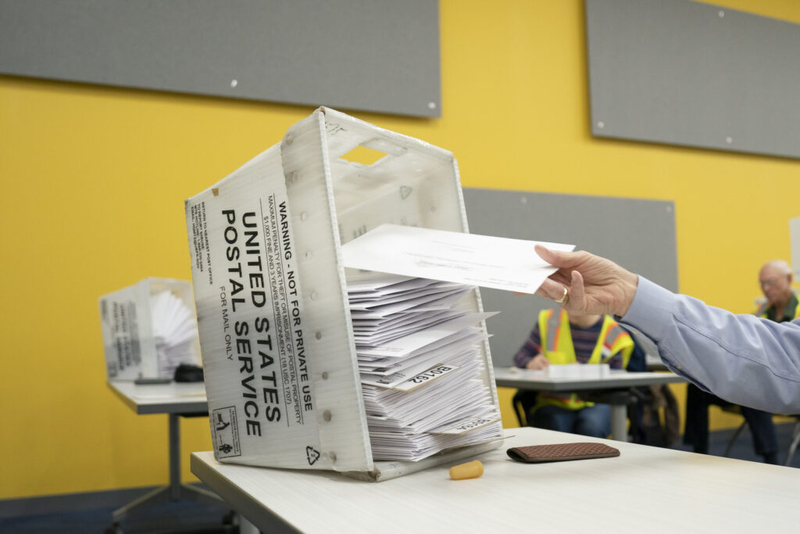
Absentee ballots are prepared to be mailed at the Wake County Board of Elections on September 17, 2024 in Raleigh, North Carolina. (Photo by Allison Joyce/Getty Images)
A federal court judge ruled against challengers of new absentee ballot requirements, saying the signature and envelope sealing requirements are not undue burdens.
In a ruling late Monday, Federal District Judge Thomas D. Schroeder wrote that the challengers were not likely to win after a trial and denied their request for a preliminary injunction.
In a rule the state Board of Elections adopted on Sept. 4 in a party-line vote, ballots that arrive in an unsealed inner envelope or only in a sealed outer envelope are no longer accepted. When county boards of election receive ballots in the outer envelope or in an unsealed inner envelope, they must send voters new ballots.
The North Carolina Alliance for Retired Americans, North Carolina Asian Americans Together, Down Home North Carolina, and two voters filed a federal lawsuit against the state Board of Elections and elections boards in Guilford and Durham, asking the court to block the rules for the 2026 midterm and future elections. They also challenged a signature verification requirement.
More absentee ballots in NC in danger of being tossed under new directives
Schroeder wrote that the plaintiffs would have counties accept ballots that were clearly not signed by the voter.
“Plaintiffs’ proposed remedy eliminates any verification of the signature, permitting a voter to sign anyone’s name to the certification, even ‘Mickey Mouse,’” he wrote.
The state board approved the rule the day the first absentee ballots were mailed. The plaintiffs filed their lawsuit 18 days later, a delay Schroeder said was significant. The state board told the court at last week’s hearing that 31,582 absentee ballots had already been cast under the new rules.
Schroeder said the plaintiffs took too long to sue, and that they were unlikely to win on the merits.
“[T]he absentee voter who fails to seal his or her ballot correctly has an opportunity to correct a mistake, and is not barred from participating in early voting or voting on election day. Likewise, the voter whose signature is rejected for ‘clear evidence’ that it is not their name has an opportunity to submit another ballot, participate in early voting, or vote on election day,” he wrote.
Raleigh, NC