Gov. Kay Ivey commutes death sentence of Toforest Johnson
Oct 20, 2026 | 3:23 pm ET
Description
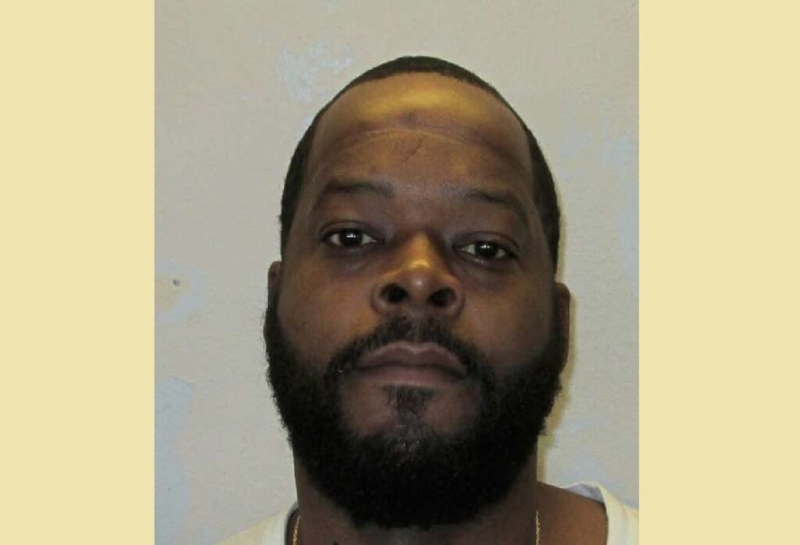
Toforest Johnson is seen in this undated photo. Gov. Kay Ivey Tuesday commuted Johnson's death sentence to life without parole. Major questions have been raised about the credibility of a witness whose testimony led to Johnson's conviction for the 1995 murder of off-duty Jefferson County Sheriff's Deputy William Hardy. (Alabama Department of Corrections)
Gov. Kay Ivey Tuesday commuted the death sentence of Toforest Johnson, whose conviction for the murder of an off-duty Jefferson County sheriff’s deputy in 1995 has faced years of questions over the conduct of prosecutors and the reliability of a key witness.
Ivey said in a news release on Tuesday that she had concerns there was not enough evidence to carry out the death penalty that jurors recommended 10-2.
“My decision is not a determination of innocence, but a recognition that the circumstances of this case justify commuting his death sentence to life imprisonment, without possibility of parole,” the statement said.
Ty Alper, an attorney for Johnson, who has always maintained his innocence, said in a statement Tuesday that the commutation “was made possible by Alabamians from all sectors of society united in their belief that Toforest does not belong on death row. That list now includes Governor Ivey.”
He added Johnson is not guilty of murder and that he and other members of Johnson’s legal team will continue to work on his case.
“Toforest Johnson is innocent,” the statement said. “Now it is up to the courts to overturn his conviction and grant him a new trial. We will keep fighting until he is home with his family.”
A message was sent to other members of Johnson’s legal team on Tuesday seeking comment.
Johnson was convicted in 1998 for the July 19, 1995 murder of William Hardy, a Jefferson County sheriff’s deputy who was working as a security guard at the Crown Sterling Suites Hotel in Birmingham when he investigated a noise he heard in the parking lot.
Law enforcement eventually arrested Johnson, Ardargus Ford and four other people in connection with the incident. Three of the individuals were released and the charges dropped.
Johnson was convicted based on testimony from Violet Ellison, who told investigators three weeks after the incident that she allegedly heard someone named “Toforest” admit to shooting and killing Hardy as part of a three-way phone conversation in August of that year.
Both Ford and Johnson were then tried twice each. Prosecutors presented different theories of the crime to jurors in the cases. In one, it was Ford who shot Hardy while in others they placed the blame on Johnson.
However, multiple witnesses said in affidavits that they saw Johnson across town, away from the crime scene during the incident. Ford was acquitted in Hardy’s murder at his second trial, but Johnson was convicted of capital murder at his second trial and sentenced to death.
The Alabama Court of Criminal Appeals affirmed the conviction on Johnson’s direct appeal. Johnson then sought a new trial through a Rule 32 petition for post-conviction relief.
In his filings, Johnson alleged that his Sixth Amendment right to effective assistance of counsel and his Fourteenth Amendment right to due process had been violated. Prosecutors did not reveal to his defense team that Ellison was paid a $5,000 reward by the state after she provided information to law enforcement about the alleged three-way phone call. The defense said it could have used the evidence to challenge her credibility.
Johnson’s appeal included multiple remands by the different courts. The Alabama Court of Criminal Appeals returned the case to the circuit court three times and ordered the trial court to hear different parts of his ineffective assistance of counsel claims twice.
In 2017, the U.S. Supreme Court ordered the case be remanded to the Alabama Court of Criminal Appeals and eventually to the trial court. The Jefferson County Circuit Court refused to grant Johnson a new trial in all cases.
His final chance happened when the U.S. Supreme Court declined to review another appeal regarding the payment to Ellison.
Johnson’s attorneys filed another legal challenge in Jefferson County Circuit Court in November 2024, citing the findings of a 2020 investigation by Jefferson County District Attorney Danny Carr that raised doubts about the conviction.
He said that the jury and judges “did not have the benefit of all of the information that we have access to now.”
Several Alabama political figures, including former Lt. Gov. Bill Baxley and former Alabama Chief Justice Drayton Nabers, have called for a new trial or for Johnson’s conviction to be overturned.
The Alabama Attorney General’s Office said that Johnson’s claims have been raised before and that his request for another hearing should be denied.
Ivey has presided over the most executions of any Alabama governor since the death penalty was reintroduced in 1983. In 2025, Ivey commuted the death sentence of Rocky Myers over questions of his guilt. In March, Ivey commuted the death sentence of Charles “Sonny” Burton, who was sentenced to death for the 1991 murder of Doug Battle in a Talladega AutoZone during a robbery. Burton did not kill Battle and was not present in the store when Battle was killed.
- 4:42 pmUpdated at 4:42 p.m. with additional background on the Johnson case.
Montgomery