Sheehy, Padilla look to secure hazard pay for prescribed burns
Jun 29, 2026 | 3:49 pm ET
Description
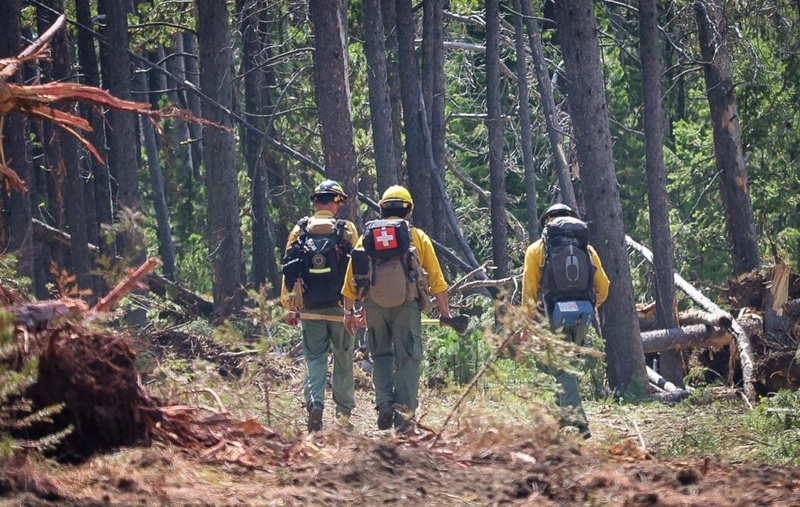
Firefighters, along with a medic, hike near the Windy Rock fire near Drummond in August 2025. (Peelee Clark / Northwest Team 2)
Legislation introduced in the U.S. Senate this month from Republican Montana Sen. Tim Sheehy and Democratic California Sen. Alex Padilla seeks to extend firefighter hazard pay to prescribed burns and training jumps.
Wildland firefighters already get hazard pay while working on active fires, but they do not currently for prescribed burns or while training for aerial insertion into an incident.
Prescribed burns are also seen as a way to reduce fire risk and this legislation would also lead to increased pay for some firefighters.
“Our wildland firefighters and smokejumpers face incredible risks to defend our communities, and for too long, they have done so without fair compensation,” Sheehy said in a statement. “With the bulk of fire season on its way, this bipartisan bill ensures we pay these heroes what they deserve as they continue their dangerous work to protect families, communities, and property from the threat of catastrophic wildfire.”
Padilla — who Sheehy partnered with on legislation creating the U.S. Wildland Fire Service last year — said it was a “long overdue” raise for firefighters.
“As wildfires become more intense and frequent, we need to recruit and retain more firefighters to maintain strong crews on the frontlines,” Padilla said in a statement. “Our bill will ensure that our brave wildland firefighters receive hazard pay for a broader range of high-risk work.”
Some advocacy organizations, including Megafire Action, the United Aerial Firefighting Association and the Western Fire Chiefs Association all expressed support for the legislation in a press release. Led in part by Sheehy, the United States under President Donald Trump has looked to turbo-charge aerial response to fires in an effort to suppress fires while they’re small.
Sheehy founded Bridger Aerospace, an aviation company heavily involved in aerial wildfire operations.
“Codifying hazard pay for prescribed fire duties into statute gives the workforce — and the agencies — something durable to build on,” said Paul Petersen, the executive director of the United Aerial Firefighting Association, said in a press release. “The bill’s extension of hazard pay to smokejumper training jumps is equally important. Maintaining parachute proficiency is not an administrative exercise; it is operational readiness, and it carries real risk. Compensating it accordingly is overdue.”
Helena, MT