Omaha dental school gets $4.6M nibble of $50B federal rural health fund
Jun 29, 2026 | 4:14 pm ET
Description
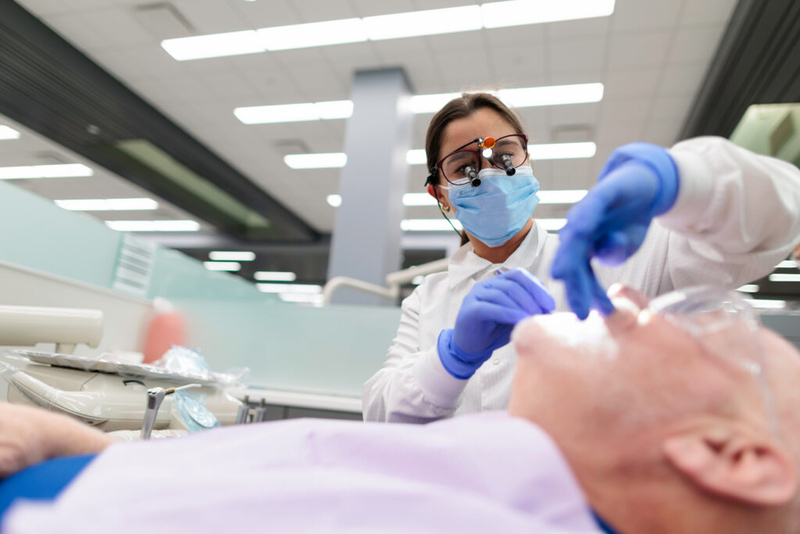
A patient receives care at a Creighton University dental clinic. The Omaha-based university's dental school is one entity to receive a bite of Nebraska's portion of the $50 billion the federal government plans to distribute among all states over five years to help offset harm to rural areas due to sweeping cuts to Medicaid. (Courtesy of Creighton University)
OMAHA — Omaha Creighton University’s dental school has been awarded a $4.6 million grant by the state to help expand access to oral healthcare for Nebraska’s rural and underserved communities.
The funds come from the federal Rural Health Transformation Program, which was authorized under the mega tax and spending cut package President Donald Trump signed into law last July. In all, $50 billion is to be distributed ($10 billion annually through fiscal year 2030) among states to help offset harm to rural areas due to sweeping cuts to Medicaid, the state-federal public health insurance for people with low incomes.
Half of the program funding is to be allocated evenly across states. The other half is to be doled out based on several factors, including a state’s rural population and policy actions, according to the Centers for Medicare and Medicaid Services.
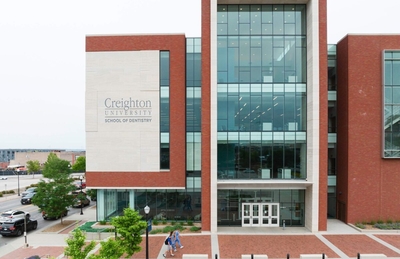
As previously announced, Nebraska secured the eighth-highest funding amount, or $218.5 million, for the first year of the five-year rollout. Creighton, a private Jesuit university based in downtown Omaha, has announced that it will receive $925,000 annually, or $4.6 million over five years.
Asked about other entities that will share in Nebraska’s funds, a spokesperson for the Nebraska Department of Health and Human Services, which administers Medicaid and the state grant program, said the state could not readily provide that information.
Independent researchers at the University of Nebraska Medical Center and elsewhere nationally have questioned whether the rural health grant funding will be enough to offset the structural changes to Medicaid that narrow thin margins for medical providers in less populated areas.
Among initiatives planned by Creighton, representatives said, are services and clinics designed to divert patients away from seeking more expensive and often less effective care for dental crises in hospital emergency rooms.
An average $3,200 cost for a dental-related ER visit often does not lead to a resolution anyway, said Jillian Wallen, dean of Creighton University School of Dentistry. “The patient gets diagnostic imaging and often leaves with an antibiotic but perhaps without the necessary tooth extraction.”
Creighton for the past couple of years has provided an “after-hours clinic” that is a less expensive alternative to the ER, and has treated more than 2,500 patients, many who travel many hours from rural areas to get relief. Guided by professors, fourth-year dental students voluntarily staff the Omaha-based clinic on certain days. Wallen said the rural health grant allows for the continuation of that program, where a typical visit costs the patient $100. Some philanthropic dollars are available for those unable to pay.
Some walk-ins have been living with pain for years due to lack of insurance, transportation or trouble finding a provider, Hayley Franklin, patient navigator for the School of Dentistry, said in a statement.
“The impact is visible in the moment when I have patients sitting across from me, so thankful that they were finally able to be seen, heard and provided immediate affordable care,” she said.
Wallen said grant funds also will offer budding dentists a taste of working in remote and smaller areas of Nebraska. Of the state’s 93 counties, 88 are considered rural and 37% of Nebraskans live in them.
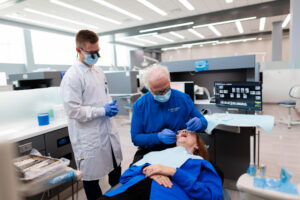
Student clinical rotations in rural areas will be in partnership with the local public health departments and other entities that also are subrecipients of the rural health grant dollars, Wallen said.
The hope, the dean said, is that the students, upon graduation, would then consider working in rural America, where dentists are “desperately” needed. “That they would find community — and a great opportunity to build a practice there.”
Wallen said Creighton and its school of dentistry are honored to be named one of the recipients of the rural health care funds.
“We recognize that access to oral healthcare remains a significant challenge for many individuals and communities,” she said. “Our responsibility as educators is to help students understand those challenges, become part of the solution and provide compassionate, high-quality care where it is needed most.”
The Nebraska DHHS web site says that healthcare providers will have additional opportunities to apply for the rural healthcare funding in each fiscal year. According to the web site, “A project of this size and scope requires participation from many stakeholders across multiple fields.”
Lincoln, NE