SC juvenile justice changeups add capacity to reduce overcrowding, violence
Nov 03, 2025 | 8:57 am ET
Description
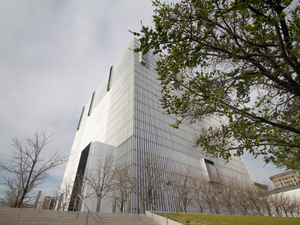
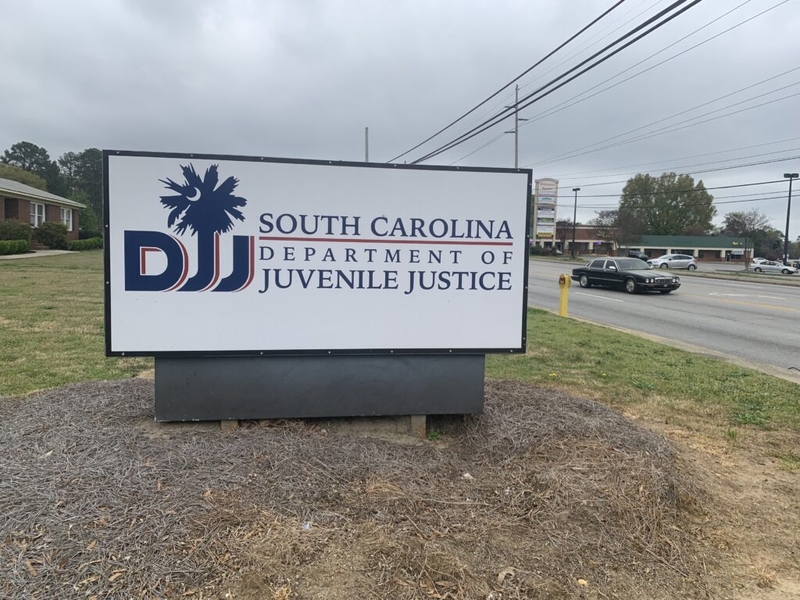
The sign outside the Department of Juvenile Justice's building on Broad River Road. (File/Skylar Laird/SC Daily Gazette)
South Carolina’s Department of Juvenile Justice has added 81 beds in five months for jailed youth who are awaiting trial in the state’s family court system. The agency is working to add 24 more as it continues its struggle with overcrowding, understaffing and the violence that comes with it.
DJJ Director Eden Hendrick says the changes are working.
“Violence has gone down,” she recently told the SC Daily Gazette. “The kids have much more educational time, much more recreational time.”
However, she did not have the data to illustrate those improvements. While DJJ tracks violence at its long-term lockup for sentenced youth, Hendrick said, the agency doesn’t collect that information at detention centers, which are supposed to be for short stays.
The additional space comes from a combination of moves made this past June. First, the agency contracted with a private operator to reopen a youth detention center in Greenville that closed in 2022. DJJ also has rearranged where it holds youth in Columbia, extending capacity to 104.
Before the changes, DJJ’s Columbia detention center regularly housed 120 children as young as 11 in a facility meant for 72, pulling out temporary beds to give the youth a place to sleep.
When renovations to the existing Columbia facilities are complete, the total capacity will rise to 176 between the Greenville and Columbia facilities. It’s unclear when they’ll be finished.
SC agency reopens Upstate juvenile detention center, aiming to reduce overcrowding
For now, the Columbia center remains beyond capacity.
Even with the removal of about 30 teens to Greenville, the numbers in Columbia have not changed as more children pour in to those vacated spaces, Hendrick said.
Daily population at the Columbia center has averaged 125 youth over the past three months, she said.
Meanwhile, civil rights groups and advocates for children with disabilities are attempting to revive a federal lawsuit to ensure the agency indeed makes changes and meets the rights and needs of jailed youth.
“It very much seems like DJJ wants to have exclusive control over the narrative so they can say things are improving but without ever releasing any data through which the public can test those claims,” said Allen Chaney, who is part of the court challenge as legal director of the South Carolina chapter of the American Civil Liberties Union.
Detention grows
When Hendrick took the agency’s helm in fall 2021, understaffing was her biggest problem. There were more vacancies than officers actually working. Her predecessor resigned after months of criticism and employee protests about unsafe conditions, including two dozen workers walking off the job at DJJ’s Broad River Road facility in Columbia.
Overcrowding at the detention center became an escalating problem in 2022, as the average monthly population increased from 91 in January 2022 to 126 by that November.
The number of juveniles held in Columbia soared as closed courtrooms during the COVID-19 pandemic created a backlog of cases, then Greenville County closed its juvenile jail due to understaffing in March 2022, Hendrick said.
Youth also spend more time in detention, which can last anywhere from 24 hours to three years, Hendrick said. The average is about 20 days.
Overcrowding only worsened when Richland County, this summer, closed the juvenile wing of its detention center in the adult side of the jail, which is under investigation by the federal Department of Justice over deaths, claims of understaffing and filthy living conditions.
SC DJJ warns of overcrowding as Richland County looks to close juvenile jail
This left Charleston County as the only county in the state to detain its own youth. The rest rely on the state to do it for them.
The ACLU argues there’s still no excuse for the poor conditions that have persisted for years.
“If South Carolina is going to insist upon arresting and incarcerating this many kids, they have to pay whatever is required to provide those kids with constitutionally compliant facilities,” Chaney said. “If they don’t want to spend the money, then arrest fewer children. You can’t over arrest and then under provide.”
Greenville facility reopened
Despite continued challenges in Columbia, the Greenville arrangement appears to be working well in these early days, Hendrick said.
The contractor the state is paying to operate the facility, RaeKar Residential, has taken in more than 75 youth since June, the company told the Gazette in a statement. About 60% of those children had been staying in the Columbia facility before the state moved them to Greenville to house them closer to family and relieve overcrowding.
Bill requires SC counties pay more to jail teens at DJJ. It could lead to fewer arrests.
The remainder are Upstate youth who police arrested and detained after the initial move.
The Greenville center is now fully staffed, according to the company’s statement.
RaeKar Residential also partners with Greenville County schools, which teaches classes at the center in an effort to keep the students from falling behind at school while they’re jailed. There is a licensed mental health therapist onsite and multiple group therapy sessions weekly.
Hendrick said the smaller population size at the Greenville center, compared to Columbia, is one of the major benefits of the arrangement, in addition to keeping the teens closer to home.
“Any more individualized attention youth can get is always better,” she said. “It’s a smaller facility, so they have opportunities to do different things.”
But the arrangement is also expensive, Hendrick said, costing about $400 per day per child.
“We want to do it because it’s good for those kids, but it’s probably not the most efficient way to do business,” she said.
Still, if it works, Hendrick said she’s not opposed to trying it in other counties.
“We’ll just have to see how it goes,” she said. “I think it’s too early to see.”
A rearrangement
SC children should no longer be locked up for skipping class, acting up, lawmakers say
Hendrick said while the Greenville facility is helpful, what has made a bigger impact are the changes in Columbia.
Next door to DJJ’s Columbia detention center stands a building the agency previously used to house juveniles who had either pleaded guilty or been convicted and were awaiting a judge-ordered evaluation before their sentencing.
Hendrick said the agency has since moved those children to the building where the agency previously housed youth with long-term sentences.
That facility was the target of a 2017 U.S. Department of Justice investigation into violence, riots and use of isolation.
In February 2020, the Justice Department found DJJ had failed to protect children at the facility from harm and used prolonged isolation to punish youth. Two years later, DJJ settled with federal prosecutors, agreed to make operational changes and opened up the facility to monitoring.
Hendrick said the agency has since made improvements, including more security cameras and fencing, to the campus that now holds about 70 youth during the 45 days they may spend waiting for evaluations.
With the evaluation building empty, DJJ began using those beds for detained youth.
“Now we have a lot more room to spread out,” Hendrick said. “We have double the classroom size. We have a gym. We have all of these extra things that were not part of detention before.”
Still, Hendrick admits, the buildings are not ideal and pose their own challenges. They weren’t built for how the agency is using them.
“These kids in detention are charged with everything from runaway to murder,” she said. “We are bringing kids from all over the state — they’re coming off the street — and putting them together in a facility.”
SC mental health treatment center to fill gaps in services for arrested youth
Hendrick said DJJ tries to separate those charged with violent offenses. But when it comes to the girls in particular, there is only one room, increasing chances of youth-on-youth violence.
“Our facilities are not designed for juvenile justice in 2025, so we are just making do with what we can,” she said.
Staffing also remains an issue, Hendrick said, and due to the buildings’ layouts, she doesn’t expect the agency will ever reach the recommended staff-to-youth ratios.
Legal challenges
The South Carolina chapter of the NAACP, Disability Rights South Carolina and Justice 360, with legal aid from the ACLU, want guaranteed improvements. They’re asking federal appeals judges to reinstate a lawsuit the groups filed in April 2022.
The suit, which came within weeks of the DOJ settlement, alleged children were being harmed in DJJ’s other facilities, not just the long-term facility covered by the settlement.
The lawsuit claimed several children, who went unnamed for privacy reasons, endured violent attacks while housed in the DJJ’s detention center and evaluation centers around the state. The suit also alleged educational instruction was nearly non-existent.
Those claims include a 14-year-old with a serious mental illness, who was repeatedly attacked at three different DJJ facilities. One time, the teen was beaten with a “lock in a sock,” requiring staples in his head to seal a wound, according to court filings.
In March 2023, a 16-year-old was stabbed and cut with a shank. During the attack at the Columbia detention center, two staff members locked themselves in another room and waited for security officers to arrive, which took about 30 minutes. After the teen recovered, staff attempted to place him back in the same room with his attackers until his family intervened, according to court filings.
New SC chief justice seeks extra Family Court judges to handle backlogged cases
And in February 2023, other youth jumped a child in the middle of the night while he slept on a temporary bed at the Columbia detention center. They assaulted him for 10 minutes before staff arrived, suffering a concussion and fractures to his arm and ribs. After returning to the center from the hospital, staff put him back in the same room with his attackers who assaulted him again, the court filings read.
The lawsuit has drug out in court and those youth were released from detention. DJJ then successfully argued to have the suit dismissed in December 2024, which the organizations have appealed.
Since the dismissal, Chaney said the groups have no way of knowing if things have changed at DJJ but suggested the agency is likely still falling short of what’s required under federal law, based on reports from disability advocates.
“If that’s your defense, that’s fine. Put on evidence; show that things don’t violate the Constitution anymore. I welcome that. I hope that that’s true,” Chaney said. “But that’s never been a part of how they’re defending this case.”
The federal appeals judges heard arguments in the case last month but have yet to rule.
DJJ’s school district aims to give SC youth offenders more opportunities, officials say
What’s next?
With state legislators scheduled to return to the Statehouse in January for the next legislative session, DJJ is preparing to continue its push for a number of measures Hendrick said could help reduce the juvenile detention population.
There’s a bill that would partially walk back South Carolina’s so-called “Raise the Age” law for 16-year-olds accused of violent offenses that carry a possible 30-year sentence and 17-year-olds accused of gun crimes. Instead of starting in the juvenile court system, as the 2019 law required, those youth would go straight to being charged as adults.
House Speaker Murrell Smith, R-Sumter, announced this week a committee to study what he called a rise in violent crime among juveniles.
Hendrick said DJJ also supports legislative efforts that do away with any jail time for what are known as status offenses, such as skipping school or running away from home. The agency would like to see that expanded to all misdemeanors that carry sentences of 30 days or less, such as disorderly conduct and minor theft and property damage crimes.
“Detention should only be for public safety issues,” Hendrick said. “Is a fight at school really a public safety issue?”
The agency would also like the authority to charge counties more for detaining youth on the county’s behalf. State law sets those charges at $50 per day. A temporary rule in the current budget raised that to $125 for the first 25 days. Hendrick would like to see that amount raised or extended and made permanent law.
Columbia