Nebraska auditor criticizes Douglas County’s ‘high’ cost to administer program for the poor
Sep 22, 2026 | 5:28 pm ET

Description
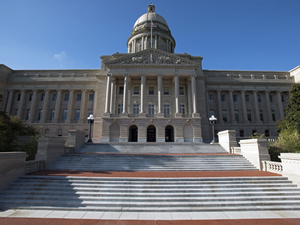
The Omaha-Douglas County Civic Center is the headquarters of city and county government. (Courtesy of Douglas County GIS)
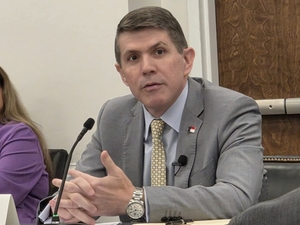
LINCOLN — Nebraska’s state auditor is criticizing Douglas County’s handling of a program that helps the poor, including what he described as high administrative costs and “problematic” distribution of Dollar General gift cards.
State Auditor Mike Foley detailed concerns in a letter released Tuesday to the governing board of Nebraska’s most populous county. Attached was a five-page response from the county.

Taking aim at administrative expenses, Foley said a staff of 18 people administers the county’s general assistance program, with the three top salaries last year ranging from $166,614 to $105,000.
According to the auditor review, Douglas County processed about 5,100 applications and provided general assistance totaling nearly $9.4 million during a three-year period from 2023 through 2025. Help was delivered to low-income residents largely for shelter, clothing, cremation, bus tickets and hygiene products. Food is not part of the program.
Foley contends that for every $100 of financial aid to the poor during that time, the county spent roughly $74 on administrative expenses.
“It costs 75 cents to give away a dollar?” Foley said in an interview. “Can’t we do better than that?”
County looks at AI
Melissa Sewick, director of the county’s program, defended her team’s efforts to “responsibly” administer public assistance, which she said includes a range from determining eligibility to helping clients connect with other resources. She said, however, that county officials recognize the importance of efficiency, have made some changes and continue to evaluate their processes in light of the auditor findings.
Among ways to potentially rein in costs and strengthen consistency is artificial intelligence, Sewick told the Nebraska Examiner.
“We are exploring whether AI can help improve efficiency and reduce some of the risk of human error in highly repetitive administrative tasks, while keeping eligibility determinations and other substantive decisions with department staff,” Sewick said.
She cautioned that any use of AI would need “careful evaluation” for accuracy, privacy and compliance with program requirements. It would be a tool, she said, not a substitute for the human review and judgement.
Sewick noted also that the classification of certain expenses also might be misleading. For example, she said, $412,376 in matching funds the county directed (over two years) to an agency that provides detoxification services for indigent residents is recorded as an administrative expense but provides a “direct and necessary service.”
Also troubling to Foley was the county’s use of gift cards for the program. The audit team found that over the three year span, Douglas County bought nearly 26,000 Dollar General gift cards valued at about $760,000.
“The distribution of many thousands of gift cards for use at a retailer with such a vast array of products is problematic,” the auditor said.
He said the investigation was prompted by complaints to his office regarding the county’s Department of General Assistance. Under state law, counties are to be the “overseer of the poor” and provide eligible recipients with aid to “insure maintenance of minimum health and decency.”
Tuesday’s letter was addressed to Roger Garcia, a Democrat who is chair of the Douglas County Board. Foley, a Republican, is up for reelection.
The department had no meaningful procedures to ensure proper usage of the cards.
Foley said eligible general assistance clients can receive $25 monthly gift cards for nonfood necessities such as hygiene and cleaning items as well as an $80 gift card every six months for clothing.
“The department had no meaningful procedures to ensure proper usage of the cards,” Foley said in a related media statement.
A sample review of 100 cards indicated use for “unallowable items” such as pet food, toys, candy, cigarettes and alcohol. Foley said that after the cards were issued, county staff “never looked at what the cards were being used to purchase.”
Natty Daddy beer, menthol cigarettes
He added, “Montego Menthol Silver and Gold cigarettes, Mike’s Harder Lemonade and Natty Daddy beer were popular choices.”
Foley said he recognizes that the program recipients are not easy to track, and perhaps are between jobs or are homeless. He said his team’s findings throw into question whether some gift cards might have been sold for cash and used by someone outside the program. He questioned the eligibility of some recipients.
The county’s general assistance program leaders, in the response attached to the audit team letter, said they concurred with many of the audit team’s findings and had implemented changes or were working on improvements.
Regarding gift cards, Sewick said her department’s goal is “to provide assistance in a way that is accessible to clients, meets their basic needs and is fiscally responsible.”
The county acknowledged that tobacco and alcohol and other noncompliant purchases are inconsistent with the program intent and guidelines, and added that Dollar General did not sell tobacco or alcohol when the gift card program was established.
Representatives said the county currently does not receive itemized transaction records from Dollar General and had no prior visibility into specific purchase patterns. They said the county would continue to pursue alternative retailers and options.
On food, pet care and toys, the county agreed those fell outside authorized purchases but said some purchases may reflect “genuine hardship needs.” According to their response, county officials plan to discuss the most effective path forward on such purchases, including more participant education, other vendors and possible clarification of program guidelines.
Lincoln, NE