Committee directs millions to drought relief for Oklahoma agricultural producers
Sep 22, 2026 | 5:17 pm ET
Description
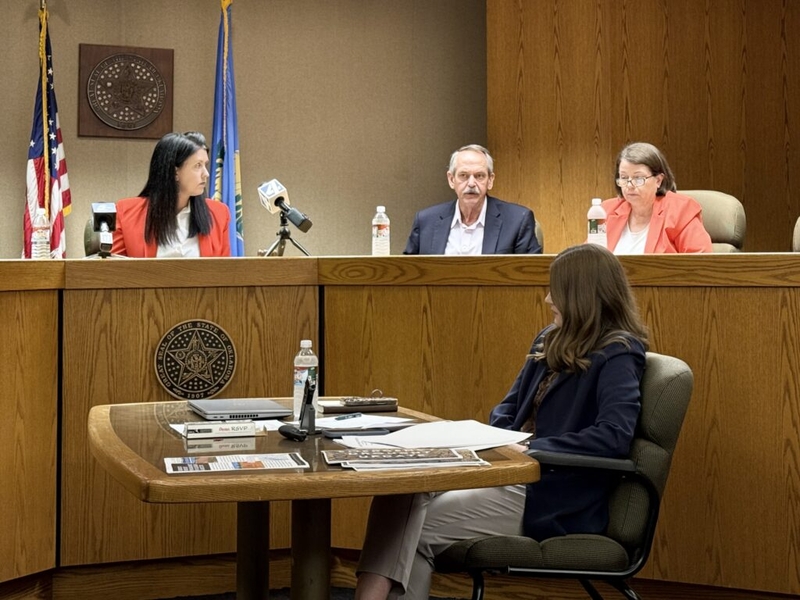
Members of the Oklahoma Emergency Drought Committee discuss allocating funding for drought relief projects to agricultural producers at a meeting on Sept. 22, 2026 in Oklahoma City. (Photo by Emma Murphy/Oklahoma Voice)
OKLAHOMA CITY — Oklahoma officials on Tuesday voted to potentially allocate up to $12 million to agricultural producers looking to complete drought relief projects on their properties.
The Oklahoma Emergency Drought Committee unanimously voted to designate more funding and accept new applications from the state’s farmers and producers as part of the Emergency Drought Assistance Program. The legislatively created committee led by state Secretary of Agriculture Blayne Arthur has allocated more than $60 million to the cost-share program since November 2022.
The state has been experiencing drought conditions for months and is in the midst of a “flash drought” that began in July. Flash droughts are characterized by a rapid onset of dry conditions. Oklahoma’s drought has been exacerbated by high temperatures and a lack of rainfall, said Gary McManus, the state climatologist.
The committee voted to allocate its remaining, unearmarked $2 million in funding to new applications for drought relief projects. The funding will be evenly distributed across Oklahoma’s 77 counties, and projects are approved on a first come, first served basis.
The committee also voted to direct another $10 million to new applications, but only if they receive a supplemental appropriation from lawmakers in that amount next year.
Trey Lam, executive director of the Oklahoma Conservation Commission and a member of the committee, said he spoke with legislative leaders and appropriation committee chairs and has a verbal agreement that $10 million in additional funds will be appropriated when the Legislature convenes in February.
The full Legislature would need to approve a supplemental appropriation.
While the state funding can be used to offset a portion of drought relief project costs, program participants contribute around 40%, according to a presentation made at the committee meeting.
Potential projects include pond cleanouts, wells, watering facilities, pumping plants, pipelines and pasture taps.
Any funding allocated beyond the first $2 million will be conditional on legislative approval, Lam said.
Previous applicants on the waitlist for funding, designated as “alternates,” will need to resubmit their applications for any of the newly approved funding.
The new application period will open Oct. 5. Applications must be submitted to the Oklahoma Conservation Commission.
Agricultural producers can retroactively apply for projects completed, or those they plan to complete, between July 15, 2026 and July 1, 2027. This excludes pond cleanouts, which would need to be completed by Dec. 31, 2026.
Program participants must submit invoices and are subject to visual inspection or verification of completed projects in order to receive the state funds.
Drought in Oklahoma
McManus, the state climatologist, told the committee Tuesday that half the state, mostly western Oklahoma, is experiencing drought rated between “extreme” and “exceptional,” triple what Oklahoma was experiencing about seven weeks ago.
“We are in bad shape across the entire state,” he said.
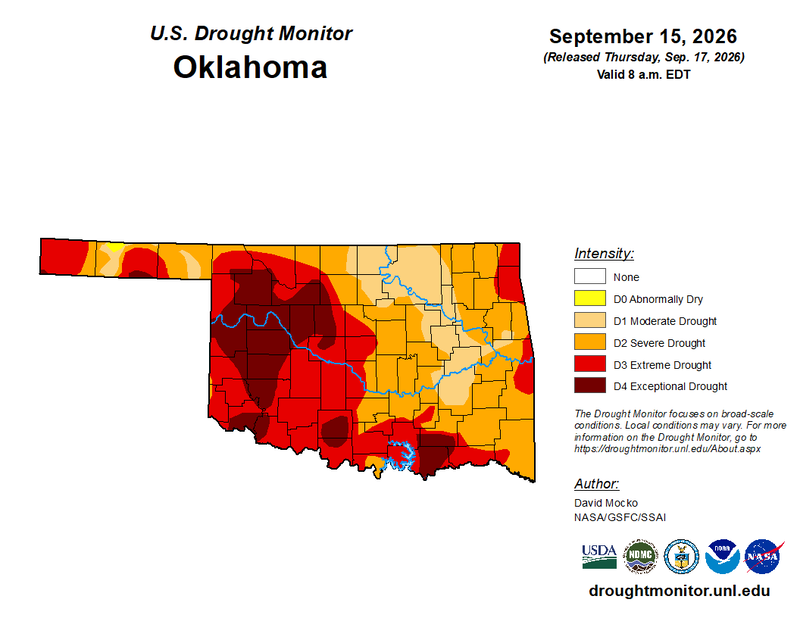
However, there is hope for the drought to improve in the near future, McManus said.
Oklahoma, along with most of the country, is expected to have a cooler, wetter season with a strong El Niño pattern expected. El Niño is a climate pattern that leads to wetter conditions than usual in the Southern U.S.
Andy James, chief of fire management with the Oklahoma Forestry Services, said the state has also seen fires increase in number and size as the doubt persists.
Between Aug. 1 and Sept. 20, there have been 445 fires which impacted over 22,300 acres of land in Oklahoma, he said. This is double the average number of fires and triple the average acreage for this time period.
Firefighters have been working more than 80 hour weeks, sometimes with shifts that exceed 22 hours, James said.
While the looming cooler and wetter weather is encouraging, James said he encourages caution with activities that could cause a spark and in counties that start to lift burn bans.
“I would caution everybody that it’s taken us seasons to get to this position, months and almost it feels like years, and it’s going to take that long to get us out of this predicament that we’re in,” he said. “… Please be cognizant of just how dry things are, regardless of the moisture that we’ve received, and be careful and be safe when you’re doing that.”
Oklahoma City, OK