Rhode Island officials seek to reassure voters ahead of midterm elections
Oct 13, 2026 | 5:05 pm ET
Description
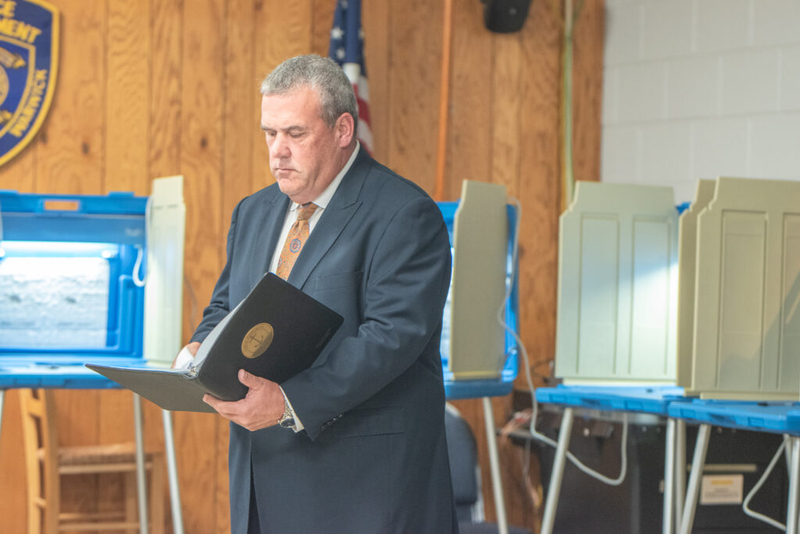
Rhode Island Secretary of State Gregg Amore looks through a binder during a press conference at an early voting site in the community room of the Warwick Police Station on Oct. 13, 2026. (Photo by Christopher Shea/Rhode Island Current)
Voting booths were lit, ballots were stacked, and ID scanners were in place inside Warwick’s police headquarters the day before early voting begins in Rhode Island for the 2026 midterms.
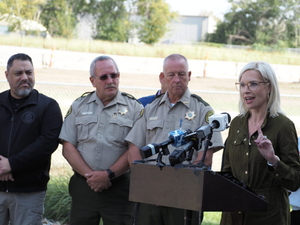
The setup offered a preview of the preparations underway across the state, as election and public safety officials Tuesday outlined their efforts to get voting sites ready and assure voters they will be able to cast their ballots safely and securely whether in person or by mail.
“Get out there and vote,” Rhode Island Secretary of State Gregg Amore told reporters gathered inside Warwick’s early voting location. “This is a precious and sacred right and nothing will impede that ability to cast a vote.”
The state’s Board of Elections has tested and sealed hundreds of voting machines, deployed more than 600 machines and electronic pollbooks statewide, and trained more than 2,200 poll workers who will work on Nov. 3.
State and local police leaders said they are working with election officials to prepare for potential problems at polling places, even if they don’t expect any major incidents.
“Our goal is for an election day to be uneventful from a public safety standpoint,” said Col. Michael Correia, chief of the Barrington Police Department and president of the Rhode Island Police Chiefs Association.
Amore, a Democrat running unopposed as the state’s top election official, said the preparations were part of the routine work election officials undertake every election cycle. But he said a steady stream of national headlines about election administration, White House executive orders and federal court decisions prompted him and other officials to publicize their efforts.
“We want to make sure Rhode Islanders are comfortable with all aspects of voting,” Amore said.
Miguel Nuñez, executive director of the Rhode Island Board of Elections, said voters can return mail ballots through the U.S. Postal Service without restrictions or interference, despite the Trump administration’s efforts to impose new limits.
The U.S. Postal Service sought to impose new requirements on ballot envelopes and require states to submit lists of eligible mail voters to the federal government, but the plan was blocked by the U.S. Supreme Court in September.
The deadline to request a mail ballot in Rhode Island was 4 p.m. Tuesday. More than 27,000 Rhode Island voters had applied for one as of early Tuesday afternoon, Nuñez said.
Get out there and vote. This is a precious and sacred right and nothing will impede that ability to cast a vote. Rhode Island Secretary of State Gregg Amore
Amore urged voters to mail their completed ballots by Oct. 27, or return them to one of the state’s 41 secure drop boxes outside either their local board of canvassers, the Secretary of State’s Office on West River Street in Providence, or the Board of Elections’ Cranston headquarters by 8 p.m. on Election Day, Nov. 3.
Election officials are also working to ensure municipalities have enough poll workers to keep voting locations running smoothly on Election Day.
Staffing shortages contributed to delayed openings at some Providence polling places during the Sept. 9 primary. The capital city saw an unusually high rate of poll worker no-shows, with some polling places opening more than an hour late. Nuñez said the Board of Elections has been working with universities, state agencies and local election officials to recruit additional workers.
1 in 7 Providence poll workers called out sick or did not show
Nuñez said he expects the recruitment efforts should create a reserve pool of poll workers equal to 10% to 15% of the state’s staffing needs, ensuring municipalities have enough people to cover last-minute absences. The call-outs in Providence on Primary Day were not part of a coordinated effort to disrupt voting, he said.
“It was simply just individuals who had gotten sick who committed to it and decided at the last minute not to show up at the polling location,” Nuñez said.
Officials said they’re also preparing for the possibility of federal involvement at polling places, particularly concerns about immigration officers showing up at voting sites. A law passed by the Rhode Island General Assembly in June bars U.S. Immigration and Customs Enforcement officers from coming within 200 feet of a polling place while voting is underway.
In August, the Board of Elections issued guidance directing local officials to notify police and document any interactions with federal agents or observers at voting sites, Nuñez said.
Officials said they have received no indication that federal law enforcement agents will be present at polling places on Election Day.
Federal election observers are expected in Pawtucket on Nov. 3 under an agreement with the U.S. Department of Justice stemming from a 2024 consent agreement — just as they did during the September primary. The agreement requires the city to provide Spanish-speaking voters with election assistance and materials in their native language.
Should federal officials interfere with voting, Rhode Island Attorney General Peter Neronha said his office would take the Trump administration to court.
“The team will be ready at a moment’s notice,” Neronha told reporters.
Early voting runs through 4 p.m. on Monday, Nov. 2.
Providence, RI