Missouri AG promises ‘more lawsuits’ against retailers selling illegal marijuana
Nov 06, 2026 | 8:00 am ET
Description
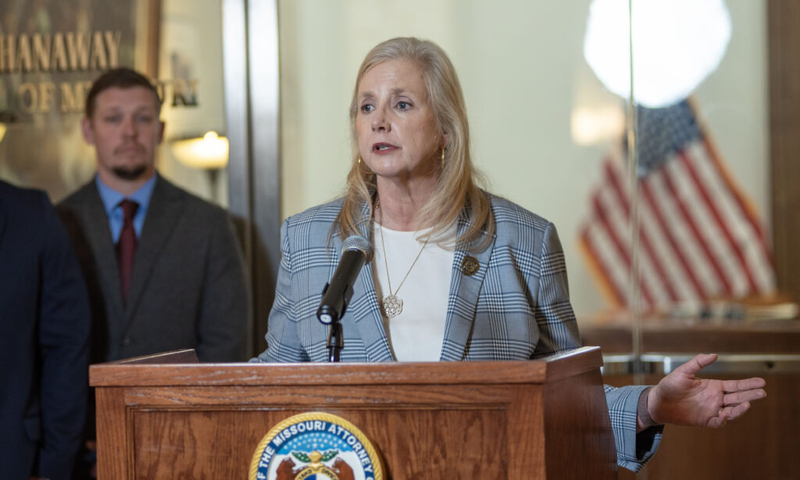
Missouri Attorney General Catherine Hanaway announces the state's lawsuit against American Shaman in a press conference outside her office March 31, 2026 (Annelise Hanshaw/Missouri Independent).
Missouri’s crackdown on intoxicating hemp products is already underway, a week before a new state law threatens to push thousands of businesses out of the market.
Attorney General Catherine Hanaway announced four new lawsuits Wednesday against retailers accused of illegally selling marijuana disguised as hemp. That same day, a federal judge dismissed a hemp industry challenge to the law, clearing another obstacle to its Nov. 12 implementation.
Now, some hemp business owners hoped to burn their products on the steps of the Missouri Capitol on Veterans Day, one day before the new restrictions take effect. But they were denied a permit because “open flames” are prohibited on Capitol grounds.
Hanaway told The Independent in an interview Wednesday that she didn’t need to wait for the new law to go after stores selling what’s known as “THCA flower,” a product that becomes intoxicating when smoked just like marijuana. She said laboratory test results posted on the stores’ own websites show they are selling marijuana without the required state licenses.
“The bottom line is: marijuana is legal in Missouri,” Hanaway said. “Great, just comply with the law. We have so many of these shops that are selling it, and some of them very openly and notoriously claiming that they’re selling marijuana.”
Hanaway said her concern is that products sold outside Missouri’s licensed marijuana system aren’t subject to the same state testing and safety requirements, potentially exposing consumers to harmful metals or other contaminants.
The new law tasks Hanaway’s office – along with the Missouri Department of Health and Senior Services, the state’s cannabis regulatory agency – with enforcement. The department previously estimated that 40,000 food establishments and smoke shops and 1,800 food manufacturers could potentially be affected by a state ban on intoxicating hemp products, “but the majority of these facilities are at low-risk of requiring investigation.”
After Nov. 12, Hanaway’s office will have “more tools at our disposal” to go after law breakers.
“You’re going to see more lawsuits,” she said. “The law is stronger and easier for us to enforce.”
Under the new law, products containing more than 0.3% total THC, including THCA, generally fall outside the state’s definition of hemp. Finished hemp-derived cannabinoid products also face a limit of 0.4 milligrams of THC per container. Intoxicating products that fall under the new restrictions can be sold only through Missouri’s licensed marijuana system.
The law establishes Missouri’s first comprehensive restrictions on intoxicating hemp products. Similar bills had been debated since 2023 but failed to pass. In the absence of comparable state oversight, smoke shops have been able to sell intoxicating hemp products containing as much as 1,000 milligrams of THC outside Missouri’s licensed marijuana dispensaries.
Under existing federal law, hemp is defined largely by its concentration of delta-9 THC. Missouri’s new law, like pending federal restrictions, takes a broader approach by counting other forms of THC, including THCA.
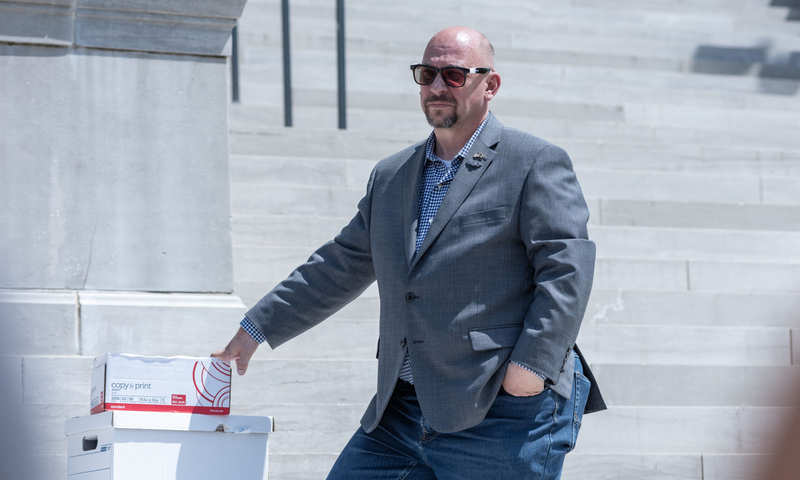
John Grady, a veteran who owns Slaphappy Hemporium in Rosebud, got into hemp farming and retail, he said, because his disabled veterans payments would be put in jeopardy if he was part of the federally illegal marijuana market.
Grady and others are planning on protesting Missouri’s law on Veterans Day, Nov. 11, because the federal ban has been delayed until Dec. 11.
Congress could end up passing regulations that are less restrictive than Missouri’s law that goes into effect on Nov. 12. His business produces intoxicating hemp beverages, which will remain on the shelves until Dec. 11 under Missouri’s law.
“They’ve now taken all of our time and investment and everything away from us,” Grady said, “and we find that untenable. It’s not about safety because they’ve denied regulations for four years straight, and instead they pursued bans. It’s about market protection for campaign contributors.”
Case dismissed
The muddled definition of hemp and marijuana is at the center of the hemp industry’s lawsuit, filed in July in the U.S. District Court for the Western District of Missouri.
The plaintiffs, led by the Missouri Hemp Trade Association, argued the state has created overlapping definitions, under which a product could be classified as legal “hemp” in one part of state law and illegal “marijuana” in another. It leaves businesses unsure what they can legally sell when the law goes into effect and argued the case over House Bill 2641 deserves to be heard in court.
Judge M. Douglas Harpool disagreed in his order to dismiss the case Wednesday, concluding the new law has not yet taken effect and its application to the plaintiffs remains uncertain.
The plaintiffs included St. Louis-based MNG 2005 Inc., which is the parent company for 55 CBD Kratom stores nationwide; the Missouri Hemp Trade Association; and a Wisconsin-based hemp business, Lifted Liquids Inc.
“So much of that order was based on the fact that no enforcement had taken place,” said Craig Katz, government relations and compliance manager for MNG. “Based on that, we’ll have to see what happens on Nov. 12, and what they do in terms of enforcement.”
The plaintiffs are assessing their next steps, he said, and whether they want to appeal.
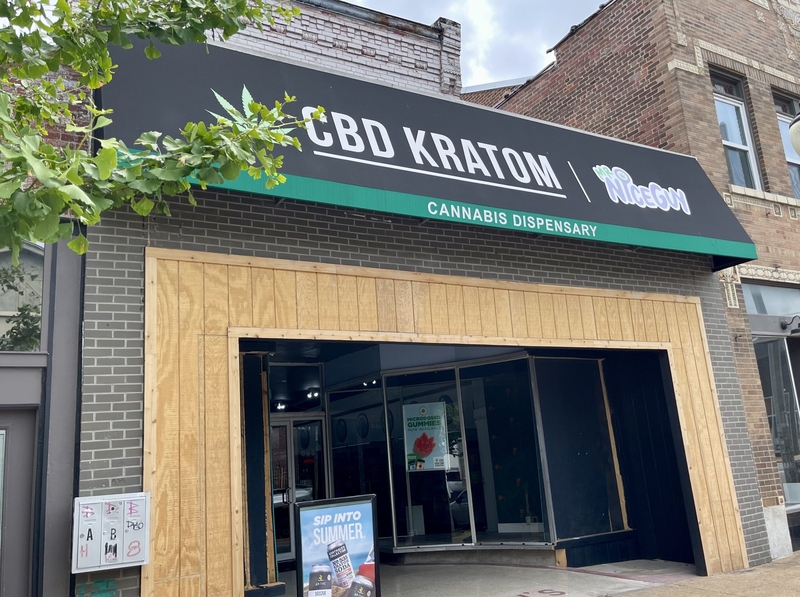
One of the four lawsuits Hanaway announced Wednesday targets a CBD Kratom store in St. Louis County, accusing the business of violating Missouri’s consumer protection law by selling marijuana products labeled as hemp.
On Oct. 8, the attorney general’s investigators made undercover purchases of two “hemp flower” products from the CBD Kratom Cannabis Dispensary in Des Peres and sent them to a state-licensed lab for testing. The results showed both products exceeded the federal THC limit for hemp, according to the lawsuit.
One package stated the delta-9 THC concentration was 0.28% on a dry weight basis, but lab results included in the lawsuit showed the concentration was 4% — or more than 10 times the legal maximum for hemp products.
Katz said the timing of Hanaway’s lawsuit was “curious” because it came a week after the plaintiffs filed a motion for a preliminary injunction in the federal case on Oct. 9.
The other three stores Hanaway sued are Puffers Choice LLC in Aurora, Herb Depot in Independence and Token THC Dispensary in Rock Port.
All four of the petitions begin with a bold statement: “The days of ‘hemp shops’ masquerading as legal marijuana dispensaries are over in Missouri.”
Hanaway alleges the stores used “deceptive and unfair tactics” designed to make it difficult for consumers to tell whether they are walking into an unregulated hemp business or a state-licensed marijuana business.
“These shops offer intoxicating products that look and smell like marijuana; they refer to those products as cannabis; and they set up their stores to mimic—and even call them—dispensaries,” the lawsuits state. “Just because these drug pushers have a storefront and an LLC does not mean that their activity is legal.”
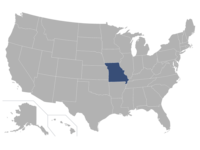
Jefferson City, MO