Ford vows to ‘fight like hell’ to tackle high cost of living
Nov 06, 2026 | 7:55 am ET
Description
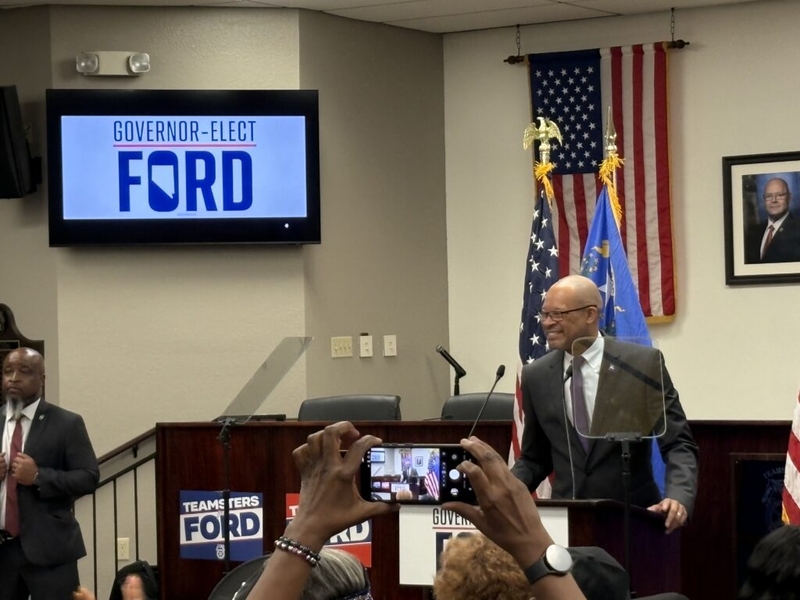
Governoe-elect Aaron Ford addressing supporters Wednesday, Nov. 4, 2026 in Las Vegas. (Photo: Michael Lyle/Nevada Current)
In his first speech since winning election, Nevada Democratic Attorney General and Governor-elect Aaron Ford on Wednesday reiterated he wouldn’t raise taxes and promised to declare the affordability crisis a state emergency saying he would “fight like hell” to fix it as the next governor.
Ford defeated Republican incumbent Gov. Joe Lombardo amid a seismic wave of Democratic victories in Nevada and the nation.
The election was a stunning rebuke to the Trump administration, which failed to address the cost of living increases hitting American households while also reneging a campaign promise not to start a new war, which in turn exacerbated the affordability crisis.
In his speech highlighting his legislative priorities, in which Ford switched between speaking in English and Spanish, he identified expensive health care, unaffordable child care, rising utility prices, and the affordable housing crisis among the list of pressing issues.
Speaking briefly to the reporters following the event, Ford said he didn’t believe state lawmakers needed to address the state’s existing tax structure to enact legislative priorities targeting the affordability crisis.
Instead, he said “we don’t have to raise taxes in order to invest in our people” but rather it was “a matter of budgeting.”
“It’s a matter of priorities,” he said, adding that “on day one we’re going to issue an affordability emergency.” The emergency, he said, would enable state agencies to look at ways to “put money back in people’s pockets.”
Ford, who was one of five Black governors elected nationwide on Tuesday, also made history as the first Black governor elected in Nevada.
The Associated Press called the victory for Ford shortly before 2 a.m. Wednesday. Lombardo conceded later that day, writing in a statement he “hoped Nevadans would move forward with a renewed sense of purpose united by our love for the state.”
Ford said he spoke with Lombardo, but wouldn’t detail the specifics of the conversation, saying only that Lombardo “was gracious.”
Lombardo vetoed record-setting numbers of bills after both legislative sessions while was governor. Many of those vetoes were tied to affordability, killing legislation that regulated corporate landlords purchasing homes, bolstered tenant protections, provided paid family and medical leave, and prevented collection agencies from threatening to arrest people for medical debt.
Without citing the vetoes specifically, Ford referenced some of the bills Lombardo killed including the efforts to rein in corporate homeownership.
“We’re going to make sure that people who live and work in Nevada have a fair shot at owning a piece of it,” Ford said. “I firmly believe that a home should be where our family builds the future, not an investment vehicle for Wall Street firms and out-of-state corporations.”
Though the cost of living played a significant role among voters this election cycle, Ford said it was also his lived experience that included surviving on Medicaid and food stamps while in college and couch surfing during times he couldn’t pay rent that also influenced his policy proposals.
“I understand the struggles you’re facing, and I will fight like hell to lower your costs and to make Nevada affordable,” he said.
In addition to tackling high costs, Ford pledged to be the most pro-union governor and end “that farce that’s called ‘right to work.’”
“We’re going to tackle perhaps the most fundamental issue of all: lifting up working-class Nevadans,” he said. “These people who build our roads, who care for our patients, who teach our children, who mine our minerals, and who keep the lights on up and down the Strip. They deserve a fair day’s pay for a fair day’s work.”
Las Vegas, NV