Advocates bring new food security network to rural Utah communities
Nov 06, 2026 | 7:02 am ET
Description
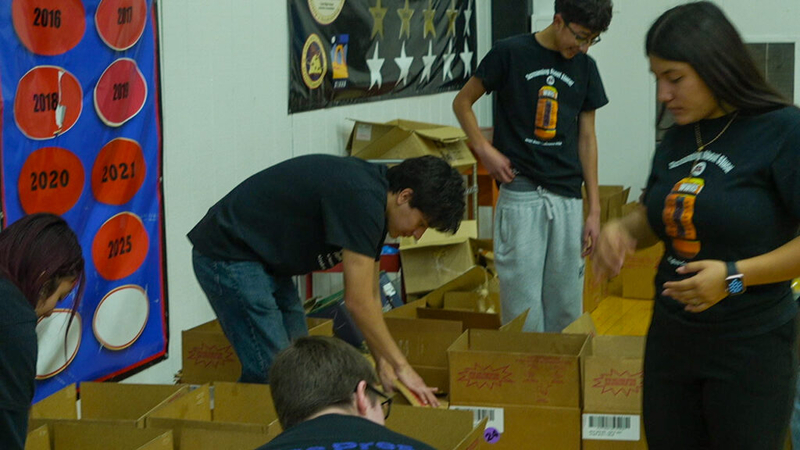
Wendover High School students pack food boxes as part of a new food security network for rural communities in Utah. (Courtesy of Chicanos por la Causa)
West of the Great Salt Lake and the Bonneville Salt Flats, in Wendover, a small city at Utah’s border with Nevada, high schoolers spent their morning packing and giving away food boxes to people facing food insecurity.
It was the first event of a new “community-based food security network” launched on Thursday by Chicanos por la Causa, a community development nonprofit, and Senate Minority Leader Luz Escamilla, D-Salt Lake City, as the number of people facing food insecurity in the state grows.
According to data collected by Chicanos por la Causa, food security is one of the top needs among Utahns — alongside housing and healthcare, said Leo Gonzalez, program manager at the organization.
“We knew that we needed to do something,” Gonzalez said. “We came together, and the plan now is to be able to take food to every single county in the state of Utah. It’s a huge undertaking, of course, but it’s also a huge gap that we understand that needs to be taken care of.”
The number of people experiencing food insecurity in the state rose by nearly 100,000 people in a year, reaching 445,000 Utahns in January of this year, according to the Utah Food Bank. That includes 1 in 5 children.
After changes implemented in Congress’ spending package known as the “Big, Beautiful bill,” over 5 million people throughout the country have lost access to the Supplemental Nutrition Assistance Program, or SNAP, including almost 29,000 Utahns, according to the Center on Budget and Policy Priorities.
Wendover, which has a population of about 1,130 people, is the type of community the new resource is targeting, organizers said, since it is an area that can be difficult to reach through traditional food assistance programs.
“Many times Wendover gets left behind,” Gonzalez said. “And we wanted to make sure that that wasn’t the case with our food network.”
Other areas organizers will prioritize include areas like the west side of Salt Lake, as well as rural areas in Tooele, Summit, Carbon and Sanpete counties, where they have identified the biggest gaps in resources.
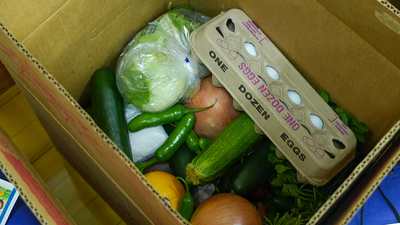
During the launch on Thursday, students at Wendover High School packed 90 boxes containing meats, fruits and vegetables, among other food items, Gonzalez said. The initiative is being funded by the private sector, with donors like the Larry H. Miller Foundation, Mountain America Credit Union, Marathon Petroleum and the Brent and Kathryn Wood Foundation.
Local producers, including Utah Natural Meat, International Rescue Committee New Roots, OakDell Egg Farms and Utah Refugee Goats are providing the food for the network, organizers said in a news release, and other organizations are helping out with distribution.

Escamilla, who has sponsored food security legislation for several years, has been keeping tabs on the needs through data the nonprofit has collected.
“What we do know is children are going hungry to bed. I mean, in Utah, 1 out of 5, and those numbers continue to grow,” Escamilla said during the launch. “And as we are prepping for more cuts into the programs that are providing a safety net to our children in our community, we know that number is going to increase.”
Now that Democrats are projected to flip some seats in the Utah Legislature, Escamilla is more hopeful about the odds of passing her future bills tackling the issue, she said.
Apart from a request for appropriations to better support the state’s Food Security Council, housed at Utah State University, Escamilla is also looking to make statute modifications to allow the body to take direct action to connect people with services.
And, for the third year in a row, Escamilla is expected to propose a bill to provide free lunch to more K-12 students in the state.
“This is going to be a little bit different,” she said. “But we’re trying to work with children under 200% of poverty level. It’s the first group that we will guarantee the free lunch.”
More information on the program can be found at Chicanos por la Causa’s Utah website.

Salt Lake City, UT