Report: Iowa lost 17% of USDA staff in 2025, impact felt at farmer-facing offices
Jul 01, 2026 | 12:41 pm ET
Description
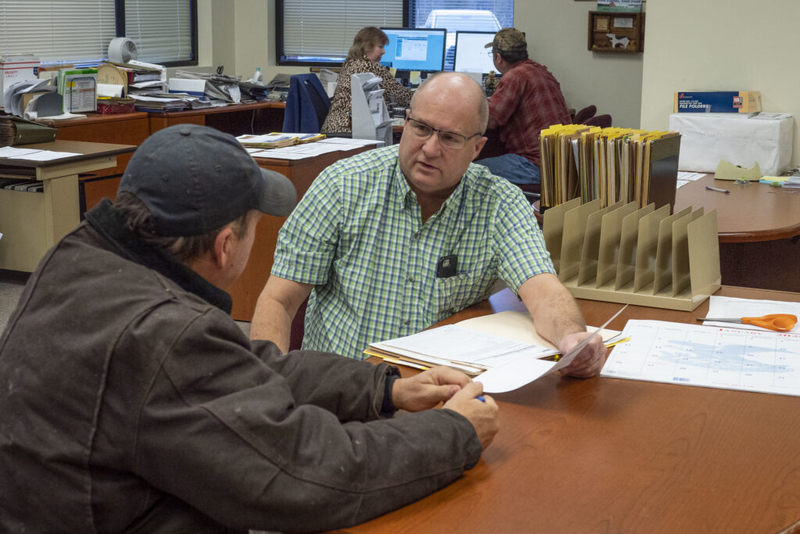
A report shows that the nation lost 8% of Farm Service Agency county staff and 23% of Natural Resources Conservation Service staff in 2025. These staff, pictured here at a Carroll County Maryland office, work directly with farmers. (Photo by Preston Keres/USDA)
U.S. Department of Agriculture staffing cuts in 2025 have left county-level service offices understaffed, according to an analysis of federal data from the National Sustainable Agriculture Coalition.
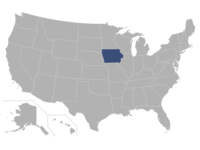
The report found that Iowa lost nearly 19% of its Natural Resources Conservation Service, or NRCS, staff and 8% of its Farm Service Agency staff between January 2025 and January 2026. Both agencies staff local USDA offices and help farmers with federal programs and loans.
Coalition staff and a co-author at Prospect Partners, LLC, used data from the U.S. Office of Personnel Management website and a Freedom of Information Act request of FSA county staff changes for the analysis.
Nationally, USDA had a 23% decline of NRCS staff and 8% of FSA employees in 2025. The report said these agencies were among those “hardest hit” by the Department of Government Efficiency led cuts.
The “steepest” losses among FSA county staff, according to the report, were county program analysts. The report said these are the staff that producers “rely on most” to help them with programs and paperwork. Nationally, more than 600 county program analysts left the department between January 2025 and December 2025.
According to the report, 34% of counties across the country had a net staffing decrease in FSA county staff and 38 counties, 2%, started the year with FSA county staff and ended the year with none. The coalition found that net FSA staffing fell in 47 Iowa counties in 2025 and the state lost a total of 52 FSA staff.
The majority of staff left USDA through the Deferred Resignation Program, which allowed employees to voluntarily resign with several months paid, as part of an initiative under the Department of Government Efficiency, or DOGE. A recent report from Public Citizen estimates the “fork in the road” program cost the nation more than $11 billion.
A USDA spokesperson said the department is “committed to providing the quality service and customer experience” that producers “expect and deserve.”
“Secretary (Brooke) Rollins understands the array of mission critical positions and programs at the Department, and she will ensure that those areas, including FSA and NRCS have the resources and personnel they need to continue serving the American people,” the spokesperson said in a statement.
Lack of staff adds to farmer stress
Iowa-specific data obtained by National Sustainable Agriculture Coalition showed that four Iowa counties — Appanoose, Decatur, Polk and Union — had no federal or country-level Farm Service Agency staff in January 2026.
Aaron Lehman, a Polk County farmer and president of Iowa Farmers Union, said his county office is now open only one day a week with an FSA officer.
Lehman said this means the process of applying for crop insurance, farm loans and other programs with the agency “hasn’t been nearly as straightforward” as it used to be.
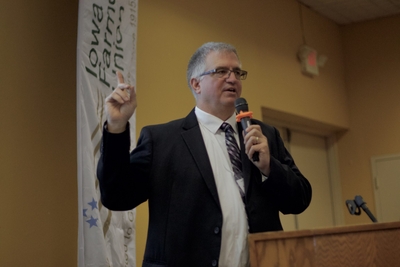
With 30 years of farming and navigating USDA programs under his belt, Lehman said he’s been able to get things done, but he said newer farmers, or those applying to programs outside of the traditional corn and soybean commodity programs, are likely feeling the staff shortages more.
“When you have less people at your local office, less hours at your local office … you may not get the same person who understands your farm and that you’re familiar with — it’s causing a lot of stress,” Lehman said.
Lehman said the loss of farmer-facing staff is compounding the stress that farmers have from several years of downturned markets, a rise in bankruptcies and uncertainty of USDA programs following other cuts from the Trump administration.
He said “everyone is a little bit confused” about the programs that are available and if USDA staffing will be restored at any of these offices, or continue to decline.
“The situation on the ground seems to be much worse than (the report) because of the transition that we’re in,” Lehman said. “These cuts are happening at the exact wrong time to help farmers through really challenging times.”
Lehman said the cuts also mean that staff at USDA service offices are “working extremely hard” to fill in the gaps created by the loss of co-workers.
Iowa among top 10 states in loss of NRCS staff
While Farm Service Agency staff help farmers apply for programs like USDA crop insurance, which is often considered a vital part of a farmer’s operation, Natural Resources Conservation Service staff work with farmers to apply for conservation programs. These programs can help farmers take better care of their land, and sometimes garner some additional cash when they enroll acres in conservation programs.
According to the report, 141 counties across the country ended 2025 with no NRCS staff, even though they started the year with staff members.
Forty-five Iowa counties had a net NRCS staffing decline, according to the coalition.
“This means that farmers and landowners in those counties lost staff with local relationships and local knowledge and that the remaining NRCS staff are now stretched thin over larger geographic areas,” the report said.
Soil conservationists accounted for the greatest loss from the department nationally, with more than 700 staff members leaving in 2025.
Iowa lost a total of 89 NRCS staff members, about 18.5%, which placed Iowa among the 10 states with the greatest loss of NRCS staff by numbers. Texas, Kansas, Missouri and Wisconsin topped the list with staff losses between 144 and 100. States with smaller NRCS staff to begin with saw a greater percentage decline in staffing. Rhode Island led the list with a 44% loss, followed by New York, Colorado and Maine, where losses were between 38% and 35%.
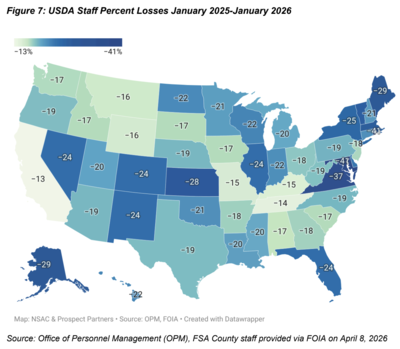
Every USDA office lost staff in 2025, according to the report, except for the Immediate Office of the Secretary, where staff increased 18% during the year.
In total, the report shows Iowa had a decline of about 17% of total USDA staff in 2025. Maryland and Rhode Island, which showed the greatest percentage decline in staff, both lost 41%. Virginia, Maine, Alaska, Kansas, Massachusetts, Vermont, New York and Florida rounded out the 10 states with the highest percentage decline.
While the report mainly focused on losses within NRCS and FSA, it also noted that other agencies lost significant portions of their workforce. The National Agricultural Statistics Service lost 36% of its workforce, National Institute of Food and Agriculture lost 40% and the Agricultural Research Service lost 31% of its staff.
The National Sustainable Agriculture Coalition report also said staff losses in USDA are expected to continue as the department implements its reorganization plan to move employees to five regional hubs.
A union representing federal employees reported that a majority of its members do not intend to relocate with the reorganization plans and would instead leave their roles with USDA.
The USDA spokesperson said the proposed reorganization is “focused on ensuring we have the county level staff needed to assist farmers and ranchers with a wide array of programs.”
Des Moines, IA