Random testing finds foreign seafood sold as local catch in New Orleans-area west bank
Jan 06, 2026 | 2:46 pm ET
Description
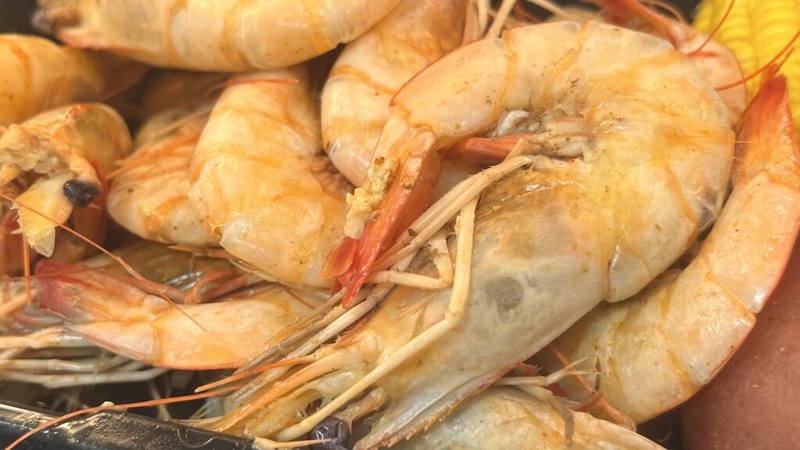
A plate of boiled shrimp (Photo: Wes Muller/Louisiana Illuminator)
The latest batch of seafood testing found two-thirds of sampled restaurants on the west bank of the New Orleans area are serving domestic shrimp. The remainder are offering foreign catch and failing to inform their customers about where it’s sourced.
The test results show a significant disparity between establishments on the west bank versus those on the east bank that were found to have much higher authenticity rates for local shrimp. The results also depart from the high authenticity rates found two years ago among independent vendors at the Westwego Shrimp Lot, an open-air seafood market on the west bank.
The testing, performed by SeaD Consulting, analyzed genetic tissue of shrimp served at 24 restaurants randomly selected on the west bank of Jefferson, Orleans and Plaquemines parishes. Sixteen served locally caught seafood, while eight offered foreign, farm-raised shrimp while fraudulently presenting it as domestic catch.
None of the eight restaurants had signage or menu language disclosing that they were serving imported seafood, as required under law. Seven businesses falsely labeled the imports as domestic, wild-caught shrimp on their menus or through verbal communications with SeaD’s undercover inspectors. One of the eight west bank restaurants had staff that didn’t know what kind of shrimp was being served, according to a news release issued Tuesday.
SeaD Consulting does not publicly identify the businesses that have violated the law, instead focusing on those who are in compliance.
It is illegal under federal and state law to mislabel imported seafood as local and can result in heavy fines or other penalties, including prison time for some federal cases.
There have been 2,600 violations of Louisiana’s imported shrimp law — and no fines
For more than a decade, Louisiana law has required restaurants and other food establishments to state on their menus the country of origin of any shrimp and crawfish being served. The same requirement applies to food vendors at fairs and festivals.
Local seafood was once easy to find in Louisiana, but an influx of cheap foreign catch — particularly shrimp and crawfish — has flooded the market over the past two decades.
In December 2024, the Louisiana Shrimp Task Force, an advisory panel for the Louisiana Department of Wildlife and Fisheries, asked SeaD Consulting to analyze shrimp from restaurants across the state in an effort to eliminate consumer seafood fraud. Its analysis includes sampling 24 randomly selected restaurants in different metropolitan areas across the state. The company shares the results with the Louisiana Department of Health, which has authority to enforce the state shrimp labeling laws at restaurants.
“When the local shrimp is so abundant, there’s no excuse not to serve them,” Shrimp Task Force Chairman Andrew Blanchard said in the release.
SeaD Consulting is a food safety technology company that developed a rapid seafood species identification test. Dave Williams, a fisheries scientist and Houston resident, developed the process in collaboration with Florida State University microbiologist Prashant Singh. Over the past two years, SeaD has made headlines for uncovering foreign-sourced shrimp sold fraudulently as local catch at restaurants and festivals across the Gulf Coast.
Baton Rouge, LA