Proposal to keep beleaguered 100-year-old Umpqua Basin fish hatchery open brings hope, frustration
Jul 01, 2026 | 9:00 am ET
Description
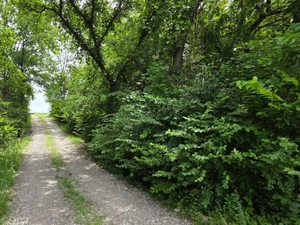
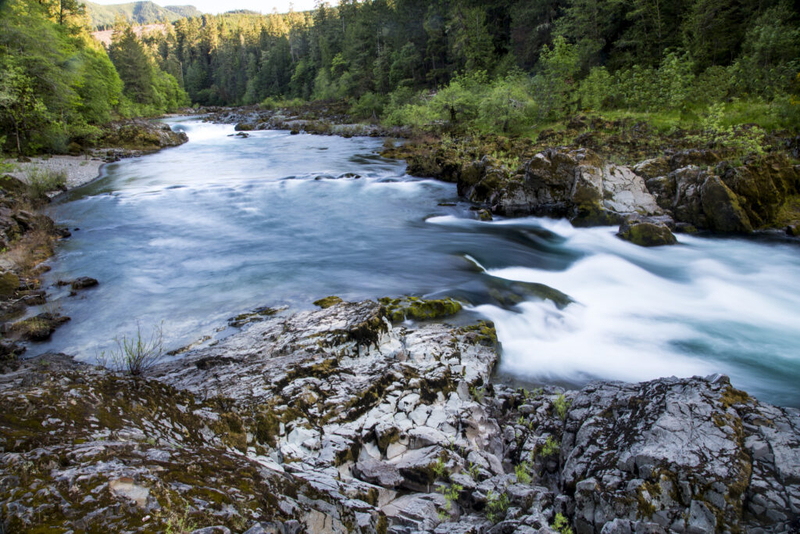
The North Umpqua River east of Roseburg. The Rock Creek fish hatchery at the confluence of the North Umpqua and Rock Creek was mostly destroyed in the Archie Creek Fire in 2020. (Photo by Bob Wick/Bureau of Land Management)
A 100-year-old fish hatchery on the North Umpqua River near Roseburg almost completely burned down in 2020 and is ranked near the bottom for quality and return on investment among all state-run hatcheries. State wildlife officials recently voted to continue funding and partially rebuild it, to the tune of $20 million.
The decision has split local anglers and tribes, who rely on the Rock Creek Hatchery to sustain cultural and economic activity in the region, and conservationists who worry it’s a sunk investment that would be better spent improving other fish stocks in the Umpqua Basin. The proposal is headed to Gov. Tina Kotek later this year and the Oregon Legislature next year for final consideration.
For nearly a century, state biologists have reared hundreds of thousands of Chinook and Coho salmon, steelhead and trout at the Rock Creek Fish Hatchery to be released into the Umpqua Basin river system in southern Oregon before the Archie Creek Fire in 2020 burned down all but one building. But the water in the area was already suffering from rising temperatures and poor quality that was challenging the hatchery operations.
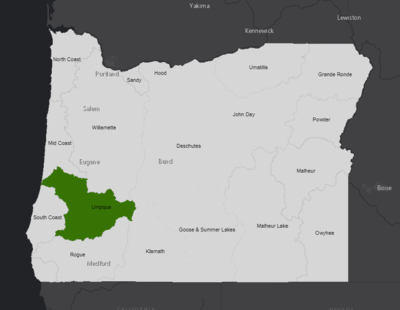
By 2022, state officials had cancelled the steelhead program at Rock Creek as the population declined, and in recent years, programs to rear Coho and Chinook at Rock Creek moved to other area hatcheries where the climate is better for the fish, which are then released into the Umpqua.
In late 2024, the Oregon Department of Fish and Wildlife didn’t recommend any funding for Rock Creek during the 2025-27 budget years. A few months later, the agency’s 500-page report on the operations, sustainability and climate vulnerability of state-owned fish hatcheries listed Rock Creek as least resilient of more than a dozen state-run hatcheries.
The report characterized Rock Creek as among the hatcheries with the “highest climate risk, lowest fish production and importance, the highest costs and the lowest economic impact.”
But on Friday, the seven members of the state Fish and Wildlife Commission voted 4-3 to advance a proposed budget for the fish and wildlife agency that includes $76 million for a “Resilient Umpqua River Basin Hatchery Complex.” It breaks down to $20 million for a partial rebuild at Rock Creek, $34 million to build a new hatchery program on the South Umpqua River, $7 million to support hatchery programs that were moved from Rock Creek to other facilities in the basin, and $15 million for contingency and inflationary costs.
‘Not willing to give up’
The vote was cause for celebration among local anglers and the Cow Creek Band of Umpqua Tribe of Indians, who have long advocated for keeping the hatchery open. The hatchery produces spring Chinook, a First Food for area tribes.
Lindsay Chapman, a spokesperson for Cow Creek, said the question of whether or not to keep Rock Creek open often devolves into a debate about the efficacy of hatcheries in general. She described the tribe as taking an “all fish approach.”
“It’s our strong belief that there’s a place for all fish,” she said, adding that the tribe is “not willing to give up on Rock Creek culturally or regionally.”
But it caused alarm among conservation groups and wild fish advocates who feel the hatchery offers little return on investment that would be better spent improving habitat for wild and other hatchery fish in the basin.
About 70% of salmon and steelhead caught in Oregon originated in hatcheries, according to state fish and wildlife data. By the time a spring Chinook is reeled in, it has cost — via fish licensing fees and other investment — more than $240 to rear into existence. For summer Steelhead it’s about $438 per fish, while trout come in at just over $6 per fish.
Kirk Blaine, wild fish manager for the nonprofit advocacy group Wild Salmon Center, said this is worth bearing in mind when it comes to investing in Rock Creek.
“Twenty years from now, in the Rock Creek watershed, water temperatures will keep increasing as a result of a changing climate and costs will keep rising. Now is the time for the state to invest in durable solutions, from habitat restoration to exploring alternatives for hatchery production,” he said in an email.
Complex issues
The Rock Creek project and the proposed hatchery on the South Umpqua would be funded in large part with a $17 million insurance settlement from the Archie Creek Fire. Federal Emergency Management Agency funds would cover about 90% of the remainder, according to the budget proposal, while the fish and wildlife department would pay the remaining 10% with capital bonding funds.
Operations would cost an estimated $1.9 million every two years, according to the proposal. A source for that funding has not yet been identified.
State wildlife officials and Cow Creek officials have spent more than a year negotiating a way to keep the hatchery partially open, to honor what the tribe said is a culturally significant and regionally significant fish stocking program.
In the commission meeting Friday, Shaun Clements, deputy administrator for the department’s Fish Division, described the question of Rock Creek’s future as “one of most complex issues I’ve been involved in during my time with the agency.”
He described the proposal for a partial rebuild as a placeholder that will allow conversations in the next two years to move forward with Cow Creek officials, who have floated keeping the facility open for research, as an education center and potentially to continue rearing some portion of spring Chinook and trout for the basin. About half of the spring Chinook released in the Umpqua Basin today are currently reared at a federal hatchery on the Rogue River and transported.
Because water temperatures are too high for many species in the Rock Creek area, fisheries staff have experimented with pumping cooler water from the North Umpqua, or cooling and circulating Rock Creek water, into spring Chinook hatch houses at the hatchery.
Clements noted to the commissioners that fully decommissioning the facility could cost enough to wipe out most of the $17 million insurance settlement. But the settlement money and the FEMA money aren’t necessarily restricted to building at Rock Creek and could be spent on other hatcheries investments in the basin. Reallocation of the insurance money would require legislative action, Clements said.
Salem, OR