Polk County Jail to launch education and training initiative with DMACC as partner
Oct 09, 2026 | 9:00 am ET

Description
DMACC has partnered with the Polk County Jail to bring education and training back to inmates through a new initiative. (Stock photo via Getty Images)
The Polk County Sheriff’s Department is bringing a national initiative to the county jail aimed at providing incarcerated people with the resources and education to strengthen their first steps back into their communities.
Inmate Growth Naturally and Intentionally Through Education, or I.G.N.I.T.E., will provide those detained in the Polk County Jail who volunteer for the program with their own technology to access training and education, help from others and incentives for participation. Community partners in Des Moines Area Community College and other organizations hope to be able to expand the program even further, Polk County Sheriff’s Office and DMACC officials said.
Polk County Sheriff Kevin Schneider announced the program in September after he and others visited Flint, Michigan, where I.G.N.I.T.E. first started, said Polk County Sheriff’s Office Public Information Officer Sgt. Brittany Worrall.
“I think the sheriff said it best,” Worrall said. “His goal is to help our folks … who are incarcerated be successful. The sheriff is really proud of the work that we’re going to be able to offer to individuals, so they can join back into the community more successful, proud of what they’ve done, and hopefully that will impact them and change lives.”
According to a communication sent by Schneider to community organizations, businesses and residents of Polk County, I.G.N.I.T.E. has been implemented in more than 40 jails in 18 states across the U.S., with Polk County’s being the first in Iowa. Washington County Jail launched its own I.G.N.I.T.E. program just one day after Polk County announced its own on Sept. 21.
Schneider said in the message that “independent research” from Harvard University, Brown University and the University of Michigan showed that one month of participation in I.G.N.I.T.E. lowers weekly misconduct numbers by 25%, “meaningfully lowers recidivism” and within one year generates “more than $7,000 in social cost savings per participant.”
In Polk County, where 90% of incarcerated people return to the community, the message stated this program will help taxpayers while ensuring people leave jail better educated and prepared for work, leading to fewer repeat offenses.
Both of the 64-person I.G.N.I.T.E. pods, split between men and women, will begin their work through the initiative Oct. 12, Worrall said. Part of the program is providing incentives to inmates to motivate them, such as providing different decor and snacks.
“Each individual will have access to their own tablet; they’ll also have earbuds, so then they can concentrate on the coursework,” Worrall said. “We also will have a two-hour block that everyone will be doing coursework at the same time, so then if there’s any type of facilitation of questions through the coursework, then we’ll have staff kind of ready to go for that too with programs and such.”
All Polk County Jail inmates will still have access to 586 courses through Edovo, an online learning platform for incarcerated people, Worrall said, with the dedicated technology and incentives setting I.G.N.I.T.E. apart, as well as potential offerings from community partners like DMACC.
Before the COVID-19 pandemic began in 2020, the Ankeny-based community college primarily offered High School Equivalency Test and life skills courses to Polk County Jail inmates, said Jessica Frederickson, executive director of higher education in prison and adult education and literacy at DMACC. Federal funding cuts to adult education have kept DMACC from bringing these courses back, though she said the county has reached out about it in the past.
With the introduction of I.G.N.I.T.E., Frederickson said the county would like to see these classes return to the jail, with the addition of education in digital and financial literacy and courses leading to “short-term, stackable credentials.”
DMACC has applied for a Bureau of Justice Assistance grant that, if received, would allow the community college and county to start its original programming again, bring in the new training, hold graduation and completion celebrations and hire an “inside/outside navigator” to work with students before and after their incarceration ends.
“Polk County is very supportive of trying to help us in any way that they can to help us secure funding, and so I appreciate that part of it,” Frederickson said. “And it’s a really integral part of DMACC’s community mission to help all of the citizens reintegrate and to be successful when they come back to the community.”
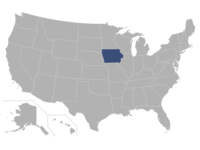
Des Moines, IA