New Alaska sea sponge species fuel debate over fishery practices
Oct 09, 2026 | 9:45 am ET
Description
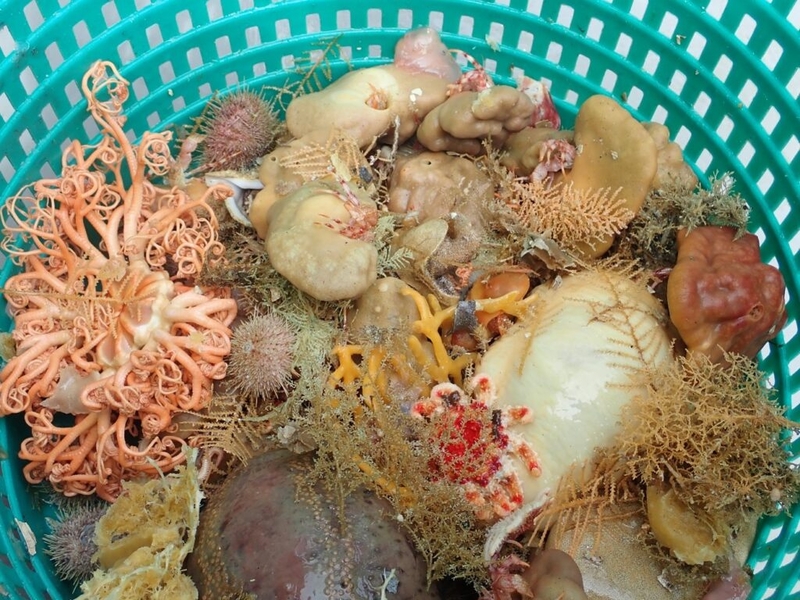
Deep-sea sponges and other invertebrates collected duriing a bottom trawl survey in Alaska are seen in a basked. (Photo provided by NOAA Fisheries)
The vast and largely unexplored seafloor off Alaska’s coastline produces occasional startling discoveries.
The latest concerns the sponges that line the bottom of the ocean and contribute to an ecosystem that supports some of the nation’s biggest seafood harvests.
Scientists have now identified nine previously unknown species of sea sponges that dwell there, including one that represents an entire genus that was previously unknown.
The discoveries are the product of a National Oceanic and Atmospheric Administration program to better understand Alaska’s sponge and coral gardens, underwater zones about which knowledge is in only the early stages.
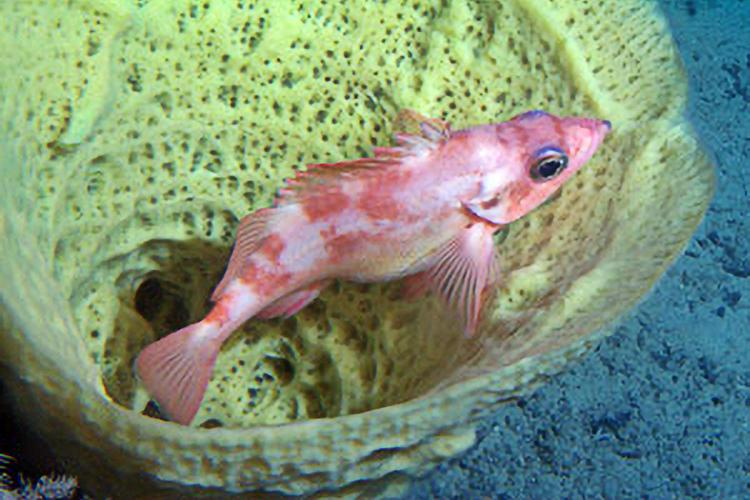
Rooney, who is part of the NOAA Fisheries team that conducts routine trawl surveys that gather information needed to set commercial seafood harvests in federal waters, doubled up in recent years to collect sponge samples as well.
Sponges are simple animals but important to the complex ocean ecosystem. They build seafloor structures, filter seawater and are used by fish as nurseries and sheltered areas to protect themselves against predators. They even have chemical compounds that could be developed into important medicines for people.
The sponge discoveries also highlight the importance of seafloor protections, an issue of concern in fishery management.
“They’re the backbone of a healthy ocean. They provide essential habitat for fish as nurseries and protective grounds from predators,” said Cooper Freeman, Alaska director of the Center for Biological Diversity. “If we want fish to continue to be abundant, they need habitat, and sponges provide that habitat.”
The newly identified species, which include the species now named Polycapus rubrum that is in a new-to-science genus and another species related to sponges previously found only in the tropics – bring the total number of known Alaska sponge species to 232, according to NOAA Fisheries.
Of the nine newly identified species, seven were found in the central and Western Aleutians, two were found exclusively in the Gulf of Alaska and some were found in both areas, Rooney said. They were found at depths between 50 meters and 500 meters, thriving in a rich ecosystem undisturbed by surface wave action, he said.
The discoveries are detailed in studies published in the journal Zootaxa: four in one study, and five in another study.
The lag between collection and identification shows how long it takes to figure out sponge species.
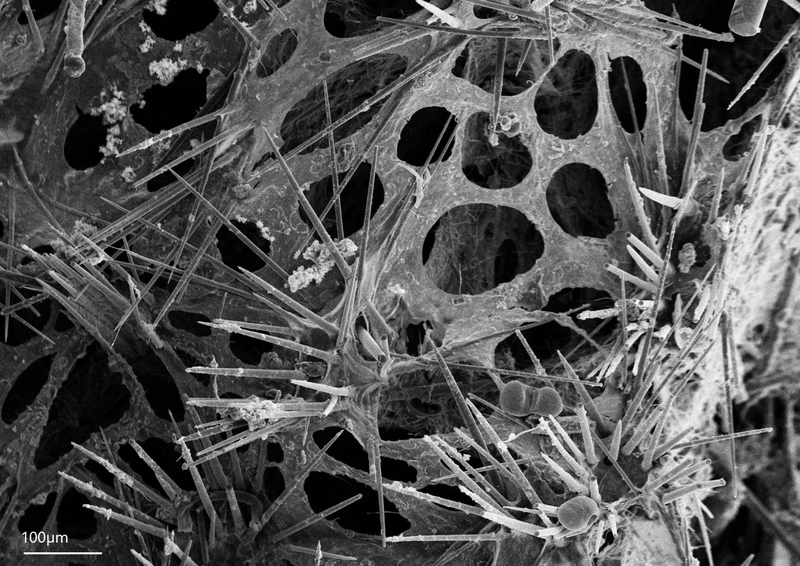
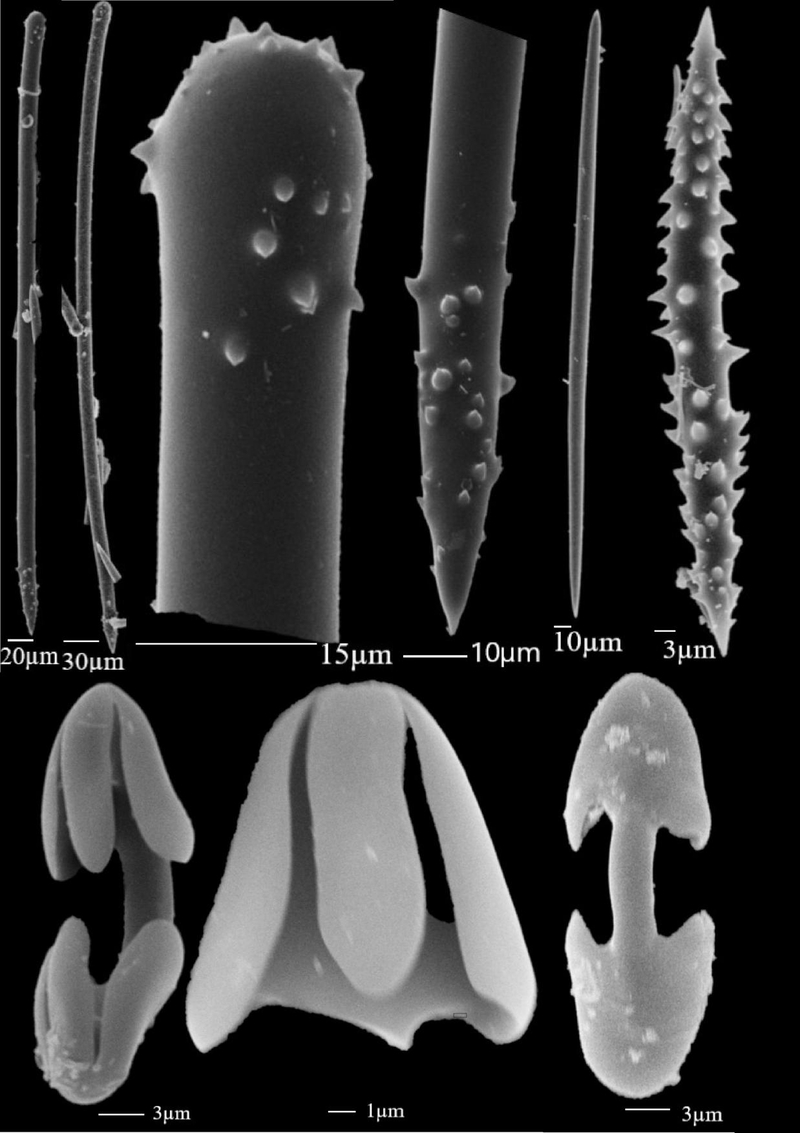
“Sponges don’t have eyes, fins or limbs, you know, like so many of the other critters, so we really have to use microscopic examination of some of these internal frameworks,” Rooney said. “What sponges have are these glass-like building blocks called spicules.”
The work that resulted in the new identifications used both examination of the spicules and DNA testing, he said.
The species in the newly identified genus has spicules that are “almost like claw-shaped and rod-shaped building blocks” that had not been seen before in that particular group, Rooney said. They were also arrayed in a pattern that “had never been observed before in sponge science,” he said. “The structure of the spicules is why we ended up calling it a new genus.”
The name, Polycapus rubrum, describes both the multiple layers of silica that create a material almost like fiberglass and the sponge’s red color, Rooney said.
The sponge species that the scientists were surprised to find so far north was also given an appropriate scientific name: Julavis borealis.
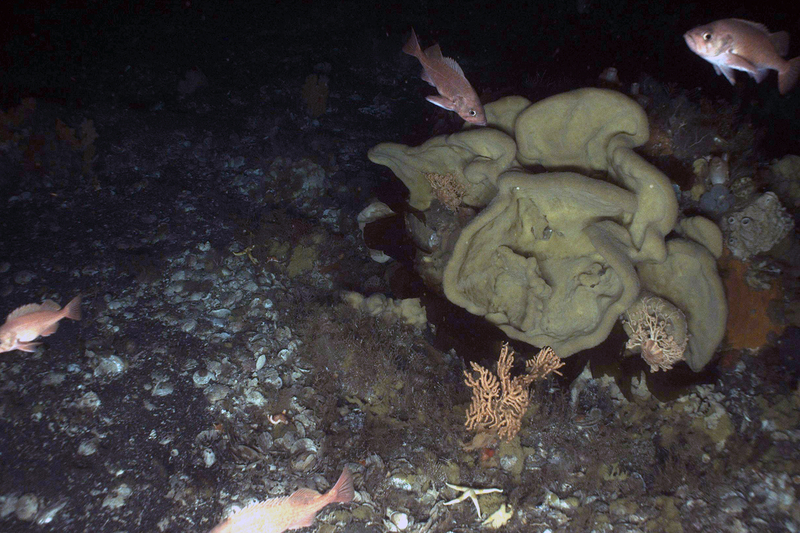
There was little knowledge about Alaska’s sponge and coral gardens until the early 2000s. At that point, NOAA Fisheries started a scientific program that documented some of the world’s most diverse cold-water sponge and coral gardens.
“So Alaska lags far behind,” he said. The vast size of Alaska’s ocean territory, rough weather conditions and seasonal sea ice make exploration particularly challenging.
Sonar mapping, if it occurs, gives only partial information, he said. “It gives you information on the depth contours, but not really the animals that are living there,” he said.
Fishery practices
The discovery of the new sponge species adds fuel to a heated debate over commercial trawling and the effects that seafood harvesting method has on the marine environment.
Most of the Aleutian region is off-limits to bottom trawling, a harvest practice that uses large nets to sweep the lowest depths of the sea. That is thanks to action taken in 2006 to protect the coral and sponge gardens there. But a small portion of the territory does remain open to bottom trawling.
Most of the Gulf of Alaska, in contrast, is open to bottom trawling, though there are some established coral-protection and seamount-protection zones.
There are efforts to end bottom trawling in the Gulf, including a campaign mounted by the environmental group Oceana that cites sponges and corals.
For several years, Oceana has tried to convince federal regulators to impose bottom-trawling bans in the Gulf of Alaska similar to those in place for most of the waters off the U.S. West Coast. Oceana also sued NOAA Fisheries in 2024 in an attempt to compel those closures, but the organization lost the case.
“We are still pushing them on it,” she said.
From the U.S. Arctic to Southern California, only the Gulf of Alaska lacks what she called a “frozen footprint” for bottom trawling. So even if trawl gear is not affecting sea sponges and corals now, it might in the future, thanks to climate change, she said.
“As we’re starting to get all of these warming events, especially in the Gulf of Alaska, especially in recent years, we’re seeing fish species shipped into areas that they’ve never been found in before, or less likely to be found in,” she said. And, as has been already observed in the Bering Sea, the fishing fleets “will follow these fish into places they haven’t fished before historically,” she said.
Beyond bottom trawling, there are concerns among environmentalists and sectors of the fishing industry about damage to seafloor habitat from midwater trawling.
Midwater trawling is an important harvest practice in the waters off Alaska. Alaska pollock, the nation’s top-volume commercial seafood species, is harvested through that midwater trawling, also known as pelagic trawling.
Midwater trawling is not supposed to occur at the seafloor level. But recent studies show that midwater trawl gear often touches the seafloor, putting the habitat there at risk, as well as occasionally crushing juvenile crab.
Hynes said official bycatch reports show that the trawl fleets are affecting sponges and corals. From 2005 to 2025, the bottom trawl fleet reported 8.8 million pounds of sponges and 1.1 million pounds of corals pulled up as bycatch, she said. The pelagic trawl fleet had sponge and coral bycatch during the period, though much smaller volumes: 9,408 pounds of sponges and 82,580 pounds of corals, according to the statistics.
The North Pacific Fishery Management Council, currently holding its October meeting in Anchorage, devoted much of its June meeting to the issue of midwater trawl gear making contact with the ocean floor. The council declined to take regulatory action at that meeting. Instead, the council directed its staff to assess options for preventing such contact from happening. The findings are expected to be presented next year in May, according to the council’s posted meeting outlook.
Juneau