Cornell case highlights the patchwork of state laws governing intoxication, sexual consent
Oct 09, 2026 | 5:00 am ET
Description
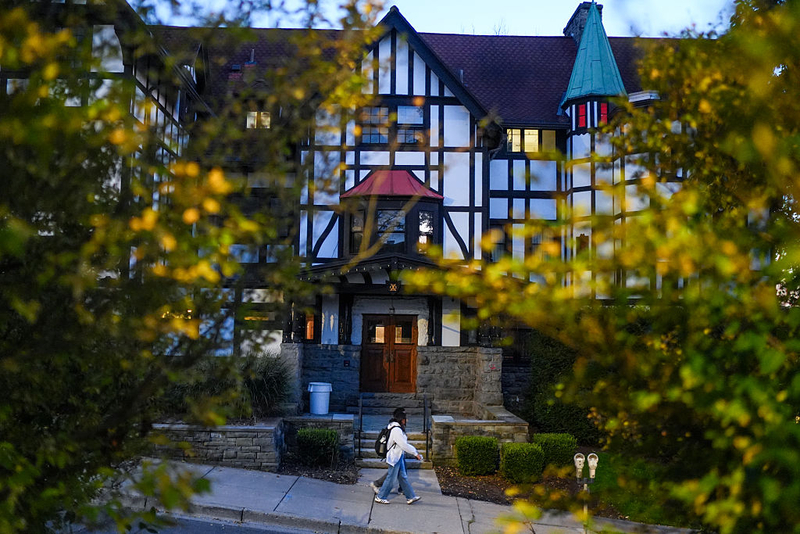
The Chi Phi fraternity house at the center of a rape allegation stands on the campus of Cornell University in Ithaca, N.Y. Nineteen states, including New York, limit mental incapacity under sexual assault law to cases of involuntary intoxication, such as being drugged against one’s will. (Photo by Ryan Murphy/Getty Images)
A Cornell University student’s allegations of gang rape in 2024 have renewed attention on a difficult area of sexual assault law.
A person can be awake, responsive and even able to move during a sexual encounter while still being so intoxicated or impaired that they cannot understand what is happening or make an informed decision about sex.
But whether that person is considered legally incapable of consenting can depend on the state and, in some cases, on how the person became intoxicated.
“There are a lot of very good laws on the books,” said Renée Williams, CEO of the National Center for Victims of Crime. “The problem is that nobody knows how to enforce them, including district attorneys, and enforcement varies from jurisdiction to jurisdiction, even within the same state.”
In New York, where Cornell is located, criminal law distinguishes between mental incapacitation caused by a substance administered without a person’s consent — such as being “roofied” — and other forms of intoxication. That can leave prosecutors relying on other provisions of the state’s sexual assault laws when someone voluntarily drinks alcohol or uses drugs and later becomes severely impaired.
More states are tracking rape kits. But key support for survivors may be slipping away.
The legal debate comes amid years of scrutiny over sexual assault and safety on college campuses, particularly around fraternity and sorority life, where alcohol and drugs are often part of the social environment. The Cornell case has brought those broader concerns back into focus while New York state lawmakers consider changes to the state’s sexual assault laws.
Across the country, sexual assault statutes vary in how they define incapacity, what level of impairment can make someone legally unable to consent and what prosecutors must prove about the accused person’s knowledge of the victim’s condition.
Nineteen states, including New York, currently have statutes that limit the definition of mental incapacity in sexual assault law only to cases of involuntary intoxication, such as when someone is drugged against their will, according to experts.
More than half of states also set time limits for prosecuting sexual assault. But those statutes of limitations vary by state and offense, and they can make prosecution more difficult when a case is reported years after an alleged assault, according to a review of state laws by NBC News.
Legislation on the issue has been before New York lawmakers for years, but the Cornell case has renewed attention on proposed changes to the state’s sexual assault laws. Two measures that passed the state Senate unanimously earlier this year would broaden how the law addresses intoxication and incapacity, and change the definition of “physically helpless.”
The legislature has already adjourned for the year, but both measures were stalled in the Assembly after they failed to garner enough support for passage. Since the case came to light, the Assembly has formed a 15-member working group to examine the state’s sexual assault laws ahead of the 2027 session.
Democratic Gov. Kathy Hochul, who has assigned the state’s attorney general to investigate the case independently, has said lawmakers could consider changes to state law early next year. .
Some possible changes have drawn pushback from some criminal defense attorneys, including the New York State Association of Criminal Defense Lawyers, who have raised concerns about whether the proposed language would provide enough guidance about when someone is too intoxicated to legally consent.
“Claims that a loophole exists are not supported by the law, and proposals based on that premise risk creating confusion while eroding fundamental due process protections and increasing the risk of wrongful convictions,” the organization said in an emailed statement to Stateline.
What happened at Cornell
The allegations date to October 2024, when the young woman, identified in court documents as Jane Doe, was a student at Cornell. She alleged that she was sexually assaulted by members of the Chi Phi fraternity, naming seven men in connection with the incident.
She said in her lawsuit that she drank alcohol at a local bar, then felt pressured by two of the defendants to snort ketamine while at a party at the fraternity chapter house, and that it was her first time doing the drug. She also wrote that she was “plied” with marijuana and “Jamaican Liquor.”
All of the men have denied the allegations, according to hundreds of pages of confidential investigative files obtained by The New York Times. Jane Doe filed a civil lawsuit in September naming the fraternity members, the fraternity, Cornell University, a local bar and her sorority, Tri Delta, as defendants. A Snapchat screenshot in the lawsuit shows a message to all Chi Phi fraternity members encouraging them to join the encounter.
Jane Doe reported the alleged assault to Cornell police in November 2024. In an interview with police, she described being severely intoxicated and said she was confident she had been raped. The subsequent criminal investigation did not result in charges.
Tompkins County, New York, District Attorney Matthew Van Houten has defended his office’s decision, saying the evidence available to prosecutors did not establish a prosecutable case under New York law, and that his office had not received the full transcript of the woman’s interview with police. The New York Times reported last week that a condensed version of the police statement sent to the DA’s office omitted that she reported being raped.
Under Cornell’s disciplinary process, two of the men were expelled, two suspended, two given lesser sanctions and one, a graduate, barred from campus. The Chi Phi fraternity chapter was closed in 2024.
But university proceedings and criminal prosecutions operate under different standards. For prosecutors, the issue is whether they can establish the elements of a specific sexual offense under New York’s criminal statutes.
That makes the state’s definitions of consent and incapacity central to the case.
Defining incapacity
The details of New York’s penal law offer a window into how seemingly narrow distinctions in legislative language can have significant implications for the outcome of a sexual assault case.
The state’s criminal code identifies several circumstances in which a person is considered incapable of consenting to sexual activity.
One is physical helplessness. A person is physically helpless when they are unconscious or otherwise physically unable to communicate unwillingness to an act.
Another is mental incapacitation, which New York defines as being temporarily incapable of appraising or controlling one’s conduct because of an intoxicating substance administered without the person’s consent.
Those definitions can create challenges in cases involving intoxication. Erin Murphy, an expert on sexual assault laws and a law professor at New York University, said the physical-helplessness standard can be difficult to apply to someone who is severely intoxicated but still conscious.
“The failure to express unwillingness continuously means that they were not physically helpless,” Murphy said, describing current law. “Someone can kind of fall through the cracks.”
New York law also raises questions about what the person accused of the crime knew about the other person’s condition. And a defendant’s own intoxication can also be relevant.
One of the men accused in the Cornell case said he was “a victim of sexual misconduct” because Jane Doe had performed oral sex on him when he was “too incapacitated” to consent, according to the university’s investigative files obtained by The New York Times.
Voluntary intoxication
One of the most significant distinctions in New York’s law is that its definition of mental incapacitation only applies when an intoxicating substance was administered without the person’s consent, such as when someone is unknowingly drugged.
That does not make sex with a voluntarily intoxicated person automatically legal. Other provisions of New York’s sexual assault laws address forcible compulsion and cases in which a person clearly expresses that they do not consent.
It’s hazing season on college campuses. State safeguards are uneven.
Still, the distinction has fueled what some lawmakers and victim advocates call a “voluntary intoxication loophole.” But others, including the New York State Association of Criminal Defense Lawyers, deny there is a loophole.
“Proposed legislation that would brand someone a rapist if their partner is voluntarily intoxicated and later claims a crime was committed because they were “incapable of appraising or controlling their conduct” is simply too vague to be fairly enforced,” the association said in an emailed statement.
Murphy said the challenge for lawmakers is drawing a line between someone who is intoxicated but still capable of making consensual decisions and someone whose impairment leaves them unable to consent.
“Any indication they were conscious or unwilling kind of works against them under physical helplessness,” Murphy said, referring to how New York’s laws are currently written.
That line can be particularly difficult to establish when a person has little or no memory of a sexual encounter. Alcohol, marijuana and ketamine — substances Jane Doe said she consumed before and during the alleged assault — can affect memory, judgment and perception.
Prosecutors will likely have to rely on text messages, photographs, videos, witness accounts and other evidence to establish Jane Doe’s condition, Murphy said.
Dr. Chinmoy Gulrajani, a psychiatry professor at the University of Minnesota who has studied intoxication and consent laws across the U.S., said a person’s effort to reconstruct an incident afterward can also introduce another complication. Talking with friends or other witnesses about what happened may help fill gaps in memory, but those conversations can also influence how a person remembers or interprets the encounter, and, in turn, how they report it to authorities.
“To actually figure out what actually went down and what the exact facts were can be a challenge for the legal system,” Gulrajani said.
Because a person’s condition can change during an encounter, prosecutors and juries may have to assess the evidence moment by moment, including what the accused person knew about the other person’s condition.
Varied approaches across the states
New York is also not the only state wrestling with this issue.
A national comparison is complicated because states define consent, incapacity, intoxication and sexual offenses differently. Some statutes focus on whether the victim was “mentally incapacitated.” Others use terms such as “incapable,” “impaired” or “unable to resist.” Some expressly address intoxication, while others rely on broader definitions or case law.
Sexual assault survivors can now track their rape kits in most states
A 2022 research article published in the Journal of the American Academy of Psychiatry and the Law found significant variation among state statutes and cautioned that courts can interpret similarly worded laws differently.
In 2021, when the review of state statutes was conducted, 21 states appeared to limit mental incapacity to involuntary intoxication only — though two states, Michigan and Texas, have since changed their laws.
Another 25 states now recognize incapacity from either voluntary or involuntary intoxication. And six states address the issue through case law rather than statutory language, according to the research article.
“Lawmakers need to understand that a person who is mentally incapacitated due to intoxication is a vulnerable person,” said Gulrajani, the Minnesota psychiatry professor and an author of the research article. “It does not matter whether they ingested the chemical of their own volition, or it was forced on them, or they were deceived into taking it.”
Minnesota changed its law in 2021 after its Supreme Court overturned a sexual misconduct conviction involving a victim who had voluntarily become intoxicated.
The state legislature amended the law so that the victim’s intoxication could establish incapacity regardless of whether the alcohol or drugs had been voluntarily consumed.
Michigan adopted similar language in 2023, following years of pressure to pursue other major legislative changes to better support survivors of sexual violence.
In Texas, lawmakers added a provision in 2025 that expressly defines as sexual assault a situation in which a person knows someone is so intoxicated or impaired by a substance that they are incapable of consenting.
Stateline reporter Amanda Watford can be reached at [email protected].