Pa. skill games could disappear in October. Businesses that rely on them are worried.
Aug 25, 2026 | 3:06 am ET
Description
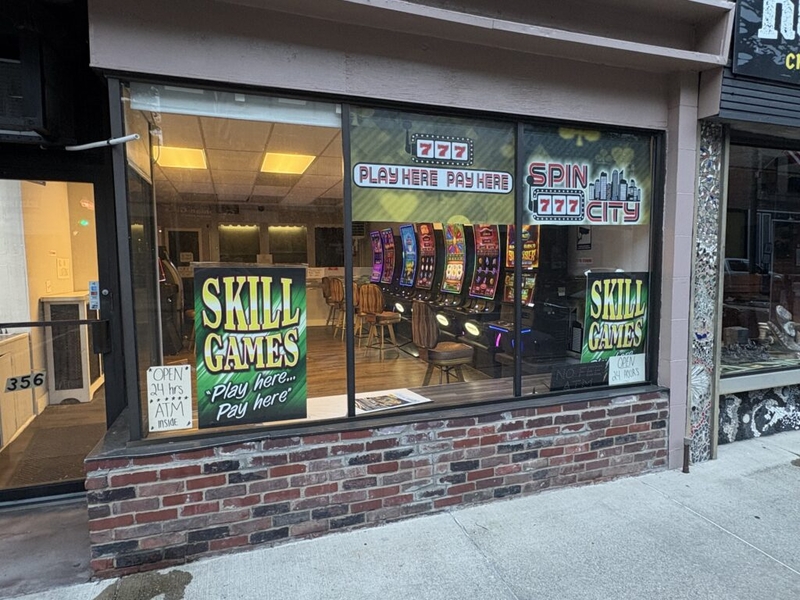
A skill games parlor in Williamsport, Pa. (Photo by Peter Hall/Capital-Star)
This story was originally published by WITF.
The four machines at the Highspire VFW in Dauphin County don’t take up much space. They look like arcade games, and people sit to play them, sometimes for hours at a time.
With their flashing lights and chance to win money, they look a bit like casino slot machines. But unlike slot machines, they don’t make noise, and customers can play them in places such as laundry mats, gas stations and VFWs.
They’re called “skill games,” and they have become a fixture in some gathering places – and an important source of revenue for the businesses that host them.
They have also been at the center of Pennsylvania’s state budget battles and political fights for years.
Now, the machines could disappear from those locations in October.
The Pennsylvania Supreme Court ruled in June that skill games are slot machines under state law and that unlicensed skill games are unlawful. The court stayed enforcement of its ruling for 120 days, giving lawmakers until October to decide whether to create a regulatory system.
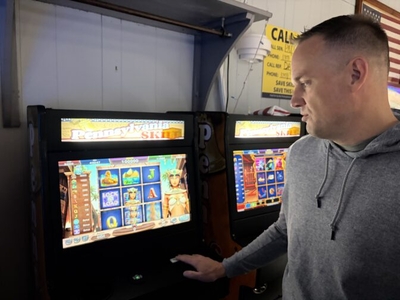
For organizations such as the Highspire VFW, the stakes are high.
Sue McMurray is She says the nonprofit is raising funds for a new roof and can’t afford to lose a revenue source.
“Without those skills machines, it will set us back a lot,” she said. “We’ll never be able to do the things we need to do… to keep this nonprofit in business.”
It’s possible Republicans and Democrats could reach a deal when it comes to skill games when they return to Harrisburg in September. But lawmakers did not include a skill games measure in the state budget agreement reached this summer.
Industry advocates are urging lawmakers to regulate and tax the games rather than eliminate them.
There are about 70,000 skill games throughout Pennsylvania, and themachines have operated without a comprehensive statewide regulatory system for nearly 15 years. Supporters say they provide an additional source of income for small businesses, bars, taverns and nonprofit organizations.
Shay’s Vending operates arcade and skill games in various locations including the Highspire VFW.
Manager Willie Shay says the new industry allowed his family business to evolve from its start, offering jukeboxes and pool tables.
“Shay’s Vending’s been around since 1938 and it saved our business… it’s savings a lot of nonprofits and bars and clubs,” he said. “If this ban comes through and nothing’s done, the fallout’s going to be really scary.”
Doug Sprankle is president of the Pennsylvania Taverns and Players Association (PATAP), a nonprofit that advocates for legislation further regulating and taxing the skill games industry.
His family’s business operates three grocery stores in Western Pennsylvania,and he says implementing skill games machines generated revenue that allowed the company to provide health insurance for their employees.
According to a report from the Independent Fiscal Office, the machines each generate an estimated $47,000 in a year.
“Our story is a lot like a lot of the people you hear from that have skill games in small businesses,” he said.
Sprankle wants regulation to weed out “bad actors” that operate terminals that aren’t technically skill games or opened “pop-up casinos.”
“The idea originally was to supplement income for that organization or business, not to be the number one draw to the facility,” he said.
“Regulation will clear a lot of that up,” said Michael Barley, director of public affairs for Pace-O-Matic, which develops skill game software. “We’re not the only issue that Harrisburg has not figured out recently.”
Laws proposed
Lawmakers failed to regulate the games as part of this year’s budget.
PATAP and other advocates are encouraging support for HB2213 and SB1079.
The bills would establish a $500 fee for each skill game terminal and set a statewide limit of 50,000.
The proposed laws would generate $300 million every year. A report from the Independent Fiscal Office estimates the games would eventually bring in more than $1 billion a year.
Harrisburg, PA