Oregon, 11 other states sue to block Paramount-Warner Bros. merger
Jul 13, 2026 | 5:31 pm ET
Description
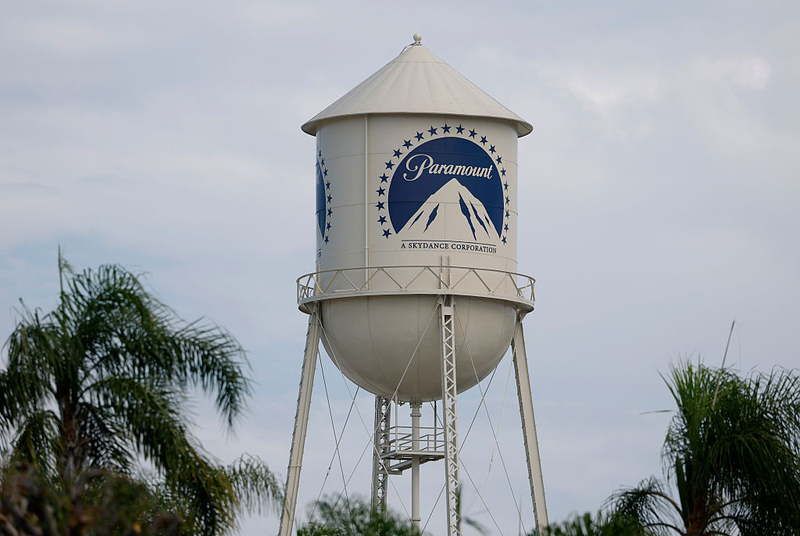
In an aerial view, the Paramount logo is displayed on a water tower at the Paramount Studios lot on July 13, 2026 in Los Angeles, California. Twelve state attorneys general, led by California, filed a lawsuit seeking to block Paramount Skydance’s proposed acquisition of Warner Bros. Discovery. They argue that the merger would violate the Clayton Act, an antitrust law that prevents anticompetitive practices. (Photo by Justin Sullivan/Getty Images)
Twelve Democratic-led states on Monday sued to block Paramount’s $110 billion acquisition of Warner Bros. Discovery.
The lawsuit, filed in the U.S. District for the Northern District of California, argues the merger violates Section 7 of the Clayton Act, a federal law prohibiting mergers that may substantially lessen competition or tend to create a monopoly.
California Attorney General Rob Bonta is leading the lawsuit alongside the Democratic attorneys general of Oregon, Arizona, Colorado, Connecticut, Massachusetts, Minnesota, Nevada, New Jersey, New Mexico, New York and Washington.
The two media companies have spearheaded the film and television industry for more than a century, with Paramount producing films such as “Titanic” and “The Godfather” and Warner Bros. producing “The Matrix” and “Casablanca.” The companies also control popular cable television content including CNN, MTV, HGTV, Comedy Central, Cartoon Network and Nickelodeon.
The companies typically negotiate with movie theaters and cable channels to promote their content — a process media distributors rely on to secure low prices for themselves and their subscribers. But states say a merger would eliminate that competition by combining two of Hollywood’s five media distributors into one that would control nearly one-third of movies and cable programming in the country.
The result would be higher prices and worse quality content for theatergoers and cable television subscribers, the plaintiff states argued.
“Consolidation here not only leads to higher prices — it also leads to fewer opportunities for important stories to come to life and fewer ways for audiences to encounter stories, ideas, and perspectives beyond their own experiences,” Bonta said in a statement.
States step in after federal government approved the merger
The merger already received federal approval from the U.S. Department of Justice, but the plaintiff states are pushing back, saying the Trump administration is not enforcing antitrust laws.
“Some people are going to continue to ask, ‘Why are we pursuing this opposition to this merger when the U.S. Department of Justice has already greenlit this deal?’” Oregon Attorney General Dan Rayfield said in a virtual press conference. “Well, this is by design. States have the ability under our own antitrust laws to enforce these regulations. We, as states, will see different harms than the national government will see.”
Rayfield said the merger would disproportionately hit the Beaver State’s small, independent movie theaters.
“When you have fewer competitors in an industry, historically, that means less pressure to keep costs down,” he said. “That’s less content diversity and less leverage for workers and vendors who depend on this very own industry.”
The state of Oregon launched its own investigation into the merger months ago. When Paramount refused to turn over requested documents related to its lobbying efforts to the federal government, the state issued a civil investigative demand to compel it to release its records.
The Oregon Department of Justice last week asked a Multnomah County Circuit Court judge to order that Paramount comply with the state’s demands to hold off on the merger, but Oregon withdrew from that case and folded its efforts entirely into the multi-state lawsuit. .
“That is a bad deal for Arizonans and it is a terrible deal for all Americans,” Arizona Attorney General Kris Mayes said in a press conference, adding that households could face higher costs to access news and entertainment if the merger moves forward.
And the merger would significantly worsen the challenges movie theaters face, she said.
“With fewer films being made, theaters don’t have the same opportunities to attract audiences, build consistent schedules and maintain stable revenue throughout the year,” Mayes said.
The states are also filing a temporary restraining order, asking the court to put a hold on the deal while the lawsuit proceeds.
Arizona Mirror reporter Jerod MacDonald-Evoy contributed reporting.

Salem, OR