Governor celebrates surplus as Democratic lawmaker says state missed opportunities to help people
Jul 13, 2026 | 7:07 pm ET
Description
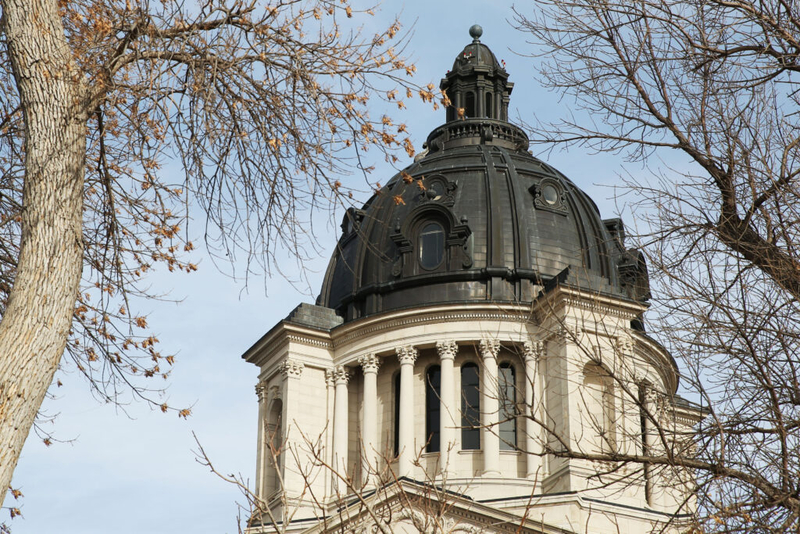
A January 2025 view of the South Dakota State Capitol in Pierre. (Photo by Makenzie Huber/South Dakota Searchlight)
Listen to an audio version of this story by reporter Meghan O’Brien. For broadcasters: See below for a downloadable version with a host intro script.
The deposit of a $69 million budget surplus has grown South Dakota’s state government reserve funds to $325 million, according to an announcement from Republican Gov. Larry Rhoden’s office Monday.
The surplus is from the end of the state’s 2026 fiscal year on June 30.
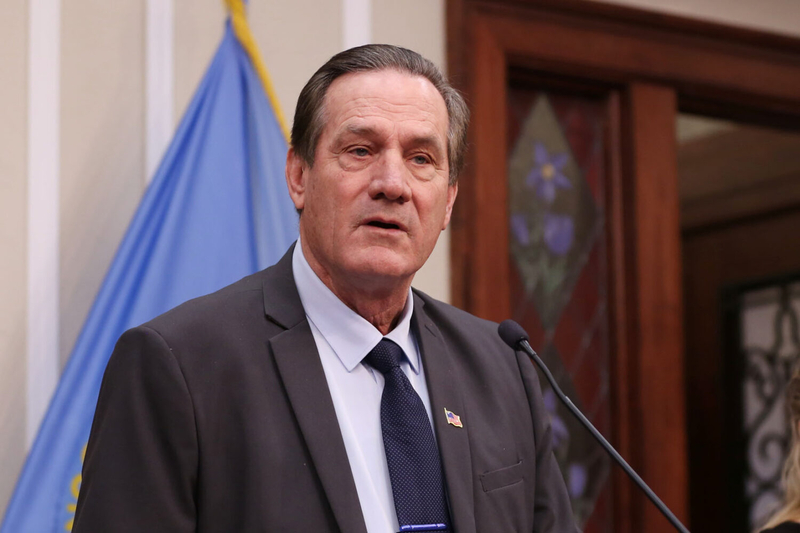
“South Dakota’s robust economy is driving steady revenue growth, moving our budget in an even stronger direction,” Rhoden said, while additionally crediting “good stewardship of taxpayer dollars.”
The state collected $30 million more than its budgeted revenue for the year, $17 million of which came from higher-than-projected sales tax revenue.
Underspending by state agencies drove the remaining $39 million of the surplus. That’s “a sign of fiscal responsibility,” according to Rhoden’s office, which said the surplus “will be available for one-time investments in future budget years.”
State lawmakers typically distinguish between “one-time” revenue for expenses such as constructing a new building and “ongoing” revenue for expenses such as the day-to-day operations of state government.
Most of the unspent money came from the Department of Social Services, which reverted $32 million from its $1.8 billion departmental budget. The department oversees programs such as Medicaid, the Supplemental Nutrition Assistance Program and Temporary Assistance for Needy Families, among others. About $654 million of its budget was from state funding sources, with most of the remainder coming from the federal government.
Jim Terwilliger, commissioner of the Bureau of Finance and Management, declined to explain the details of the department’s reversions Monday and said that information will be presented to the Legislature’s budget panel, the Joint Appropriations Committee, next week.
Democratic lawmaker questions budget decisions
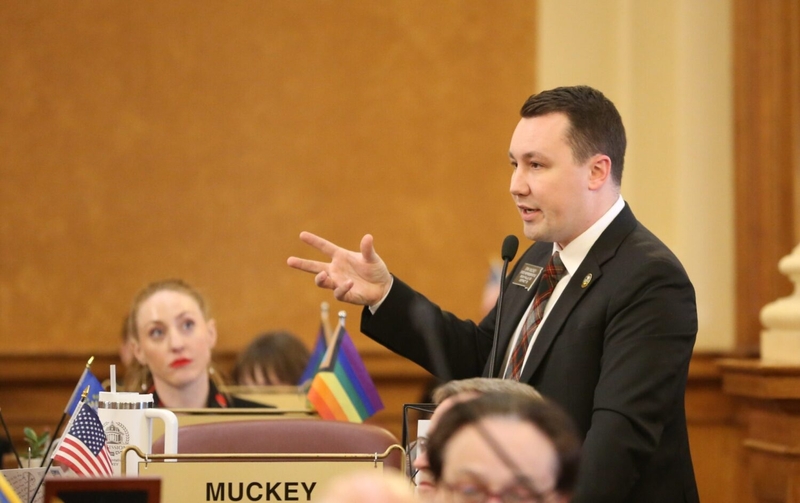
Budget committee member Rep. Erik Muckey, D-Sioux Falls, is “heartened” by the sales tax revenue increase.
“But the message isn’t about the surplus,” Muckey said. “The message is we’ve clearly had opportunities to make a difference, and did we leave money on the table to accomplish that?”
He pointed to the Department of Social Services’ large reversion, “particularly at a time when addiction and behavioral healthcare are seeing significant needs,” and at a time when the state needs funding for programming at a prison under construction in Sioux Falls.
State leaders broke ground on a $650 million men’s prison in the state’s largest city earlier this year. It’s needed, Muckey said, “but not without accompanying programming in terms of rehabilitation, recidivism and so on.”
Muckey has also questioned the Department of Social Services in recent years over its management of Temporary Assistance for Needy Families, a federal-state program. It’s used in South Dakota to assist families with children who need financial support because of the death of a parent, an absent parent, or the unemployment or physical or mental incapacity of a parent. Caregiver participants are required to work, search or train for a job.
Earlier this year, lawmakers partially restored cuts to the program that the department made last year.
“The same question keeps coming up,” Muckey said. “Why are we trimming off the edges of programs that are really having an outstanding impact on people in South Dakota and are known for their impact, while we then turn around and say we don’t really need this money, we can just send it back?”
There will be new ways in the coming years for lawmakers to hold state agencies accountable for their budgets, Muckey said.
That includes Project BISON, a computer system that’s scheduled to come online next summer. Among other updates to state operations, it’ll give lawmakers the ability to see deeper into department budgets and understand the management of specific programming.
Higher-than-usual share of budget in reserves
With the addition of the surplus to the state’s reserve funds, those reserves now make up 12.7% of the current fiscal year’s general fund budget.
Traditionally, about 10% of the budget goes into reserves. In December, Rhoden announced his desire to increase that to 12.5%. Muckey criticized the proposal at the time and renewed the criticism Monday.
He said state officials are “patting ourselves on the back” for the surplus, “when we really could use more of that funding to actually help people and still maintain a very healthy reserve.”

Pierre, SD