Warnock: New federal housing law designed to ‘stop the spread’ of corporate-owned homes
Jul 13, 2026 | 5:07 pm ET
Description
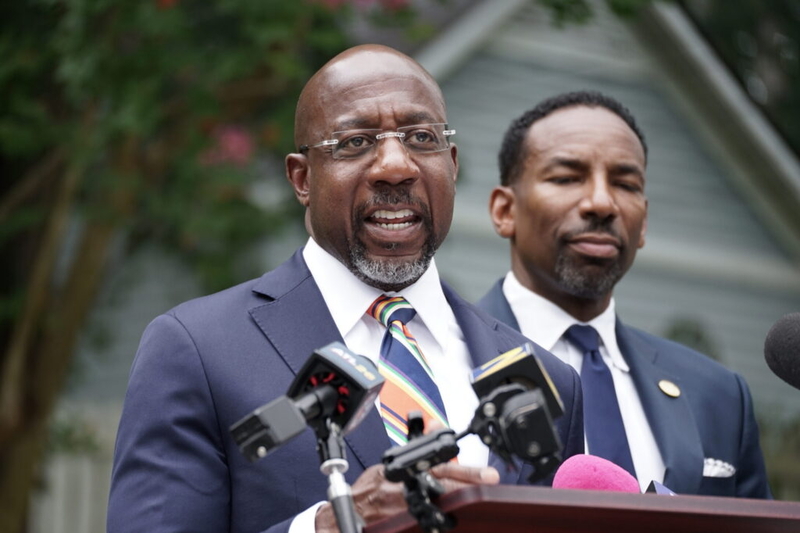
U.S. Sen. Raphael Warnock (left) speaks at a press conference on July 13, 2026, in Atlanta and is joined by Mayor Andre Dickens to discuss a new federal law that limits the number of single-family homes an institutional investor can own to 350 homes. Alander Rocha/Georgia Recorder
U.S. Sen. Raphael Warnock on Monday touted a new federal law that went into effect over the weekend that is aimed at making homeownership more attainable.
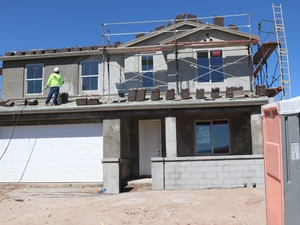
Speaking in southwest Atlanta in front of a home that is corporate owned, Warnock was joined by city leaders and a local resident struggling to find an affordable home for sale.
U.S. Senate passes bill with Warnock-backed provision limiting the number of investor-owned homes
The legislation, which was headed by Massachusetts Democratic U.S. Sen. Elizabeth Warren and South Carolina Republican U.S. Sen. Tim Scott, automatically became law over the weekend after President Donald Trump did not sign the measure but also did not veto it.
Warnock, who is a Democrat, highlighted a provision he pushed for that limits the number of single-family homes an institutional investor can own to 350 homes.
“What’s happening in Metro Atlanta is happening in communities all across the state. Private equity firms and major corporations have bought up thousands of single-family homes, leaving Georgians without an opportunity. Let’s be clear. If you’re a single mom, if you’re the married father of two trying to buy a home, owning a small barber shop, you cannot compete with Wall Street,” Warnock said.
Most of the Georgia delegation voted in favor of the new law, with only GOP U.S. Reps. Andrew Clyde of Athens and Clay Fuller of Lookout Mountain voting against it.
The law is “forward-looking,” Warnock said, and corporations won’t have to divest if they currently own more than 350 investment homes. But moving forward, if a corporation goes beyond the 350-home cap, the federal government can impose a fine of up to $1 million per violation or three times the purchase price of the home involved, whichever is greater.
“What I want to do is to stop the spread of corporations buying homes. If you’re already in a home that’s owned by one of these corporations, this does not force the corporation to sell that home. But what we’re trying to do is stop the spread, and this is a start in that direction,” Warnock said.
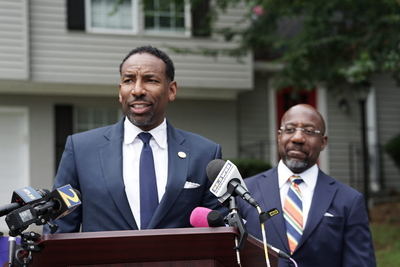
Atlanta Mayor Andre Dickens, who joined Warnock Monday morning, said the new federal law would complement his administration’s local efforts to build or preserve affordable housing, pointing to initiatives that are aimed at revitalizing underserved neighborhoods in Atlanta.
“Large institutional investors, private equity firms – they buy up neighborhoods and the homes in bulk. It becomes so much harder for working families to achieve their dream of home ownership, and it becomes harder for legacy residents to remain rooted in the communities that they helped to build,” Dickens said. “Here in Atlanta, we see the negative impacts of unchecked institutional investment. Over the last decade or more, corporate investors have suffocated metro Atlanta’s housing market.”
Atlanta was identified in a 2024 U.S. Government Accountability Office report as a hotspot for investor-owned homes. The report named the city as the top market in the country for homes owned by private equity firms, with 25% of single-family homes owned by a private equity firm.
Despite the lack of data on private-equity homeownership outside of Atlanta, Todd Edwards, director of governmental affairs for the state association that represents counties at the state Capitol, said that any place in the state that is growing or has a tourism industry is a target area for corporations to buy homes. Edwards said that rural areas, however, aren’t as impacted.
“Any cities and counties that are growing. It’s not just Atlanta. You go up all the way to Cherokee (County), anywhere on the outskirts, inside and out. It’s all demand,” Edwards said. “And then if it’s not for outright purchasing and renting, it’s purchasing for short-term rentals anywhere that’s a vacation spot around the state.”
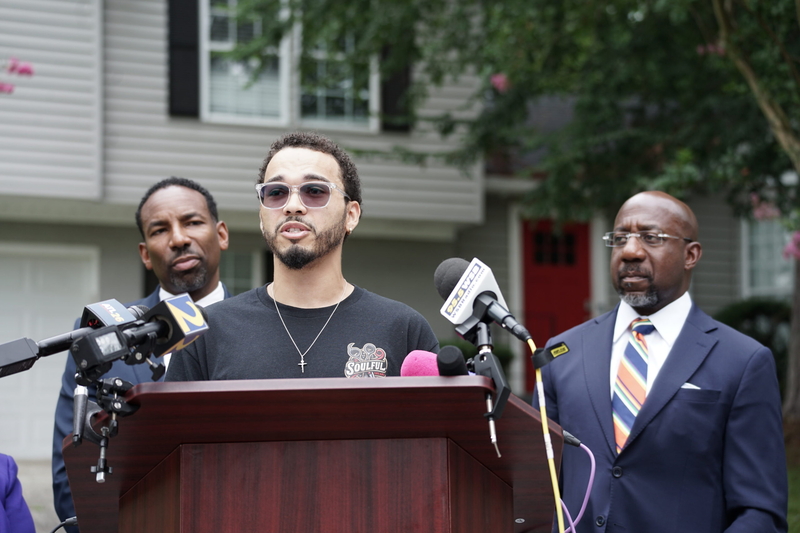
Jacob Parcel, a Smyrna barbershop owner who joined Warnock at the Monday press conference, has been trying to buy a home for the last two years in that area. He said that affordable homes for sale “have been few and far in between.” He said that with unaffordable options, he’s had to consider moving farther away from his family and business.
“I believe if you work hard and if you save for years, you should be able to buy a home in the neighborhood that you want to be in, and with all the homes being purchased up by major companies, it’s very hard to do,” Parcel said.
Atlanta, GA