OPINION: In defense of ‘those people’
Jun 27, 2026 | 6:00 am ET
Description
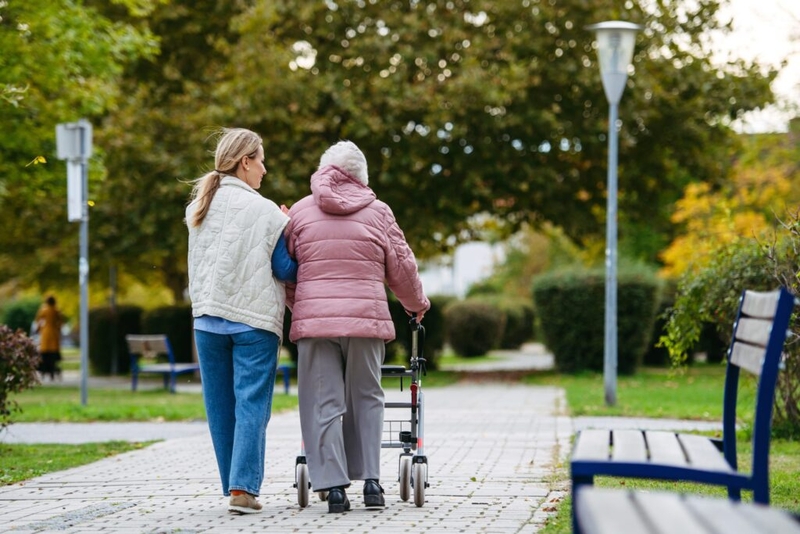
A senior woman walks with her caregiver while spending a chilly day outdoors in a park. (Photo by Halfpoint Images/Getty Stock photo)
Recently, I heard someone mention “those people” when discussing a strategic approach to working with aging adults. The comment was surprising not only because of the tone but because the person could easily be confused as being one of “those people.”
Admittedly, I have used this phrase at some point in my younger years, not fully appreciating its impact. Now that I, too, am one of those people, aging has taken on a different complexion.
Becoming an older person is not easy nor is it something Western culture embraces. Look at any influencer on social media or a fashion magazine. Youth is in.
The cosmetics industry is one such example. By 2033, money spent on anti-aging products is estimated to exceed $100 billion. That is a good chunk of money to hide a natural and inevitable part of the lifespan. What if this money was spent on preventive efforts?
Remember, “OK Boomer?” A half-joking, half-serious attempt to diminish the perspectives of an aging population. People laughed – but at whose expense?
And for those fearful of being accused of repeating a story or oversharing information, a tendency to retreat from gatherings can happen. If you have been on the receiving end of “you already told me that story,” feeling embarrassed is not so unusual. And so is the question of one’s cognitive state. Is this the start of old-timers (sic) disease?
BTW – LOL, time spent with younger people also produces the occasional rinse and repeat of a story that is meaningful to them. Are we apt to tell someone under 40 years of age … you’ve already told me this story? Probably not.
It seems, based on anecdotal comments and observations, there is an effort to shame people for having the audacity to age. It is not so much their aging that offends us – but our own prospect of aging that prompts us to find ways to shame the process and the outcome of a life lived.
Aging is a process not an event. Recent research highlights aging begins in the womb. Habits and behaviors when we are young have a long-term impact over the course of life. It is not so much aging we abhor but the effects of a life lived without regard for the consequences that rile us. Something to ponder.
Aging also includes the trials of being vulnerable to those less interested in our welfare. Frauds and scams are the leading cause of elder abuse for older adults. A recent exploration of this topic by a student at Skutt Catholic highlights the importance of seeing older people deserving of respect, attention and dignity by families and those working in the field. An important and promising contribution from someone starting out in the world.
And our own May UNO masters and doctoral graduates in gerontology completed impactful theses and dissertations on such topics as end-of-life planning in long-term care and the impact of COVID on loneliness for people living in retirement communities. All important and relevant research at this pivotal time in history.
Planning our own future self and engaging in healthy behaviors today in preparation for tomorrow is critical, especially if the aging process is of concern. Future aging is more than a retirement account. It includes physical, spiritual, cognitive and social exercise that benefits from continual effort over the life-course. Exercise works.
There is no shame in aging. Yet, “Over the Hill” parties meant to be entertaining leave people dreading turning 40 or 50, not to mention freeze in fear at the thought of life after 60.
It is also worth noting, “those people” didn’t start their day hoping they would experience physical or cognitive decline in later life. What are we doing to ensure the support provided to “those people” would be the same for us? Because one day, it may very well be us facing such changes.
Just imagine a world without older people. Who would teach us how to endure, with resilience, the challenges of life and loss? And when the power grid fails, who will be there to show us how to use a mechanical can opener, cook on a charcoal grill, or provide family history not captured through social media or other contemporary means. Their knowledge is priceless.
Upon reflection, it is safe to say, “those people” are deserving of our defense, respect and innovative solutions to honor them as we ourselves plan for the day we become one of “those people.”
Lincoln, NE